Unraveling Top-Dying Disease in the World’s Largest Mangrove Forest, Sundarbans, Bangladesh
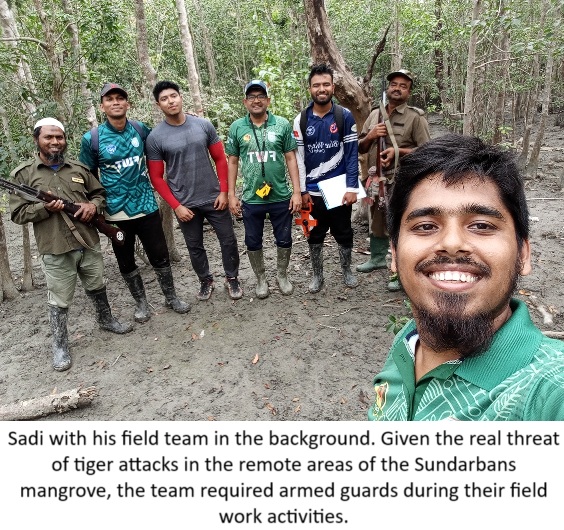
 In May 2024, M.S. student Md. Seikh Sadiul Islam Tanvir (Sadi) completed field research in the Sundarbans, Bangladesh, the world’s largest single-tract mangrove forest. Sadi is investigating the impact of top-dying disease on Heritiera fomes, a key mangrove species that form climax communities in this extraordinary mangrove system. His study examines soil microbiota abundance and key porewater parameters (pH, salinity, sulfide, and redox potential) in diseased and healthy mangrove stands.
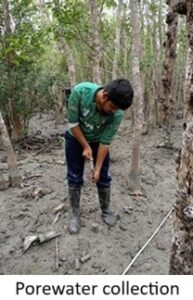
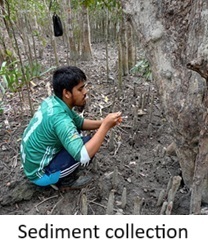 With assistance from one of his committee members, Dr. Saidur Rahman and several students, Sadi surveyed 60 plots, measuring tree height, diameter at breast height (DBH), canopy cover, and pneumatophore heights within 15 m area at each. For diseased trees, he assessed crown condition, trunk health, and pest infestation. He also collected sediment and porewater samples for lab analysis he conducted here on campus in Durham.
Now analyzing his data, Sadi aims to pinpoint environmental and microbial factors that may be driving (or contributing to) disease spread. His novel findings are expected to be critical to mangrove conservation and restoration strategies for the region.