
Introduction
 Americans are probably globally known best for our fast-paced lifestyles, consumerist mindset, and our love affair with fast food, resulting in high adult and child obesity rates. In contrast, the French tend to be known for their love and passion for food, terroir, and wine. After taking FREN 525H and learning about various cultural differences between France and America, we wanted to learn more specifically about the diet of French children, and how it differs from how American children eat. In this article, we will discuss various aspects of and factors that affect children’s diets, including breastfeeding habits, child obesity rates, differences in diets between income levels, school lunches, and meals eaten at home.
THESIS
There are many differences between the French and American idea of nutrition. Good nutrition starts from early childhood with kids being breastfed and continues well into adulthood. As showcased in the following research below, France strives to make sure its children have access to the best quality of food they can get. They ensure that every child gets nutritious food no matter their social status. This is unlike the United States where high income communities are preferred over lower income communities and are given more nutritious food options. Good nutrition also translates into obesity rates. While the rate of childhood obesity is rapidly increasing in the United States, it is at a much lower plateau in France. In conclusion, France has an excellent system in place that helps establish lasting nutritional well being among its citizens as seen in the following research.
How Does the Food you Eat Affect your Body?
The TED Ed video shows the effect food has on people’s bodies and brains. The brain is one of the most important parts of the body and its development is affected by foods that are consumed by the majority. Trans and saturated fats can compromise brain health while foods high in omega 3 and omega 6 can elevate it. Different foods are important to help maintain neurotransmitters. Micronutrients found in fresh fruits and veggies are important to help fight off brain disease. Foods with high sugar contact causes a immediate increase in blood sugar and an immediate crash. This leads to trouble focusing in the classroom, at work and even while driving. School lunches in the United States often serve white bread for lunch along with other foods containing saturated and unsaturated fats, while school lunches in France are filled with fresh fruits and vegetables that promote brain development (Nacamulli, 2016).
Child Obesity
The differences in eating habits of French and American children have lead to differences in the child obesity rates of the two countries. In America, one in six children is obese, or 16.7% (France24, 2017). However, in France, the child obesity rate is only 3.6% (France24, 2017). This difference in obesity rates has been attributed to the fast-food-focused diets and bigger portion sizes for American children. Childhood obesity can result in many health complications later on in adulthood, such as diabetes, heart disease, joint injuries, low self esteem, and others. Figure 1 shows how the child obesity rates in England, France, and the United States have changed from 1990 to 2015. While the child obesity rate in the United States has been increasing over the past 25 years, the child obesity rate in France has been remaining mostly constant (Fig. 1).

Figure 1. Obesity rates in children in England, France and the United States from 1990-2015. (OECD, 2017).
The French Paradox
The French have lower child obesity rates and less weight-related illnesses than the United States, but their diets tend to consist of foods that are higher in fat (Le Billon, 2012). They also tend to spend twice the amount of time eating as Americans do; most French people enjoy a two hour lunch break from work (Le Billon, 2012). Their increased intake of fat and additional time spent eating might cause one to infer that the French should have a higher obesity rate than Americans. Why is this not the case? This question has been long debated. Some believe that it might be due to the French having smaller portion sizes; one study found that a medium fry at McDonald’s in Philadelphia was 72% larger than a medium fry in Paris (Le Billon, 2012). Some believe it may be due to the French exercising more, especially walking rather than solely relying on cars for transportation. Still others attribute the decreased obesity rate in France to the French habit of spending more time to enjoy their food rather than inhale it and be left feeling unsatisfied, like in the United States.
Modern Rates of Breastfeeding in Europe & The United States
The rates of mothers who breastfeed their babies from infancy vary across countries.
- United States = 81%,
- United Kingdom = 81%,
- Finland = 99%
- Sweden = 83%
- With France’s initial rate of breastfeeding only being 62%.
However, after six months of breastfeeding many breastfeeding rates begin to drop as mothers become exhausted, uninterested and unwilling.
- United States = 52%,
- United Kingdom = 34%,
- Finland = 60%
- Sweden = 72%
- With France’s rate of breastfeeding falling to 39%.
The Paris Organization for Economic Co-operation and Development (OECD), an organization that works to promote policies to help improve the economic and social well-being of people all around the world, states that “France is not only the European country where the breastfeeding rate is one of the lowest but it’s also one of the countries where mothers chose to breastfeed their child the least time possible.”
History of Breastfeeding in France
19th Century:
The Invention of Pasteurization rendered cow’s milk safe, which prompted many mothers to resist breastfeeding and accept the easier, convenient and less intrusive method of formula milk from a bottle. People associated breastfeeding with the undeniable rates of infant mortality, therefore bottles began to symbolize a saving grace for children, something that would be ultimately safer.
20th Century:
Breastfeeding rates remained low throughout the 20th Century, and even in the year of 1995 only 45% of French women would begin breastfeeding their infants. From convenience to shame, there were many reasons why the French women resisted their bodily ability to breastfeed. The “French Stigma” defined the cultural aversion to public breastfeeding due to the shameful nature of undressing yourself in public.
The feminist group "Leche League France", a breastfeeding support organization, said the reasons are historical and also tied to a curious strain of French feminism.
"There is a significant movement in French society which says breastfeeding is tantamount to slavery and exploitation. So to promote breastfeeding is to be against women’s liberation, this brand of French feminism renounces breastfeeding because they consider motherhood slavery for women" said Leche League spokeswoman Claude-Suzanne Didierjean-Jouveau.
However, contrary, there were also many French women who notably stood behind dated ideas that their breasts were for their husband, public undressing of any sort is completely inappropriate, and bottle feeding is a modest, more ladylike option to child rearing.
21st Century:
In the year of 2000, the French Government, in an effort to truly help its citizens, spoke out against society's trend towards non-breastfeeding by encouraging French mothers to begin and continue breastfeeding. Rates of worldwide obesity were rising, and though the French rates remain more stable than other countries, an increase was still occurring. French national health authorities intervened to state that mothers should be breastfeeding their children for at least four months, however six months of breastfeeding is the best for the child’s health. This information was obtained from World Health Organization, who promotes that mothers should ideally breast feed their children for six months because breast milk is the “perfect food” for newborns, because it contains all the nutrients a child needs.
Following government intervention, rates of French mothers beginning to breastfeed rose to 70%. (based on a study given with 18,000 French mothers) This increase was ultimately beneficial to the French population, which indicated the importance and emphasis the French government places on the health of it’s nations citizens.
Benefits of Breastfeeding
Many studies regarding the benefits and drawbacks of breastfeeding remain in progress, with results that are heavily thought to be true but still inconclusive. However, many benefits of breastfeeding have been regarded.
Benefits include reduces in the babies’ risk of:
- Allergies
- Eczema
- Viruses
- Urinary Tract Infections
- Inflammatory Bowel Disease
- Gastroenteritis
- Ear Infections
- Respiratory Infections
- Pneumonia
- Colds
- Lessens the risk of SIDS
- Promotes effectiveness of vaccines
- Spinal Meningitis
- Type 1 Diabetes
- Hodgkin’s lymphoma
This includes the fact that formula fed babies are three times more likely to suffer from ear infections than breastfed babies. Also, formula fed babies are five times more likely to suffer from pneumonia and lower respiratory-tract infections.
Inconclusive yet pertinent research has pointed towards an improvement in IQ linked to breastfeeding. Though socioeconomic factors remain vital to the IQ scores of people, scientists believe the fatty acids in breast milk may factor into high IQ scores in the long run. Similarly, lower levels of obesity have been linked to breastfeeding. There are many psychological factors within a mother breastfeeding, and often a mother has the ability to sense when her baby has had enough to eating, leading to diminished rates of overfeeding, which promotes healthy eating habits and ultimately helps avoid trends of obesity.
Finally, the psychological relationship between mother and child is strengthened by breastfeeding because of the level of consistent intimacy that is necessary for successful breastfeeding to occur. The benefits of this motherly love and intimacy have many long term benefits on the child.
What do American Children Eat at Home?
Breakfast:
For breakfast, the most common food that is eaten is cold cereal. The cereal is usually filled with sugar and is unhealthy for the consumer. Other breakfast foods are muffins, bagels, eggs, waffles and bacon. As a child grows up, they are more likely to eat breakfast before going along with their day. 83% of adults older than 65 eat breakfast everyday (Langer, 2005).
Breakfast Eaters by Age in the United States (Langer, 2005)
|
Age |
Percentage |
|
18-34 |
53% |
|
35-44 |
55% |
|
45-54 |
54% |
|
55- 64 |
71% |
|
65+ |
83% |
Snack:
For a snack, American children are likely to eat chips, cheese, crackers or other forms of junk food. Children are more likely to eat junk food and parents are less likely to implement a harsh nutritious diet in the United States than in France (Langer, 2005).
Dinner:
For dinner, parents try to appease their child and usually give PB&J, Mac & Cheese, a hamburger to picky eaters. Restaurants specifically cater to children with a separate “children’s menu” that features the options given above for picky eaters (Langer, 2005).

What Do French Children Eat at Home?
The eating habits of both French and American children tend to differ depending on whether the meal is eaten at home or at school. Usually both French and American children eat breakfast and dinner at home, and lunch at school, although some American children eat breakfast at school instead. A typical breakfast for a French child might include a piece of fruit, a tartine, a croissant, or a bowl of cereal, and some juice (Whitaker, 2014). Usually breakfast foods in France are light, and just enough food to hold you over until lunch, which is the main meal of the day. Usually French kids eat non-sugary cereals, but the influence and globalization of American culture has led to an increase of French kids beginning to eat sugary cereals. Some French children, especially younger ones, eat a small afternoon snack such as cookies and tea. A typical dinner for a French child varies depending on the region of France they live in, but French children are expected to eat the same food that their parents are eating; there are no “kids’ menus” in France. Common French dishes served at dinner include cassoulet, ratatouille, choucroute, and others.
School Lunches Around the World
The video shows different school lunches that are offered in countries around the world. Most countries offer a wide array of healthy options while America is shown to have a peanut butter and jelly sandwich on white bread with chips for their school lunch. On the other hand, France is shown to have a four course meal for their lunch (Buzzfeed, 2014).
School Lunches in America
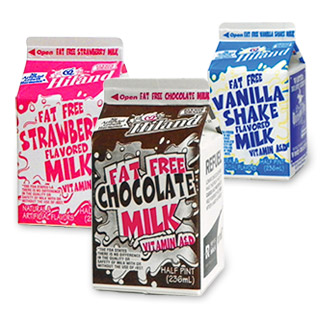
In the United States, most students are rushed through their meals and on average only get ten minutes to eat during their lunch period. The food provided is not nutrient-rich. Schools that do not have mandated food suppliers contract out to food management companies that care more about the profits to be gained from schools than the quality of the meal that they are providing. In 2010, the United States instituted the Healthy, Hunger-Free Kids Act. This was the first major change to nutrition in schools in over fifteen years. The act mandated less junk food and processed sugars, but the country has seen little change in the quality of its school lunches since the implementation of the act (USDA, 2017).
An example of a typical school lunch served in America is shown below. (American Lunchroom, 2012).

School Lunches in France
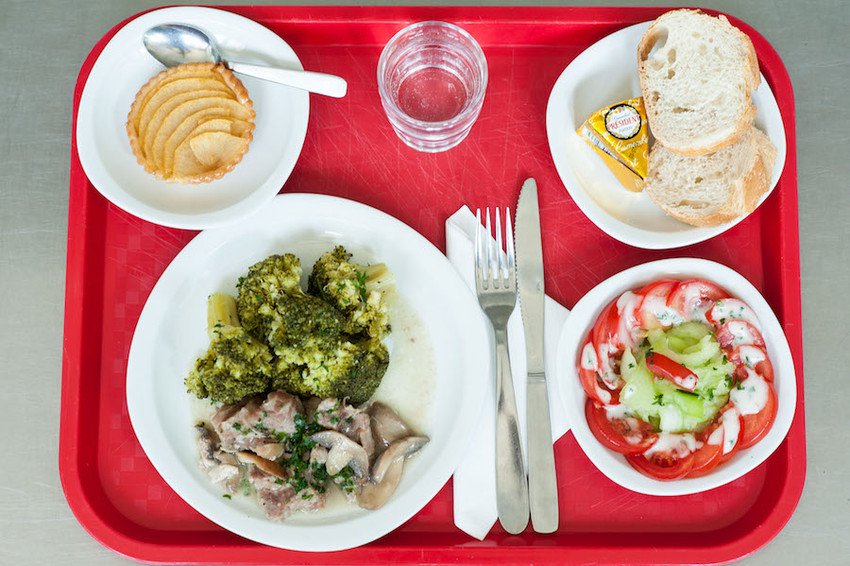
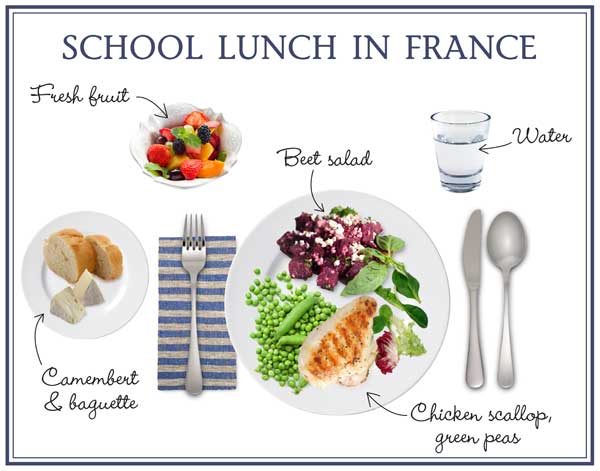
The French school lunch program is different from the American school lunch program in several ways. France is one of the few European countries that has mandated requirements for what can be served at school lunches (Vieux, Dubois, Duchêne and Darmon, 2018). New guidelines became mandatory in France in 2011, which included fifteen frequency criteria that mandated how often certain dishes could be served in school lunches each month, or every twenty meals served (Vieux, Dubois, Duchêne and Darmon, 2018). An example of one of these criteria is “starters containing more than 15% fat served no more than four times out of 20” (Vieux, Dubois, Duchêne and Darmon, 2018). These guidelines also standardized the general format of meals and the portion sizes served (Vieux, Dubois, Duchêne and Darmon, 2018). Additionally, the French Ministry of Education set guidelines about what can and cannot be served at lunch. Some of the guidelines include vegetables and fruit required at every meal, alternating between raw and cooked; fried food, ketchup, and sugary desserts can only be served once per week; and vending machines are forbidden (Le Billon, 2012).
An example of a typical school lunch served in France is shown below. (Roberts, 2014)
Do Prisoners in the United States Eat Better than its Schoolchildren?

On the left of the graphic is the average meal given to a prisoner while on the right is the average meal given to a student by the school for lunch. There are many visible differences between the two trays. The prisoner’s tray is filled with an array of foods including fresh foods and vegetables, starch, protein and a carbohydrate with a plain beverage. The student’s tray is filled with a fried starch item, fruit soaked in sugar syrup, milk and a slice of pizza that contains some meat. As seen by the graphic, prisoners get better quality and more nutritious food than schoolchildren. The average cost of a meal in prison to the government is $2.62 while the average cost per child for a school lunch to the government is $2.68. For the added cost, it is obvious that children are not getting the nutrition that they deserve (Know Your Meme, 2018).
Differences in Agricultural Systems
There are some major differences between the way that the American and French agricultural systems are structured, which influences how food is distributed in the two countries and how school lunch programs are funded.
The United States Department of Agriculture (USDA) funds America’s school lunches (Le Billon, 2012). Over 30 million school lunches are served each day (Le Billon, 2012). In America, subsidies are given to certain children based on their family’s household income so that school lunches can be more affordable for them. The American system receives discounted food from farmers that it uses for the school lunch program, which results in the program favoring corn, soy, potatoes and processed foods instead of fresh fruits and veggies, because it is less expensive to get these foods discounted from farmers than to spend more money on fresh fruits and vegetables (Le Billon, 2012). Spending less money on school lunches gives a bigger profit to the USDA.
Both French municipal and national governments pay for school lunches (Le Billon, 2012). In France, over 6 million school lunches are served every day (Le Billon, 2012). Like the United States, subsidies are given to children based on their household income so that school meals can be more affordable.
Lunches are often subsidized down to a minimum cost of $0.18 in France (Le Billon, 2012). Since France is not focused on maximizing the profit to made off of school lunches, like the United States, the quality of food is much better. The average French school lunches contain fresher food with more fresh fruits and vegetables than the United States. France has clear regulations on what can and cannot be served (Le Billon, 2012). In France, school lunches commonly have three courses.
Is There a Difference in the Quality of School Lunches in High and Low Income Communities?
France:
In France, there is no difference between school lunches that are offered in high income vs. low income communities within the country. France does an excellent job of providing nutritional foods to all of it’s students no matter their economic status. If a child is overweight, it is more likely because of outside factors such as a child’s diet at home and the amount of exercise they get on a regular basis (Karenlebillon.com, 2012).
United States:
In the United States, there is a large gap between the quality of school lunches in low income vs. high income communities within the country. The following image is an example of a school lunch in a low income community of Colorado (Gonzalez, 2016).

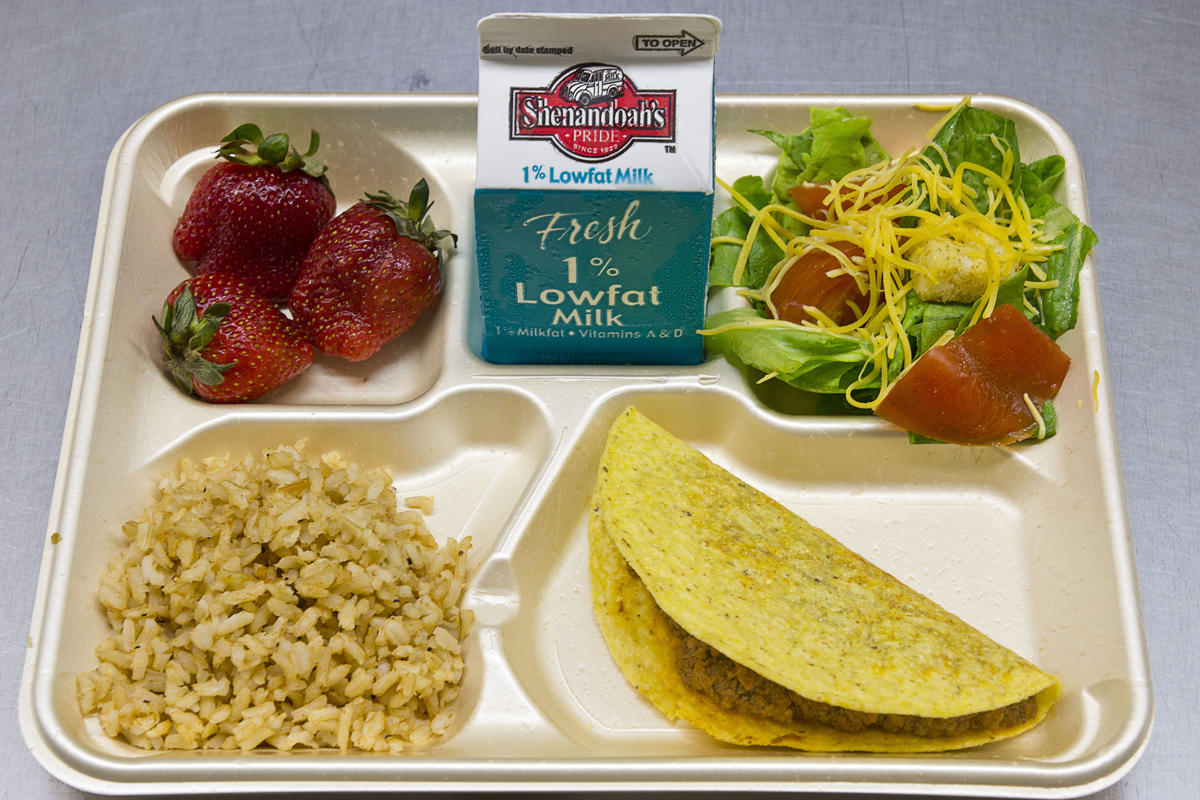
The children were served frozen strawberries, an unripe pear, burnt bread, undercooked chicken, milk with added sugar and no french fries because the cafeteria ran out. The parents of the child who took the photo requested permission from the school board to go to neighboring towns and see what the children were being served during lunch. They found that children in affluent communities got more nutritious and better quality food than their lower-income community counterparts. The following image is what a school lunch looks like in an affluent neighborhood in Wyoming that does not need government subsidies to purchase food. As depicted below, the school lunch has brown rice, fresh fruits, vegetables and milk with less fat. In comparison, this lunch is much healthier and appetizing than the one in the picture above from Colorado (Schrank).
Nutritional Education
The education about nutrition that you receive as a child can influence your dietary choices as an adult. Nutritional education can be formal, like a chart explaining portion sizes and the number of servings of fruit needed per day, or it can be informal, like showing children what a healthy portion size looks like during lunch time at school. A report from the European Union Action Plan on Childhood Obesity states that having healthy school lunches can cause better eating habits, decreased rates of child obesity, better school attendance and performance, reduced disparities between children of different economic classes, and increased knowledge of children about healthy eating (Vieux, Dubois, Duchêne and Darmon, 2018).
FRANCE
 In France, there is a nutrition awareness program called “Manger Bouger”, which translates to “eat and move”. This program is similar to the “Food Pyramid” in America (American Society for Nutrition, 2017).
The Manger Bouger program is part of a larger governmental organization called le Programme national nutrition santé, or PNNS. This program deals with national nutrition and health issues.
The program was created in 2001 with a goal to improve public health and reduce disease (American Society for Nutrition, 2017). The French nutritional education system in schools provides health lessons to students from kindergarten all the way to high school (Vilian, 1984). The program teaches kids how to maintain a healthy and varied diet by teaching about food groups and portion sizes.
AMERICA
In America, all schools that are part of the National School Lunch Program have to follow guidelines for nutritional education (Beckwith). The Richard B. Russell National School Lunch Act set the following guidelines for school lunch programs: (Beckwith)
|
Set goals for nutritional education, physical activity, and other activities to promote school wellness |
|
Make nutrition information available for all foods and beverages offered during the school day |
|
Invite parents, students, representatives, and other school staff to participate in wellness policy development, implementation, and updates |
|
Inform and update the public community about content of school wellness policies |
|
Periodically measure compliance with all school wellness policies (Beckwith) |
Additionally, the Nutrition Education Act requires each student to receive 50 hours of nutrition education per academic year (Beckwith). Although the National School Lunch Act requires schools to provide nutritional education, many schools do not actually follow these rules, resulting in the low quality of school lunch and nutritional education programs in the United States. “ChooseMyPlate” and the Food Pyramid are often taught in health classes, but health class programs vary greatly depending on the school and the state.
UNH
At UNH, the Wildcat Plate was introduced in June 2012 (UNH Today, 2016) in an effort to promote healthy eating as part of a healthy lifestyle. The plate helps students control portion sizes when eating in the dining halls. UNH also offers healthier options in dining halls, such as vegan and vegetarian options, a daily salad bar, and healthier dessert options. To help students keep track of the food they are eating, cards are placed in front of each dish served that contain calorie count and other info about that particular food. Nutritionists are available to discuss eating habits and dietary needs with students, and UNH Health and Wellness Eating Concerns mentors are available for students who have concerns about their diets.
Conclusion:
While there are certain similarities between the diets of French and American children, there are also many differences. Some of the similarities include the presence and structures of nutritional education programs for students, and the government involvement in school lunch regulations. Some of the differences include the priorities the two countries place on school lunches (the United States tends to prioritize keeping the cost of the food served low, while France tends to prioritize the nutrition and quality of food served); the types of foods children eat (focus more on a varied diet with plenty of fruits and vegetables and smaller portions in France, versus the high-fat, high-sugar, low-veggie diet of Americans); how obesity rates are changing (maintaining a steady rate in France versus continually increasing in the United States); breastfeeding rates (lower in France throughout history than in the United States, and the French government’s involvement in increasing the breastfeeding rate in the recent past); and differences in diets and school lunch quality between economic classes (happens in the United States, but not as much for school lunches in France).
Sources:
Beckwith, Sara. “Nutrition Education in America's Schools: A Policy Brief.” An Act to Improve the Health of America's Youth through Nutrition Education in Schools (H.R. 3800), asphn.org/wp-content/uploads/2017/10/2016-Nutrition-Education-in-Americas-Schools.pdf.
Billon, Karen Bakker Le. “Prêt-à-Manger: Why the French Have Their Cake and Eat It, Too.” Oral History Review, Oxford University Press, 22 Mar. 2012, muse.jhu.edu/article/469400.
Blogger, ASN. “The French Approach to Nutrition.” American Society for Nutrition, ASN Blogger Https://Nutrition.org/Wp-Content/Uploads/2016/10/Asn-Logo-2.Gif, 23 Aug. 2017, nutrition.org/french-approach-nutrition/.
“Breastfeeding.” Centers for Disease Control and Prevention, Centers for Disease Control and Prevention, 20 Aug. 2018, www.cdc.gov/breastfeeding/data/reportcard.htm.
“Breastfeeding Norms Around The World.” Well Rounded NY, 7 Apr. 2017, wellroundedny.com/breastfeeding-norms-around-world/.
BuzzFeed. “School Lunches Around The World.” YouTube, YouTube, 8 Oct. 2014, www.youtube.com/watch?v=Po0O9tRXCyA.
Enserink, M. “EDUCATION: France Launches Public Health School a L'Anglo-Saxonne.” Science, vol. 319, no. 5862, 2008, doi:10.1126/science.319.5862.397a.
“France.” Department of Health | Discussion of the Four Key Health Issues, www.health.gov.au/internet/publications/publishing.nsf/Content/int-comp-....
“French Childhood Obesity Trends Downward as Global Rates Rise.” France 24, France 24, 12 Feb. 2017, www.france24.com/en/20170212-french-childhood-obesity-trends-downward-gl....
“French School Lunch Menus.” Karenlebillon.com, 18 Mar. 2012, karenlebillon.com/french-school-lunch-menus/.
“French Women Least Tolerant towards Public Breastfeeding.” YouGov, today.yougov.com/topics/lifestyle/articles-reports/2013/09/11/french-women-least-tolerant-public-breastfeeding.
Gonzalez, Brendaliss. “Moms Say Kids Being Served 'Unfair' School Meals.” 7NEWS, 27 Aug. 2016, www.thedenverchannel.com/lifestyle/health/parents-say-students-in-low-in....
“How School Lunches Can Benefit Your Child.” EXtension, Extension, 15 Aug. 2017, articles.extension.org/pages/68807/how-school-lunches-can-benefit-your-child.
“‘I Hate School Food’ | Infographic Dumps.” Know Your Meme, 22 Feb. 2018, knowyourmeme.com/photos/550982-infographic-dumps.
Langer, Gary. “POLL: What Americans Eat for Breakfast.” ABC News, ABC News Network, 17 May 2005, abcnews.go.com/GMA/PollVault/story?id=762685.
Lucia, Carole Anderson. “The Benefits of Breastfeeding.” Parents, Parents, 18 Sept. 2018, www.parents.com/baby/breastfeeding/basics/the-benefits-of-breastfeeding/.
“Macaroni and Cheese.” American Lunchroom, 8 July 2012, americanlunchroom.wordpress.com/.
Melvin, Joshua. “Why Don't Many French Women Breastfeed?” The Local, The Local, 7 Oct. 2014, www.thelocal.fr/20141007/french-very-unlikely-to-breast-feed.
Nacamulli, Mia. “How the Food You Eat Affects Your Brain - Mia Nacamulli.” YouTube, TedEd, 21 June 2016, www.youtube.com/watch?v=xyQY8a-ng6g.
"Obesity Update 2017". Organization for Economic Cooperation and Development. 2017. https://www.oecd.org/els/health-systems/Obesity-Update-2017.pdf
Plantier, Rebeca. “7 Ways French Women Do Childbirth & Breast-Feeding Differently.” Mindbodygreen, Mindbodygreen, 13 Oct. 2015, www.mindbodygreen.com/0-21921/7-ways-french-women-do-childbirth-breastfe....
Roberts, Jeffrey. “What French Kids Eat For School Lunch Puts American Lunches To Shame.” Collective Evolution, 1 Oct. 2014, www.collective-evolution.com/2014/10/01/what-french-kids-eat-for-school-....
“School Meals.” Food and Nutrition Service, USDA, 5 Oct. 2017, www.fns.usda.gov/school-meals/healthy-hunger-free-kids-act.Thomas.
Schrank, Aaron. “Federal Dollars No Longer On The Lunch Menu In Some Wyoming Schools.” Wyoming Public Media, www.wyomingpublicmedia.org/post/federal-dollars-no-longer-lunch-menu-som....
“The Stigma of Breastfeeding in France.” Women Across Frontiers Magazine, 15 Oct. 2016, wafmag.org/2016/10/stigma-breastfeeding-france/.
Vieux, Florent; Dubois, Cristophe; Duchêne, Christelle; Darmon, Nicole. "Nutritional Quality of School Meals in France: Impact of Guidelines and the Role of Protein Dishes". Nutrients. 10 Feb 2018. https://www.ncbi.nlm.nih.gov/pmc/articles/PMC5852781/
Vilian, C. "In France, school health education". (translated) Hygie. 4 Dec 1984. https://www.ncbi.nlm.nih.gov/pubmed/6510919
Whitaker, Hannah. “What Kids Around the World Eat for Breakfast.” The New York Times, The New York Times, 8 Oct. 2014, www.nytimes.com/interactive/2014/10/08/magazine/eaters-all-over.html.
“Wildcat Plate.” UNH Today, 27 Jan. 2016, www.unh.edu/healthyunh/wildcat-plate.