A COMPARISON of FRENCH vs AMERICAN CHOCOLATE
By: Sonnet Agran-St. Pierre, Ibrahima Camara, Matt Murray, Liz Osuchowski, Doug Redshaw, and Sydney Snelling
History of Chocolate in France
Everyone loves chocolate, particularly the French who are world renowned for their use of chocolate. This is why it is so surprising that chocolate was not introduced to France until 1615. Anne of Austria brought the chocolate as a gift to her husband-to-be Louis XIII (A Love Story). Chocolate was very expensive and rare during this time and was really only accessible to the nobility and bourgeoisie. Hot chocolate in particular was popular to the French Court. Kings and queens would appoint their favorite chocolatier to create unique hot chocolate recipes for them (Marsh).

Anne of Austria
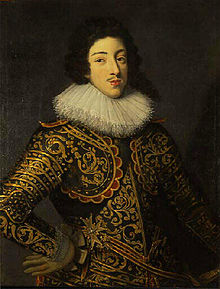
Louis XIII
Louis XV was considered the greatest lover of hot chocolate and would even prepare his own hot chocolate he was so fond of it. Louis XV created his own recipe for hot chocolate which was passed down from generation to generation of French nobility.
“Place the same quantity of chocolate bars and glasses of water in a coffee maker and boil gently; when you are ready to serve, place one egg yolk for four servings and stir over a gentle heat but do not boil. If prepared the night before, those who drink it every day leave a leaven for the one they make the next day; instead of an egg yolk you may use a whisked egg white after having removed the first mousse, mix it with some of the chocolate from the coffee maker then pour back into the coffee maker and finish the preparation as with the egg yolk,” (Marsh)

Louis XV’s special cups for tasting hot chocolate
King Louis XV would serve his hot chocolate to his lover: Madame du Barry. Special cups and pots were made that allowed for the hot chocolate to be enjoyed to its maximum potential. In proper settings the hot chocolate was sipped delicately for maximum enjoyment.
Marie Antoinette brought her own chocolatier with her when she moved to Versailles to join Louis XVI. Marie Antoinette was a firm believer in chocolate medicine and ordered her chemist to make chocolate pistoles whenever she took a bitter medicine.
It is because of Marie Antoinette that pharmacists, or chemists as they were known at the time, began to praise the benefits of chocolate in France. The support of the French chemists allowed for the development of equipment to speed up production of chocolate, which allowed for it to become accessible to the masses (Chocolate History).
In the 19th century chocolate finally became available to the public. Chemists were still the largest consumers of chocolate because of its medicinal usage. Menier was one such pharmaceutical company that championed the medicinal uses of chocolate. Menier targeted children by showing that they could add something sweet to their medicine to make it taste better. Over the course of the 19th century Menier transformed their company to only chocolate and was eventually purchased by Hersheys in the 20th century. The early 20th century brought the rise of chocolate shops, however chocolate was still very expensive at the time (History of Chocolate in France). Chocolate was often given as a fine gift because of its expense. Today chocolate is still a common gift for holidays and birthdays in France (Marsh).

Pharmaceutical company ad for chocolate in France
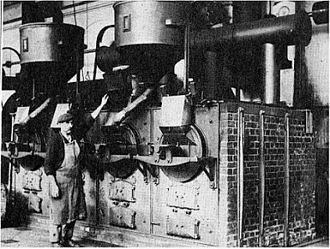
Chocolate Machinery
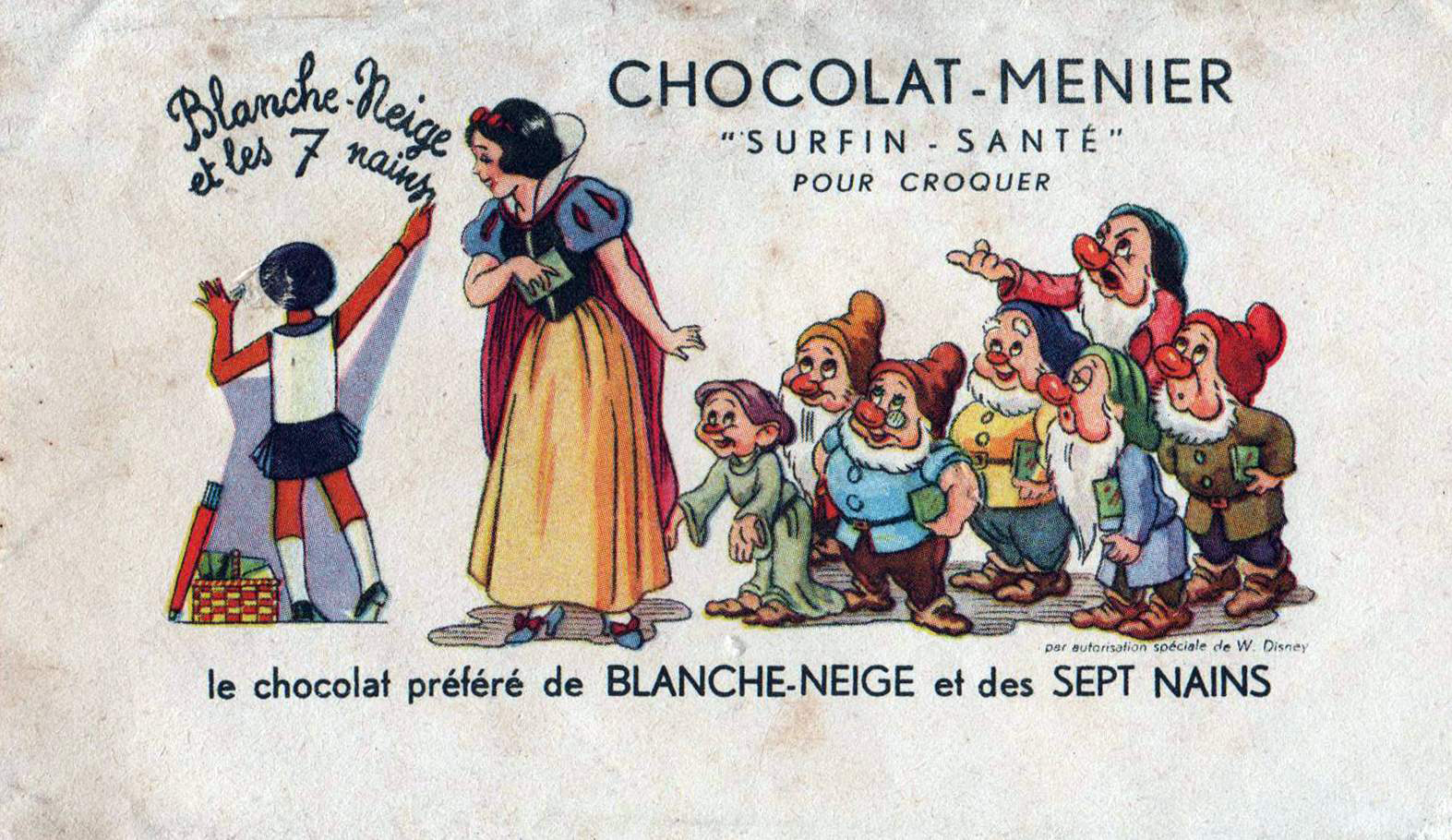

Children’s advertisements for Menier chocolates
American Chocolate Companies
Hersheys
Hershey’s was founded by Milton S. Hershey in 1894, introducing Hershey’s Cocoa as their first product.
He set out to create a delicious affordable chocolate for all, building the companies first factory in 1900. For hundreds of years chocolate was something which was previously reserved only for the wealthy. Trying to give his workers a better quality of life in 1903 Hershey built a model town which had a trolley system, schools, and affordable housing, and even a zoo.
Continuing to care about the well being and quality of life of his workers, Hershey built a Hershey Park in 1906 so workers and their families could relax and play together in their free time.
In 1907 Hershey's Kisses milk chocolate were first introduced, each one being individually wrapped by hand. In 1909 the Milton Hershey School opened, giving young orphaned boys an education and decent, happy lives.

Milton S. Hershey
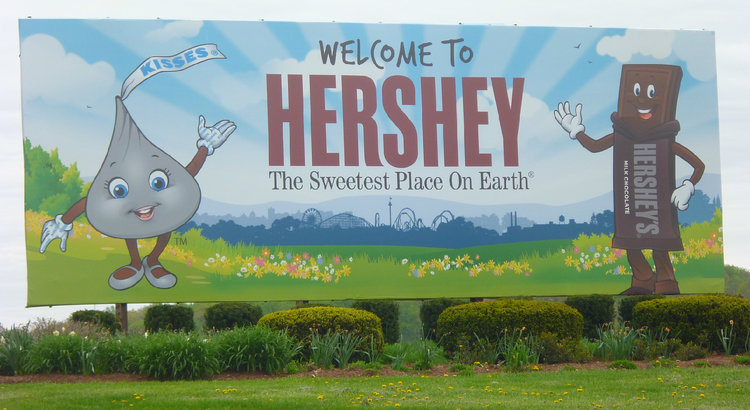
Welcoming sign seen entering Hershey, PA

An original ride at Hershey Park
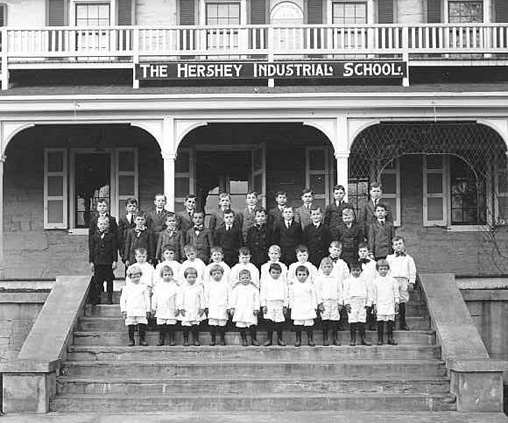
The Hershey Industrial School
In 1926, Hershey Chocolate Syrup began being sold, allowing children to enjoy chocolate milk quick and easy whenever they please. Before Hershey died he entrusted his entire fortune to ensure his company, town, charitable institutions, and schools were well cared for. Today, Hershey’s headquarters still resides in Hershey, Pennsylvania, however it is now a multi billion dollar company employing nearly 15,000 people.
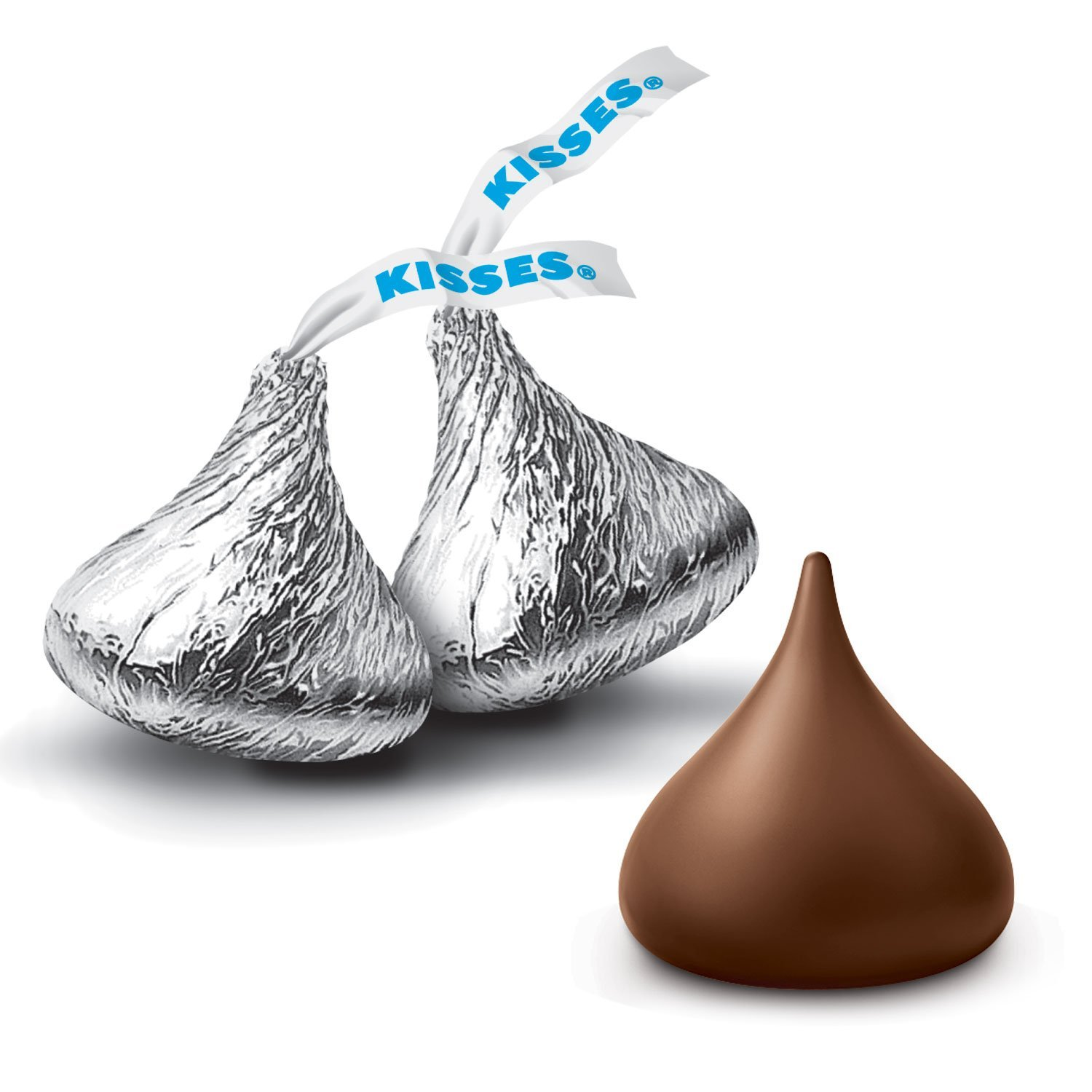

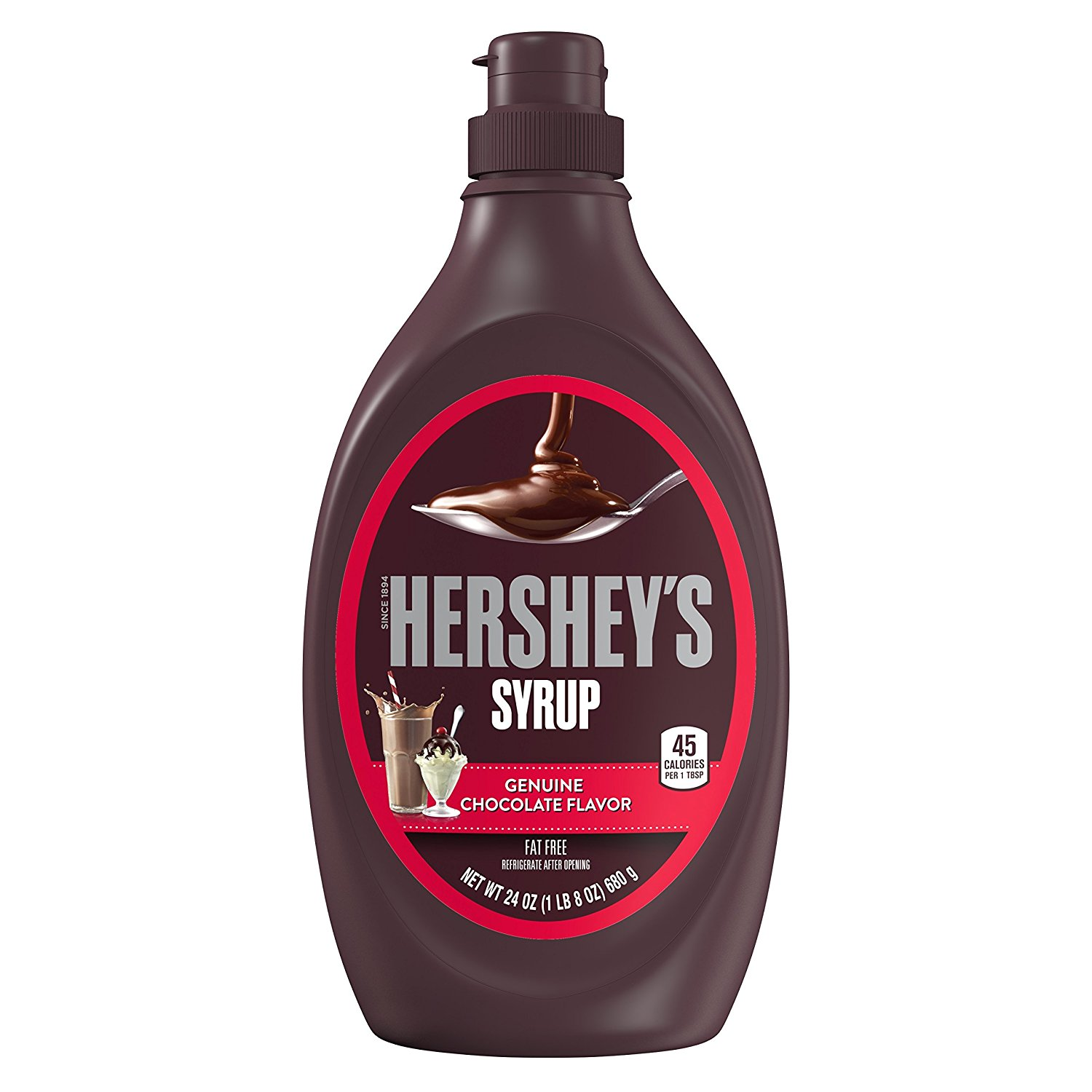
A few of Hershey’s most popular products
Mars
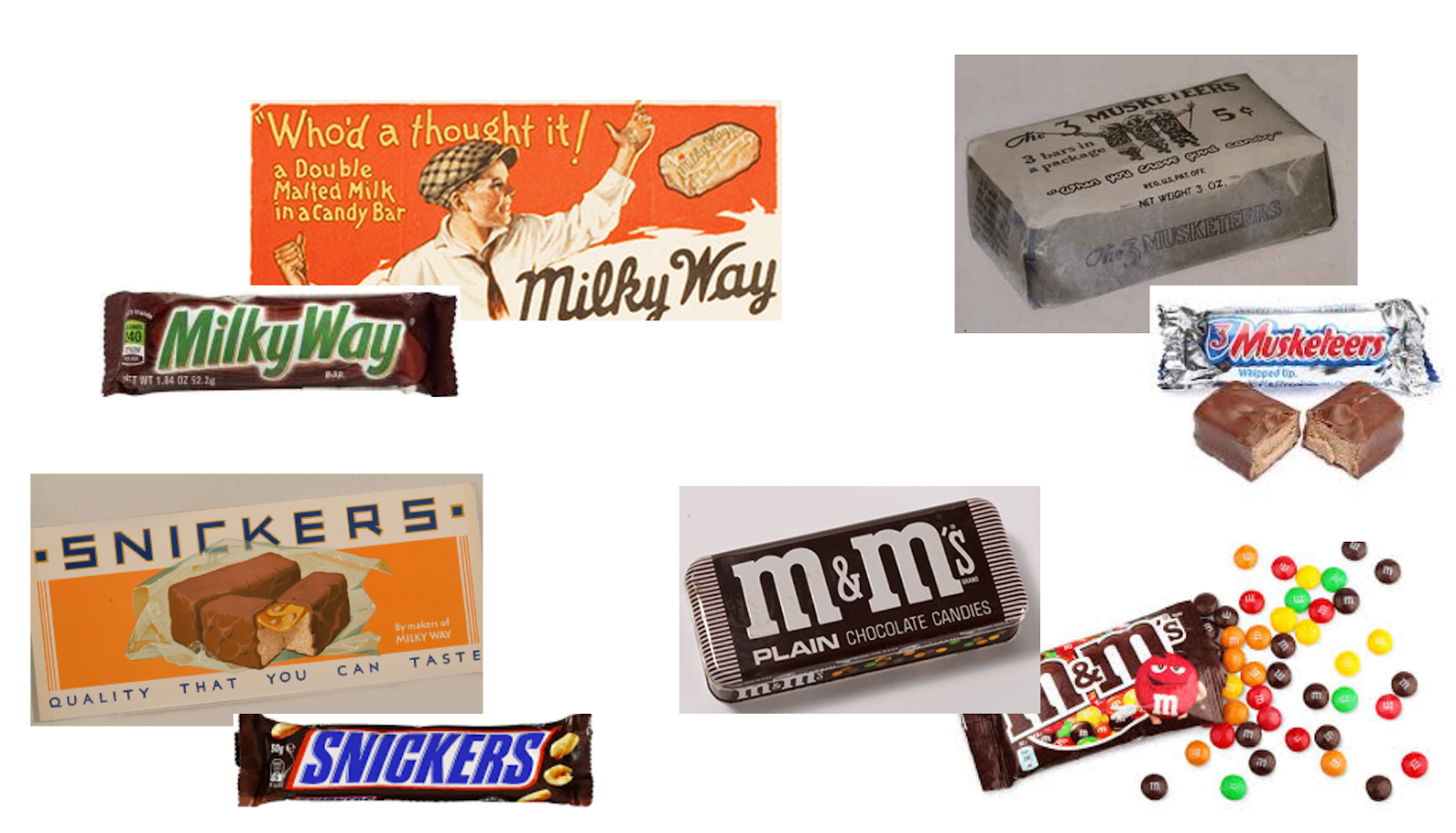 Mars is Hershey’s biggest competitor, raking in a whopping $35 billion and employing 80,000 people, according to Forbes 2017 list of America’s Largest Companies list. However, these sales numbers are not exclusively chocolate, as Mars is the owner of many other brands and produces a variety of food and animal products. Mars got its start just a few years after Hershey’s with Frank C. Mars making and selling butter cream candies out of his kitchen in 1911. Some of the candy we all know and love today are products of Mars. The Milky Way Bar was invented in 1923, Snickers in 1930, Snickers in 1932, and M&Ms in 1945. M&Ms were originally made for the US Military in 1941 during WWII, becoming available for the public in 1945.
Russell Stover
 Russell Stover is leading the nation in boxed chocolates coming in as the third largest American chocolate manufacturer behind Hershey’s and Mars. Currently accounting for 60% of all boxed chocolate sales in the US, and manufacturing nearly 100 billion pounds of chocolate annually.
Russell Stover was founded in 1923 by Russell and Clara Stover, when they started packaging and selling boxed chocolates out of their home. The company was actually originally named, "Mrs. Stover's Bungalow Candies", and wasn’t renamed to Russell Stover Candies until 1943. In 1969 the company was bought by Louis Ward, who transformed the company from a regional to a worldwide brand. They acquired Whitman’s in 1993 and Pangburn’s in 1999 and were acquired by Lindt and Sprungli in 2014.

Russell and Clara Stover

Whitman’s sampler box of assorted chocolates
French Chocolatiers
The very first French chocolate industries were established by Jewish people. After the Jewish community fleed Portugal in the early 16th century to escape the persecution they were facing from the Spanish Inquisition. The community landed in Bayonne, France, where they established the first chocolate factories and taught the French community all they knew about chocolate, until they were thrown out towards the end of the 17th century. Jean-Michel Barate, who’s very well known in France, is the head of Chocolate Academy and CEO of Bayonne chocolate firm said that “ ...after they introduced chocolate in France, Bayonne Jewry was gradually evicted from the chocolate industry in the 17th century by the very people who had learned everything from them.” This is a very important piece of the French chocolate history and it origins that everyone should be aware of.
Some well known French chocolatiers and companies are Patrick Roger, Valrhona, Cazenave, and Richart. Patrick Roger, is one of the most respected chocolate makers in France. He is mostly known because of his skills of crafting chocolate into sculptures. Patrick won the World Chocolate Cup in 1994, which is the most prestigious and recognized awards you can achieve in the chocolate industry.
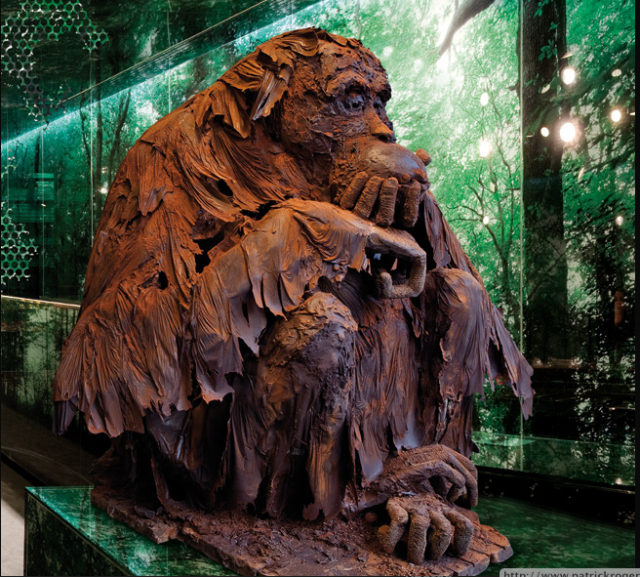
Chocolate Sculpture
 Valrhona is a company established in 1922 by Albéric Guironne in Ardéche, France. The company has changed its name numerous time. It was originally called Vivarais in 1922, then Chocolate of Gonnet in 1938, and then finally changed to Valrhona since 1947. Albéric’s motto is “use the best to make the best”, his uniqueness is that he would try to involve all five senses in the process of creating chocolate.
Cazenave was founded in 1854 by Martin Pierre in Bayonne, France. His products are recognized to be the finest quality of chocolates in France. They are made out of beans that are specially imported from South America and the Caribbean. The formulas and recipes have been consistent and popular making them successful and passing down the recipes generation after generation.
Joseph Richart opened his own chocolate company in Crox Rousse Hill in Lyon. His chocolate are created in seven different flavored themes known as families: Balsamic, Roasted, Fruity, Curtis, Herbal, and Spice. Each of these themes have different flavors within them, which are used to classify the variety of chocolates being created. Joseph’s recipes have won “Le Ruban Bleu” seven times, which is France’s most prestigious confectioners award.
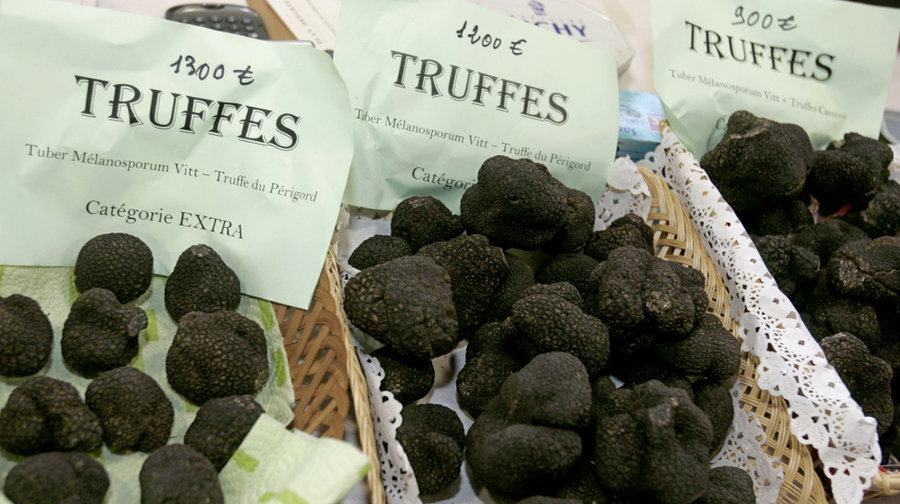
French Specialty Chocolates
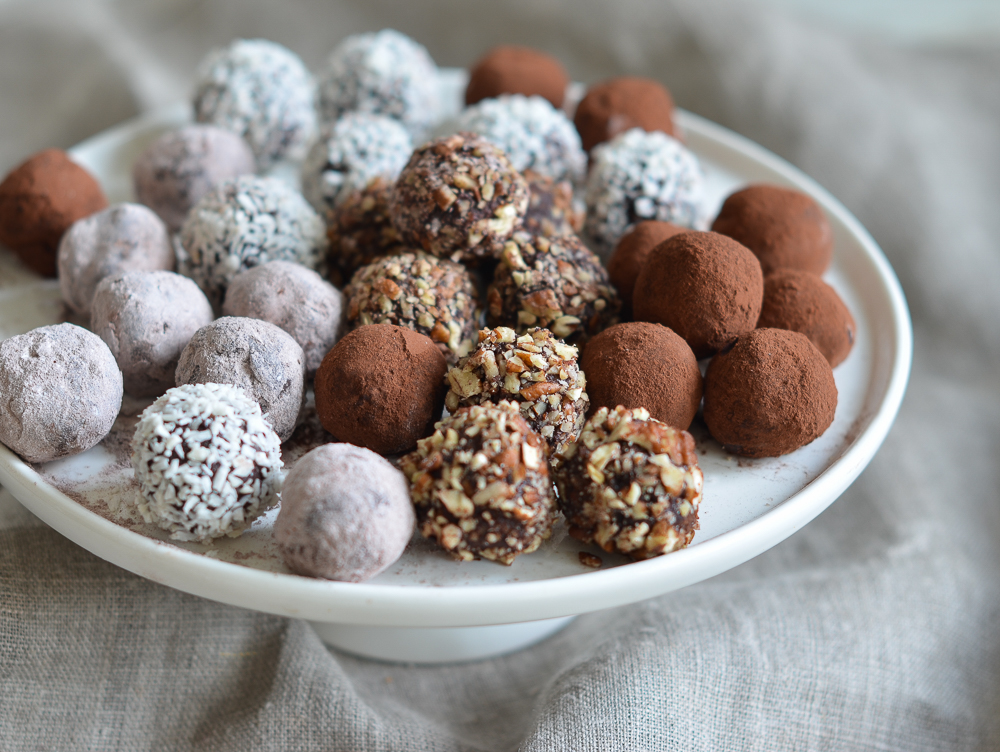
One of the most well know French chocolate specialties is the chocolate truffle. Traditionally a truffle is classified as a ball of ganache rolled in a chocolate powder. The French started calling these confectionary delights truffles for their stark resemblance to the famed truffle mushroom. As you can see in the photos here the two have a striking resemblance.
Over the years recipes have changed and new traditions have been made, however one thing has stayed true; there shall be no fruit or whipped cream in a truffle. Candies you receive in a box that have a fruit or cream filling would not actually be classified as truffles. Some of the more cavalier chocolatiers have been known to roll the ganache in crushed peppercorn and cocoa powder which gives eaters a unique blend of spicy, yet rich sweetness.

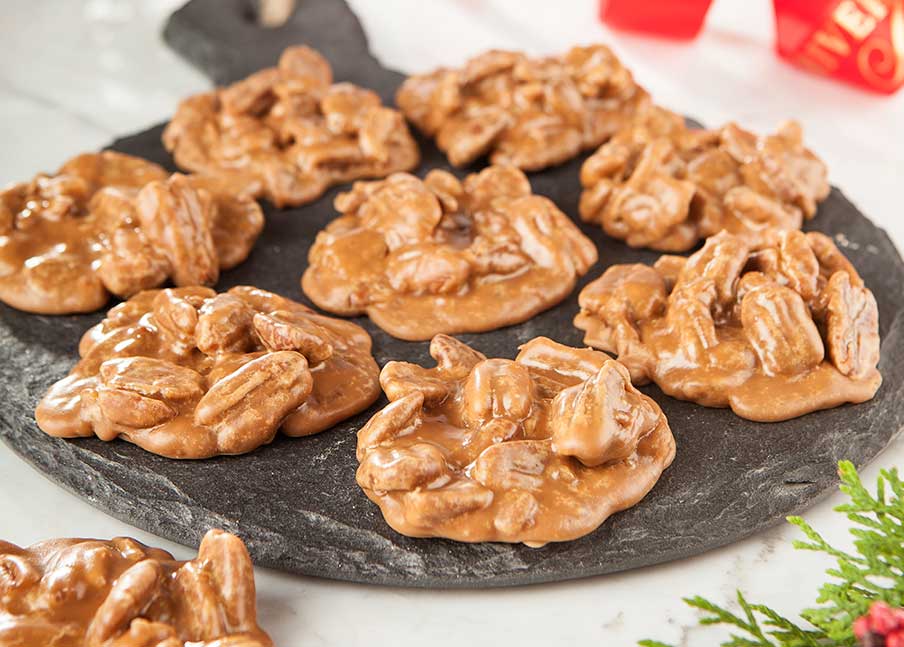
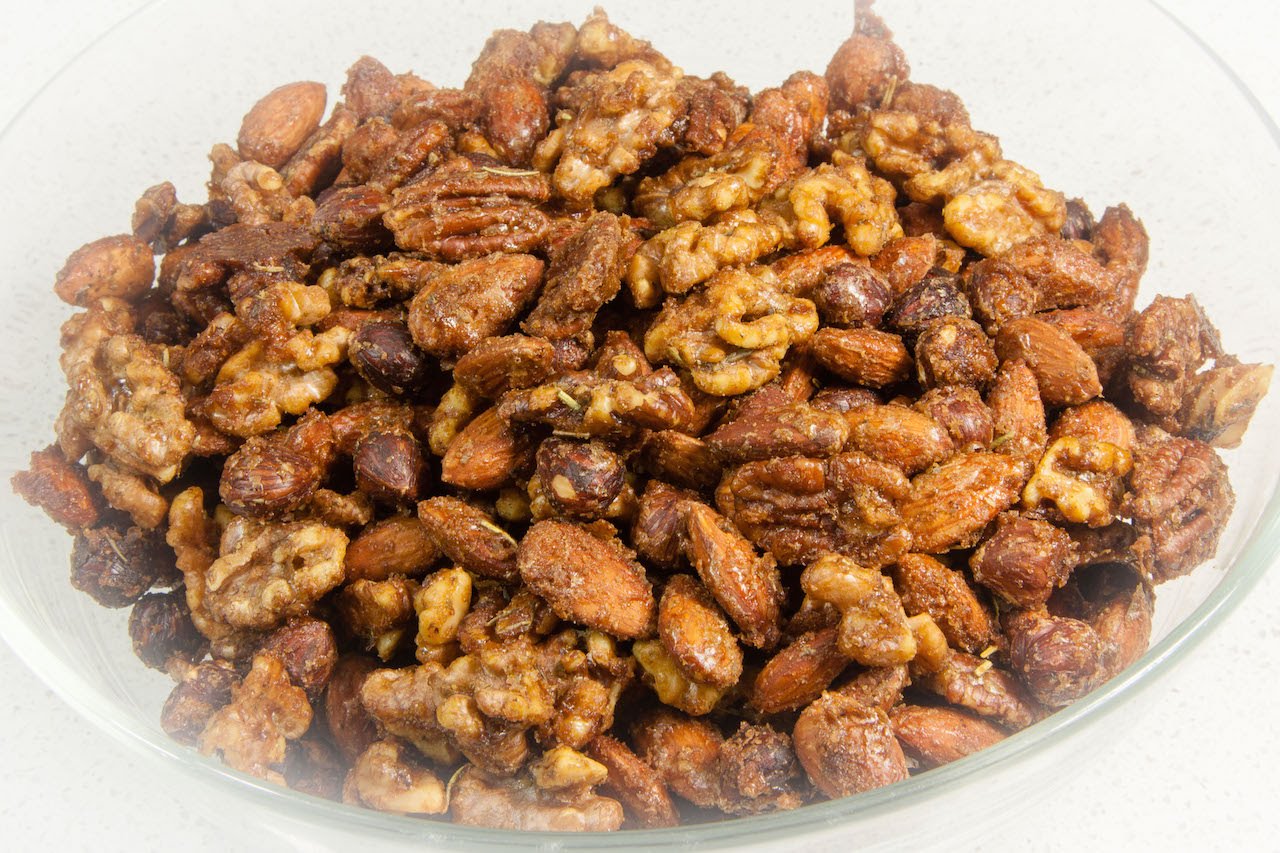 Another French specialty is the praline. Today pralines are more of a chocolate treat, however they were not always like that. There is much debate over how or who invented this treat. One of the common explanations is that a clumsy apprentice was stirring a vat of caramel when he accidentally knocked a jar of almonds into the vat, thus creating a sugary coated almond. One of the more creative invention stories is that of Count Plessis-Praslin who asked his chef Clement Lassagne to create a sweet treat that the women he wished to court could not resist. Rumor has it that Lassagne then created it and named it after his employer. Today in France the praline is very similar to the truffle, with crushed nuts and chocolate surrounded by a chocolate shell.
Pralines in the United States have stayed quite similar to the original. The recipe was brought to the United States by the Ursuline Nuns when they came to educate the new French region of North America. They have however since switched to using the native pecan rather than the more expensive almond.


Chocolate Recipes
Chocolate plays a very large part in both the French and American food cultures. So below we have embedded videos that include recipes and live video tutorials on how to prepare the different chocolate recipes. Scroll down to view videos with recipes for Mousse au Chocolat, Gâteau au Chocolat, and Truffes au Chocolat. Best of luck not craving chocolate after watching these.
Mousse au Chocolat
Gâteau au Chocolat
Truffes au Chocolat
Chocolate Truffles Recipe - Bruno Albouze - THE REAL DEAL
How it’s Made
The Cacao Tree
Cacao trees are native to the tropical regions of Central and South America, and only produce fruit twice a year. The cacao pod is harvested off the tree, and then split open to gather the seeds. The seeds are dried and fermented for about a week and a half to become cacao beans.

Cocoa Pods

Cocoa Pods
Roasting
The cacao beans can either be roasted in their shells or shelled and then roasted. Different times and temperatures when roasting, allow for different flavors to develop in different beans. In pre-roasting, the beans are very quickly heated to separate the meat from the shell, then fully roasted at 100-150℃. In direct roasting, the beans are roasted in their shells and then shelled after. This method is older, and it allows the flavors to develop properly. After the cacao beans are roasted, they are now cocoa beans.


Examples of Roasting Cocao Beans
 Shelling/Milling
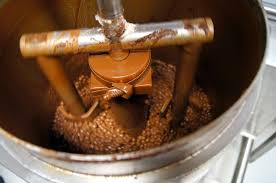
Shelling the cocoa beans happens after or during roasting, depending on the roast desired. The meat is separated from the shell, and then crushed into smaller pieces to prepare for milling. In the milling process, the crushed beans are broken into even smaller pieces, and the shell fragments are removed. After milling, the meat of the beans are now considered cocoa nibs.
 Refining
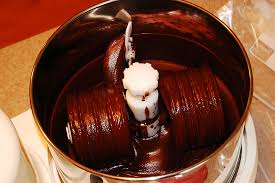
During the refining period, the dry milled beans are converted into liquid. The cocoa butter within the beans allows the dry beans to bind into a thick substance, unsweetened chocolate. Refining chocolate is very similar to the grinding of peanuts into peanut butter.
Examples of Refining
Conching
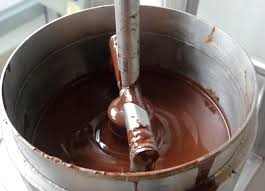
When the chocolate is conched, the mixture is slowly stirred and extra cocoa butter is added to make a smoother consistency. The mixture starts as a thick paste and ends in a satiny chocolate consistency. This is the time that other ingredients like milk and sugar are added into the chocolate.

Tempering
When tempering, chocolate is heated and stirred consistently. The chocolate is heated until cocoa butter crystals completely melt, then carefully cool. This process allows the chocolate to stay firm to the touch, but melt in the mouth. Properly tempered chocolate is smooth and glossy, snaps when broken, gives smooth texture when eaten, and gives off a chocolaty flavor and aroma. Incorrectly crystallized chocolate results in fat bloom, or a grey/white film on the surface. As does incorrectly stored chocolate. This fat bloom is not harmful but looks and feels bad in the mouth.


Molding
Chocolate is poured into vibrating molds to release any air bubbles and ensure an even distribution. The molds are then sent through a cooling tunnel, and the chocolate is removed and packaged.


European v. American
Is one chocolate better than the other? Really it is all a matter of taste preference. There are four distinguishing factors affecting the difference in taste of chocolate between American and European Chocolate; cocoa content, sugar content, fat content, and difference in where they acquire their cocoa beans.
Cocoa content: the United States requires a lesser percentage of cocoa in their chocolates. The US only requires 10% to be cocoa while Europe require chocolate to have at least 20% of cocoa. American Hershey's tastes much different from a British Cadbury bar since Hershey's has 11% cocoa content while Cadbury has 23% cocoa, resulting in a much darker, richer taste.
Sugar content: since American chocolate has less cocoa content they therefore have more sugar content. Which is why Americans are more known for lighter sweeter chocolate, while Europeans are known for their richer more bitter chocolate.
Fat content: Europeans and Americans also add varying levels of cocoa butter and cream to their chocolates. Europeans use European butter and cream which has a higher fat content which results in a smoother, richer flavoring. Further highlighting the smoothness of the chocolate Europeans use more butter cream, further accentuating the difference in tastes.
Difference in where they get their cocoa beans: Americans tend to get beans from South America, whereas Europeans tend to get beans from West Africa. Different beans therefore result in different flavors. The quality of a bean and whether they were correctly processed to bring out the proper flavors are both important in producing an overall delicious chocolate flavor.
Therefore, it truly all comes down to a matter of taste preference. Americans have sweeter lighter chocolates; using a smaller variety of ingredients such as caramel, almonds, peanuts, and chocolate cream. European chocolate, in comparison, is darker and richer. Its ingredients could be anything from fruits, nuts, spices, and herbs, to caramels, ganaches and more.
Types of Chocolate
Typically when eating chocolate people tend to prefer a sweet milk chocolate or a more bitter dark chocolate. But there is also semisweet chocolate often seen in chocolate cookies or muffins and an unsweetened chocolate used to make cakes and other specialty desserts, but never eaten alone. But what exactly makes all these chocolate so different?
Unsweetened, bittersweet, and semisweet chocolate typically consists of cocoa liquor, cocoa butter, sugar, with milk and white chocolate containing milk or cream in them as well. Chocolate flavor mostly comes from the cocoa bean, a ground bean is referred to as chocolate liquor, coming from the solid particles and fat, also known as cocoa butter. The highest percentage of cocoa bean is referred to as unsweetened chocolate which is not very enjoyable to eat. Cocoa percentage decreases as sugar increases, along with the percentage of milk products in milk and white chocolate.
References
History of Chocolate in France:
“The History of Chocolate in France.” Marsh, Janine. The Good Life France, 27 May 2014, www.thegoodlifefrance.com/history-chocolate-france/.
“The History of Chocolate in France.” Roy Chocolatier, 11 July 2017, www.roy-chocolatier.com/news/facts-chocolate/history-chocolate-france/.
Richart. Chocolate History - RICHART Chocolate, www.richart-chocolates.com/chocolates/static/chocolate-history.
S.L. “A Love Story.” Just Landed, 16 July 2015, www.justlanded.com/english/France/Articles/Culture/A-Love-Story.
American Chocolate Companies:
“America's Largest Private Companies.” Forbes, Forbes Magazine, www.forbes.com/largest-private-companies/list/#tab:rank.
“Our Hershey's Happiness History | HERSHEY'S.” Our Brands, www.hersheys.com/en_us/our-story/our-history.html.
“Russell Stover Chocolates History.” Russell Stover Chocolates History | Russell Stover Chocolates, www.russellstover.com/rsc-history.
“The History of Mars, Inc.” Mars, Incorporated, www.mars.com/global/about-us/history.
French Chocolatiers:
Wiesenthal, Simon. Sails Of Hope; The Secret Mission Of Christopher Columbus. New York May, 11th 2016 “Jews and chocolate” https://chocolateclass.wordpress.com/tag/jews/
Gilbert Pytel: express Style: « Les 15 meilleurs chocolatiers de Paris » Oct. 27th 2017
https://www.lexpress.fr/styles/saveurs/les-dix-meilleurs-chocolatiers-de-paris_1611186.html
James Norman: « The Top Chocolatiers In France For Sweet-Tooths » Oct. 16th 2016 https://theculturetrip.com/europe/france/articles/the-dramatic-story-of-french-chocolate-and-the-world-s-top-chocolatiers/
French Specialty Chocolates:
“New Orleans Pralines, Sweet Southern Confections.” Micaela Almonester Pontalba | The Baroness of New Orleans, www.frenchquarter.com/new-orleans-pralines/.
“History of the Praline.” Southern Candymakers , southerncandymakers.com/pages/history-of-the-praline.
“The Nibble: History Of Truffles - Chocolate Truffles.” The Nibble: Brownies History, www.thenibble.com/reviews/main/chocolate/chocolate-truffle-history.asp.
Chocolate Recipes:
Albouze, Bruno. “Chocolate Truffles Recipe - Bruno Albouze - THE REAL DEAL.” YouTube, 29 Dec. 2012, www.youtube.com/watch?v=W4wTeFf9Utw.
“Gâteau Au Chocolat (Recette Extra Simple).” YouTube, CuisineAZ.com, www.youtube.com/watch?v=A3aMn_V1N-w.
“Mousse Au Chocolat Extra Légère En 4 Minutes.” YouTube, Hervé Cuisine, www.youtube.com/watch?v=8jd30I_OxJE.
How it’s Made:
Schenk, H. and R. Peschar. "Understanding the Structure of Chocolate." Radiation Physics & Chemistry, vol. 71, no. 3/4, Oct. 2004, pp. 829-835. EBSCOhost, doi:10.1016/j.radphyschem.2004.04.105.https://www-sciencedirect-com.libproxy.unh.edu/science/article/pii/S0969806X04003019?_rdoc=1&_fmt=high&_origin=gateway&_docanchor=&md5=b8429449ccfc9c30159a5f9aeaa92ffb&ccp=y
Jones, Christine A. "Exotic Edibles: Coffee, Tea, Chocolate, and the Early Modern French How-To." Journal of Medieval & Early Modern Studies, vol. 43, no. 3, Fall 2013, pp. 623-653. EBSCOhost, doi:10.1215/10829636-2338626.
“Making Chocolate.” RICHART Chocolate, www.richart-chocolates.com/chocolates/static/chocolate-making
“Our Chocolate Making Process.” HERSHEY'S CHOCOLATE, Hershey's, www.hersheys.com/en_us/our-story/our-process.html
Albouze, Bruno. “Chocolate Truffles Recipe - Bruno Albouze - THE REAL DEAL.” YouTube, 29 Dec. 2012, www.youtube.com/watch?v=W4wTeFf9Utw.
“Gâteau Au Chocolat (Recette Extra Simple).” YouTube, CuisineAZ.com, www.youtube.com/watch?v=A3aMn_V1N-w.
“Mousse Au Chocolat Extra Légère En 4 Minutes.” YouTube, Hervé Cuisine, www.youtube.com/watch?v=8jd30I_OxJE.
European v. American:
“European vs. American Chocolate: What's the Difference?” Gourmet Boutique, 3 July 2013, www.gourmetboutique.net/blogs/tasting-room/17250043-european-vs-american-chocolate-whats-the-difference.
Spector, Dina. “Why British And American Chocolate Taste Different.” Business Insider, Business Insider, 27 Jan. 2015, www.businessinsider.com/why-british-and-american-chocolate-taste-different-2015-1.
Types of Chocolate:
Williams, Pam, and Vincent Hallberg. “Lesson-Understanding Cocoa Percentage.” Chocolate School - Chocolate Making Course - Chocolatier Class, Wilmor Publishing Corp, www.ecolechocolat.com/en/cocoa-percentage.html.