The French Dining experience is unlike any other. Meals are created with technical expertise and cultural significance. Dining and Gastronomy are highly important aspects of French Culture, that of which the U.S. has adopted in its own form. Here you will be taken through differenty types of french dining, the flow of kitchen chefs, French cooking technique and how these techniques were adopted in French and American teaching.
Bon Appétit!
Types of French Dining:
There are six main types of French Dining resturants in France. Each of which have their own unique character and origin. Often, these restururants have a dining expereincce unline one you would find in the U.S. This experience involved food fit for well developed palates and ingedients from local farms and winerys.
Auberge: Authentic, Rustic, Family Style
The Auberge is a type of dining facility fit to accomidate guests overnight. The term Auberge translates to "Inn" and is often found on the French Country side. 1570 is when the first Auberge was designed, strictly to fit into a house. Local ingredients are the only type of ingredients used in their food as to keep up with the terroir in the area.
Bistro: Intimate, Casual, Family Owned
French bars were labled as bristros during the Napoleonic War when the Russians occupied Paris. During this period, Russians would often hang out at the bars between shifts but required quick service so they could return to their post. The soldiers would scream "Veestra veestra!" which translates to "hurry hurry!". The bar was then coined the Bistro.
Follow this link to see what a French style bistro, The Bridge Street Bistro, is like here in America.
Brasserie: Bustling, Pub-like, Relaxed
Brasserie translates to brewery. Beer used to be brewed and sold on the premise. These pubs are no longer breweries but do offer a large selection of drinks and comfort food with a relaxed setting. This style of dining is popular in Northern France and typically serves "meat heavy" dishes.
Cafe: Light, Social, Variable
The Cafe, or Parisian cafe, was not very popular when the concept was first established. The first cafe was Procope in 1689, this cafe found it hard to get a following as it only offered tea and coffee. Soon after, cafes began offerine a small tobbaco shop inside to attract customers. During the Restoration Period following the Napoleonic War, popularity increased due to people wanting a casual place to gather and discuss politics or the daily news. Now, cafes offer a full menu and bar not just coffee and tea!
Michelin Star Restaurants: Original, elegant, high quality
in 1900, Michelin tires started assembling a Guide, published in 1955, to food service and quality. This gudie was strictly reserved for French Resturants and rated the resturants on a three start scale. The rating was based on quality of ingredients, mastery of flavor and technique, originailty, value, and consistency. Getting a three-start rating is rare and marks the resturant as "exceptional and worth the travel". The guide also notes comfort level and the wine list, but this does not factor into the rating.
The French Brigade System:
French Brigade System- developed in the 19thcentury by Georges Auguste Escoffier. His method is now used in professional kitchens around the world. The model focuses on dividing the work into multiple stations that work to make specific parts of meals. Escoffier modeled his system after the French Military.
Chef de Cuisine– Is tasked with being the one in charge of operations. Responsibilities go beyond just cooking but is responsible for menu preparation, purchasing food, and overseeing all kitchen operations.
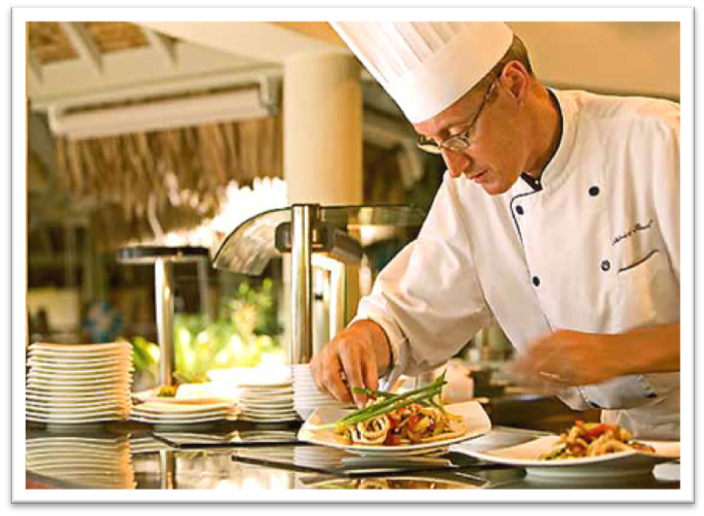
Sous Chef de Cuisine–Sous means “under” in French. The sous chef works alongside the chef de cuisine. Sous Chef de Cuisine is often referred to as the eyes and ears of the Chef de Cuisine. Unlike the Chef de Cuisine, Sous Chef is more hands on when it comes to cooking.
Chef de Partie–Often times in kitchens there are multiple Chef de Partie. Chef de parties are in charge of particular stations in the kitchen. Each chef has other people work under him in order to prepare parts of dishes.

Stations Include:
- Saucier–the sauté cook alos works to make the sauces for dishes.
- Rotisseur– the chef in charge of roasts. Works alongside both the Grillardin and Friturier.
- Grillardin–in charge of making sure all grilled meats come out perfectly cooked and timed correctly for quick service
- Friturier–is the fry cook
- Poissonier– is the fish cook. Is in charge of all fish and seafood preparations from sautéing to poaching
- Potager– the soup cook.
- Legumier– the vegetable chef
- Garde Manger–in charge of all cold preparations
- Patissier– This is the pastry chef
Cuisinier–Cuisiniers means cooks in French. They are responsible for preparing specific dishes at a specific station.
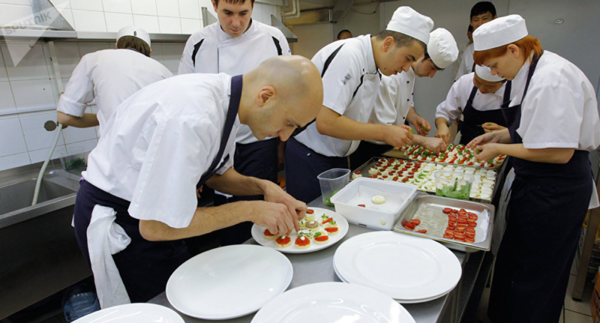
Commis-Are cooks in training or junior cooks. They work directly alongside the Cuisiniers and Chef de Partie at stations. Unlike Cuisiniers though they are tasked with smaller responsibilities such as preparing tools to be used and fetching ingredients.
Apprentice– Are usually gaining work experience and help with cleaning and prep work. At the start of his apprenticeship, an apprentice might even find himself washing dishes.
The 6 Types of French Cooking Techniques:
| Technique | Description | Picture |
| Flambéing | Technique where the food is covered in some sort of liquor and then bringing the temperature to very hot. The flames are a result of the combustion of alcohol and the alcohol is burned away but a good flavor is left behind. Flambé is French for flamed, which makes sense considering the food is being flamed |  |
| Sautéing | Using a small amount of fat, the chef flips and tosses the food in a pan to allow it to cook quickly and evenly. Sauté in French means to jump. |  |
| Poaching | A gentle way of cooking by simmering the food in water, this allows the food to uncoil without losing flavor. The poaching liquid is called court bouillon, this consists of: a base liquid, an acidic ingredient, and flavorings. Poaching is most commonly done with eggs, but it can also be done with meats and vegetables. |  |
| Broiling and Grilling | These techniques are very similar considering they both involved an oiled piece of food being cooked over direct heat. With Broiling the heat comes from above the food, while with grilling the heat comes from below the food. |  |
| Braising | Braising involves meat being seared at a high temperature, then a flavorful liquid being added to fully cook the food. Many types of liquid are used ranging from oil, stock, juice, and milk. |  |
| Baking | Dry heat in an enclosed oven until the goods are cooked. Baking is most commonly known for breads and pastry making techniques. | 
|
France vs. US Cooking Schools
Years ago, if you were looking to become a chef, you were expected to go to cooking school in Paris, France. It was said that, “a chef’s knife became an extension of your hand.” Usually when someone returned from Paris after finishing their schooling, they were almost guaranteed a job at a top restaurant. Today, there are almost 800 cooking schools around the country, and French technique is only a small part of the curriculum that is taught. The culinary world has changed over the decades, so now there is more to teach because of many different influences on cuisine.
 Le Cordon Bleu has not changed, and its cuisine focus remains purely French. This cooking school differs a lot from The Culinary Institute of America. Its narrow and small building is still squeezed into the residential area of the Left Bank in Paris. The classrooms are not modern and look nothing like the classrooms at the Culinary Institute’s. The atmosphere is more personal because of the student to teacher ratio being 10-1. There is no library, restaurant or dining hall.
 The 3 semester program at Le Cordon Bleu is designed to master French cooking technique. Like we have talked about in class, the French do not like change. Le Cordon Bleu in Paris teacher’s classic technique, but does not focus on new food trends and fads. They tend to ignore new cooking styles and techniques. The only thing that changes is the ingredients is they are in season or out of season. They focus on their three semesters including technique, regional cooking and skills. The school is still very competitive and hard to get into. “Le Cordon Bleu seems frozen in time.” We spoke in class earlier this semester how France does not like to change their ways, and most French people do not want to pick up the same ways are we do her in the United States.
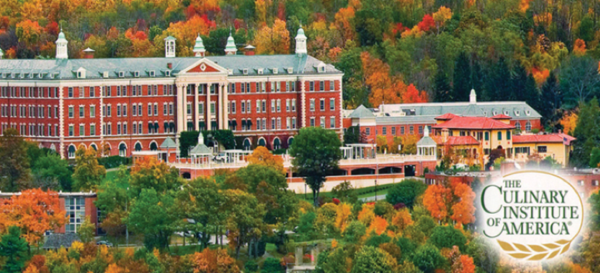
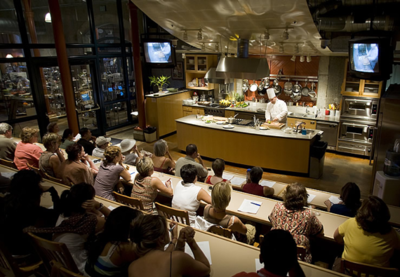 The Culinary Institute of America teaching French technique, but it is more interested in introducing students to the world of cooking and the business of running a restaurant. It even provides classes on how to managing everything when you are overwhelmed. This school is more of a campus feel as it sits high over the Hudson River. The school has four restaurants that are all staffed by students and open to the public.
Interview with Bridge Street Bistro
How did you create a French culture in your restaurant?
- The decorations, classic French style meals, authentic French wine and keeping the size of the restaurant small.
How is the restaurant staffed? How many chefs work and how does the chain of command work?
– The head chef is also the owner. He is the only chef in the kitchen and does all the cooking. His wife works in the front of the restaurant making sure everything is running smoothly. They also hire high school students to wash dishes or wait on tables.
How are menu Items prepared? Are they made fresh or made offsite and completed in the restaurant?
– All the food is bought in the New England area. The chef goes out every day or every other day to the market to pick up fresh goods depending on the amount of reservations.
When were you taught to cook, were you taught traditional French techniques? Being in New Hampshire, do you find yourself changing your ways and techniques that you were taught?
– He learned to cook by his parents. Living in France everyone knows how to cook. He then went to culinary school where he really mastered his skill.
Is the atmosphere different cooking in America rather than cooking in France?
– The only difference or example he could think of was the big farm to table or keeping it local movements that have been going on in the United States. In France those aren’t movements because everyone taught to buy local goods and use the farms freshest most natural products.