
All About the Baguette
Before the Baguette
Before we begin our conversation about baguettes, we thought we’d talk a little about the history of France. Before the French Revolution came to fruition, the average person consumed about three pounds of bread a day. Though this seems like quite a bit of food, this was the main source of food. During those times poverty and starvation roamed the cities of France. The rich, were eating fine breads made from pure white flour, while the poor were left the bad and unfiltered grains to make do. This occurred because of the sudden rise in the prices for bread and grains themselves.
Due to that fact that France consumed mostly bread, during the 18-19th centuries, the lack of grains and flour for the poor was a death sentence. People starved and rioted to receive the necessary ingredients. The storming of still functional bakeries was also unsuccessful because most of them were also in dire situations. As the situation in France worsened, people became angrier and stronger.
The Bastille, a prison built in the center of Paris, was stormed as a sign of rebellion. The reason that was a good way to begin the Revolution was because The Bastille held the majority of the good bread of the city. At times, it was said to be more convenient to be in jail, than poor. After the storming of The Bastille, and the enormous amount of food that people got from it, the French Revolution began.
After the crazy events of the Revolution died down, France passed a non-official law called “bread equality”. This eventually became an official law and created rations for the people of France. The “bread equality” stated that every bread baked, had to be baked in an official setting, aka. A bakery, and had to have the same ratio of flours. The ratio for every bread had to be ¾ wheat flour and ¼ rye. The reason this created rations was, this meant that all the bakers only gave out a specific amount of bread per ration and everyone had food, even if it was scarce. This made France a not so hungry country to live in, for some time.

The Rise of the Baguette
French bread continued to persist in the diets of the French population, but during the turn of the 20th century, a drastic decrease in the consumption of bread per capita was observed. No longer was bread the bulk of the French diet, as increased modernization and socioeconomics allowed for more of a varied diet (Kaplan, 2006).
During this period both World War 1 and 2 played a major role in the supply flours for bakers. Agricultural lands were ruined by warfare, providing a lack of sufficient flour both in terms of quantity and quality (Kaplan, 2016). As focuses turned to war efforts, the production of traditional bread slowly became forgotten (Weinraub, 2005).
After World War 2, industrial baking was introduced as an alternative to the laborious process of traditional bread. With increased technology, bread was able to be produced in larger quantities but at a risk to the quality (Weinraub, 2005). Mechanization processes such as machine kneading, parbaking, and the addition of additives allowed for further distribution of bread and a longer shelf life (Kaplan, 2006). Parbaking, is the two-bake process which involved partially baking the bread then quickly freezing the bread (Debonne et al, 2017). The bread is then able to be distributed and finished baking, this process altered the texture and crust development that traditional bread was known for (Debonne et al, 2017).

This "bad" bread was a disappointment to the identity of the French, as bread was a national symbol of their country. By the 1980'scided to bring back artisanal breads by offering bakers better flours and reintroducing traditional bread recipes (Weinraub, 2005). They campaigned for authenticity of their bread and the identity of their culture.
By the 1990's the demand for traditional bread was back. People were purchasing their bread from boulangeries and wanted the real authentic French bread (Kaplan, 2006). Even the government stepped in and declared a bread law to retain its identity.
The French Bread Law
On September 13, 1993, the French government passed the French Bread Law (Le Décret Pain). This law was created by the Prime Minister of France, Édouard Balladur, containing six articles, outlining the requirements bakers must follow to make “true” French bread. By following these articles, French bakers can separate their bread from mediocre bread sold along the streets of France, and around the world. Each article is specific to each aspect of the bread making process and are taken very seriously by the finest of bakers in France.
Article 1 explains that bread must be sold on the premise in which it was kneaded, worked, and cooked. It must follow these criterias if it is to be called “pain maison” or if it is to be sold by a similar name. If the bread is sold off the premise, the professional who made the bread must ensure that it was kneaded, worked, and cooked at the same place.
Article 2 gets into the details of what ingredients are to be used when making bread. Bread that is to be called “pain traditionnel de France” can not contain additives, preservatives, or to be frozen at any time during the making process. The dough must contain wheat flour, salt, yeast, and water and each ingredient must adhere to the following characteristics:
- Made only from a mix of wheat flours suitable for making bread, safe water, and cooking salt.
- Fermented with yeast suitable for breads (Saccharomyces cerevisiae) and a starter, in the sense of article 4 of this Decree, or either yeast or a starter;
- Relative to the weight of the (wheat) flour used contain no more than
- 2 percent broad bean flour:
- .5 percent soya flour
- .3 percent malted wheat flour
Article 3 and Article 4 go hand in hand regarding the starter of the dough. Article 3 states that the pH of the starter can not exceed 4.3 and can not have an acidity less than 900 parts per million. This rule applies to any bread that is to be sold under the category of “pain au levain,” which is bread made from a sourdough starter.
Article 4 is the longest of the six articles and outlines the specific requirements of the starter. The starter is a paste that goes through an acidifying fermentation process, which includes wheat or rye, water (from a safe source), and salt (optional). The purpose of the natural acidic fermentation process is to make sure the dough will rise properly. When the dough reaches the last phase of kneading, the yeast (Saccharomyces cerevisiae) is added, not exceeding .2 percent relative to the weight of the flour. If the starter has one billion live bacteria as well as one to 10 million yeasts per gram, the starter is able to be dehydrated. After rehydration, the dough must be lifted correctly to ensure there is an adequate amount of yeast. Article 4 also states, “the starter can have micro-organisms added to it, authorized by decree of the Minister for Agriculture and the Minister in charge of Consumers, made upon advice of the commission of food technology created by the decree n° 89-530 of 28 July 1989.”
Article 5 -- Article 2 of the decree No. 63-720 of 13 July 1963 relating to the composition of the flours of wheat, rye and méteil (a mix of wheat and rye) and the decree No. 67-584 of 18 July 1967 fixing the definition of the bread of current consumption taken pursuant to article 13 C of the law No. 66-10 of 6 January 1966 bringing reforms and various provisions of a financial nature are repealed.
Article 6 -- The Minister of State, Guard of the Seals and Minister of Justice, the Minister for the Economy and the Minister for Agriculture and Fishing are entrusted with the execution of this Decree, which will be published in the Official Journal of the French Republic (Oulton and Randal, 2004).
Bread in the United States vs. France
In France, the process of making bread is taken very seriously as we saw in the French Bread Law passed in 1993. Although some places in the U.S. follow strict guidelines on how they make their bread, the regulations passed by the U.S. Food and Drug Administration (FDA) are much less strict than those passed in France. These regulations fall under the Code and Federal Regulations (CFR) Title 21, Volume 2, part 136, which outlines the requirements for the specific standardized bakery products used in breads, rolls, and buns (CFR, 2017). These regulations allow breads to contain additives and preservatives, shortening, dairy, and several other ingredients, decreasing the freshness of a large number of breads made in the U.S. A few aspects that separate U.S. bread from French bread, aside from the laws, are the methods, culture, and quality of flours. The specific flours used in French baking will be discussed in the following section.

What’s in a Grain of Wheat?
Before talking about different types of flours, it’s important to know what makes up a grain of wheat. This will help to better understand what makes these types of flours different.
Bran: This is the hard, outer layer of the wheat grain. Typically, the bran is removed during the milling process because of its high fatty acid content that makes flour go rancid faster. But, the bran can be heat treated to increase its longevity, like in whole-wheat flour. The bran contains many minerals, which gives flours a much deeper flavor.
Endosperm: The endosperm is the most abundant part of wheat, making up about 80% of the grain. The endosperm contains starch, oil, and is also the major source of protein, contributing to gluten, which is the most important component of flour!
Germ: Also known as the “embryo,” the germ is the reproducing part of the grain. It has a concentrated supply of nutrients including vitamin E, vitamin B, and minerals. Like the bran, the germ is typically removed during the milling process because it contributes to a shorter shelf life.
Analysis of French Bread Law, Article 2
When asking “What makes French bread so good?” it was expected that the type of flour was one of the main reasons why. Because the French Bread Law specifies the amount of non-wheat flours that can be added to bread, my research was focused on WHY? The non-wheat flours specified in the law included soy, bean, and malted wheat, which all have distinct tastes that would alter the final product. The nutritional content of these flours is also important, because they differ significantly from typical wheat flour. The protein and fiber content of the flours contribute greatly to the texture of the crumb, or the inner doughy part of the cooked bread (Fig. 1).
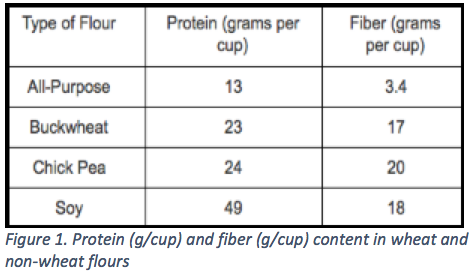
The high protein content, and lack of gluten, in these non-wheat flours can contribute a dense and gummy texture to the crumb… think gluten free bread! (Gluten is extremely important in the elasticity and strength of the bread and allows for gases to be trapped inside the dough during cooking to give a nice open crumb!) The high fiber content in these flours can contribute a crumbly and dry texture because the fiber soaks up lots of water. None of these qualities are wanted in a traditional French bread and therefore, are limited because of the French Bread Law.
French Flours: Type 55
The flour used in French breads is called Type 55 flour. The “55” indicates the extraction rate of the wheat grain, measuring the total amount of the wheat grain a flour contains. The higher the extraction rate, the greater the amount of germ/bran a flour has. This means that Type 55 flour has an extraction rate of 55%.
The ash content of a flour relates to the mineral content of the flour, a portion of the flour is incinerated after milling to burn off excess organic matter. The higher the mineral content, the higher the ash content. Type 55 flour has an ash content of 0.55%. This contributes to the fermentation activity and flavor of the bread, which is essential to good bread!
Type 55 flour is seen as a “middle of the road” flour that is versatile and flavorful with a protein content of 11-12%. Surprisingly, all-purpose flour is the American equivalent to Type 55 flour. Most American bakeries use all-purpose flour when baking baguettes. Our group bought bread from two local bakeries; Tendercrop Farm in Dover, NH and The Beach Pea in Kittery, ME, who both use all-purpose flour in their baguettes. The differences between Type 55 and all-purpose flour was so insignificant that using either flour would make a comparable product. This lead to the conclusion that flour was not the main reason French bread was so good!
French Mills Today: Moulin Bourgeois
Today, French flour mills, like Moulin Bourgeois, are incorporating robots into their packaging/shipping departments to increase efficiency and cut down on manual labor for employees. This innovation impacts many areas of this industry. On the upside, this allows for an abundance of specialty flours that are readily available to artisan bakers, makes the company more profitable, increases the demand for wheat, and decreases the likelihood of workplace accidents. On the downside, this could contribute to the mass-production of breads that lack quality, and it takes job away from hard-working people.
Health Factors Associated with French Bread
When it comes to the food that people put into their bodies, one needs to consider more than just taste. It is important to consider what that food can do for you. In France, there are dietary recommendations put forth in The National Programme of Nutrition and Health. These recommendations suggest how much of each food group (meats, dairy, fruits, vegetables, grains, and fats) the average person should eat. This is represented as graphic in the form of a staircase, where each food group is on a step and the ones you should eat less of are on the bottom, and the ones you should eat more of are on the top. Bread and other grains or starchy foods fall in the middle of the staircase, with a recommended 3-4 servings a day.

That said, it is important to recognize what a serving of French bread can provide a person nutritionally. One serving contains approximately 185 calories and 1.5 grams of fiber. Calories are essential form of readily available energy for a person. Fiber allows your body to slowly digest your food, which allows you more time to absorb more nutrients. One piece also provides about 7.5 grams of protein, which is 13 percent of the daily recommended intake for men and 16 percent of the daily recommended intake for women. Protein can be stored in the body to add to your muscle or can be stored as a form of excess energy as well. One last important nutritional way a serving of french bread can benefit a person is that it is a good source of iron. One serving has approximately 2 milligrams of iron, which covers 29% of the recommended daily intake for men and 13% for women.
While there are many beneficial nutrients French bread can provide a person with, it is necessary to acknowledge the health risks associated with it as well. For starters, French bread is a very carb-loaded food. One serving has about 36 grams of carbohydrates, which is 28% of the recommended daily intake. Just to reiterate, one single piece of bread accounts for about one third of total carbohydrates people should be eating. Too many carbohydrates can lead to dangerous health issues, such as obesity, heart disease, and other serious risks. Another way French bread can negatively affect your health is through its glycemic index score. The glycemic index is a system that rates foods according to the impact of their carbohydrates on blood sugar. If a food has a score of 70 or higher, it is not good for your blood sugar. French bread has an average score of 78, which can potentially cause a dramatic spike in blood sugar.
Baguettes: The Process
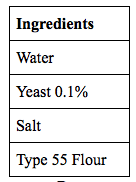
Baguettes are long, thin loaves of French bread that are distinguished by the length and crackling sound of the outside crust. Everyone knows how articulate the French are when it comes to baking and cooking to get the precise look and taste. This is how you can make an orthotic French baguette. In order to make this baguette, two days will be needed. On day one, the poolish is going to be made. A poolish is a fairly wet sponge pre-fermenter that has a 1:1 ratio of water and flour. To make the poolish, 500mL of water and type 55 flour are added to 0.1% yeast for 18 hours at 18° C. This allows the yeast to ferment longer to get a better reaction with the dough.
The next day, water at 25°C , salt, dried yeast, and active malt get mixed together. Then, the poolish and mixer is added to a large mixer for 20 mins. After mixing, a Window test is performed to determine the gluten development in the dough (see video).Once the gluten development is around 75%, the dough is folded for 45 mins through a process called the lift and the fold. This process will allow redistribution of the heat, yeast is back contact with the dough for a food source, and it builds up the gluten structure. After resting the dough for 45 mins, the dough is cut into 400g pieces and the first shaping takes place (see video). After 15 mins, the final shaping takes place (see video). When shaping the dough do not roll the dough from the top, push from the bottom. This will tenderize the dough and it captures the gas produced by the yeast. After 45-60 mins, a press test is used to determine if the baguettes are ready to be baked (see video). Before the baguettes are placed in the oven, a lame is used to score. This tells the bread where to crack. If this was not done, random cracks will appear in different places and will not look pretty. It is time to place the baguettes in the oven. In order to due this an oven that can bake and use stream is needed. Heat the oven at 260° C and place the baguette in the oven for 22 mins. During this time, the baguettes should be exposed to 3 seconds of stream. This allows the baguette to expand before the making of the crust. After 22 mins, the baguettes are done. To make sure the baguettes are done right, the outside should have 3 colors: golden brown, yellow, and dark. And the crust should be able to make crackling sounds when squeezed like a person eating pop rocks. That is how you know you have made a wonderful baguette!
Video Link: https://www.youtube.com/watch?v=4yp8UhNnj-w
Conclusion: Rating French Bread
What makes French bread so good? Steve Kaplan, a professor of European History at Cornell University has spent his entire career studying the culture of French bread. He has amassed many books about the topic, and even is a member of the French Ministry of Culture's Order of Arts and Letters (Weinraub, 2005). He has developed a system of rating bread during his time in which he has visited over thousands of bakeries. His rating system is subjective, but his opinion highly revealed amongst the French. In a Cornell University interview, Kaplan explains his system is based on five factors (Brimley, 2010):
• Appearance: The slits on the top of the bread must be deep, and the bread must have a straight line. It should be burnt-sienna in color, and the crust must look "crusty." Kaplan says, "The appearance must seduce you."
• Crust: "Bread solicits all five of our senses." Kaplan wants to "hear the bread," as it emerges from the oven; "it 'sings' as it cools." He says it's a "wonderful melody."
• Crumb (the inner texture beneath the crust): Kaplan says, "You don't want a hyper white crumb," but it should be a pearly yellow or gray as well "responsive" and "fleshy."
• Mâche (the "mouth-feel"): How the crust and crumb feel in the mouth. It should "invite me to go further," Kaplan said.
• Aroma: Is the aroma intense? Simple or complex?
• Taste: Even for Kaplan taste is hard to "disentangle" from the aroma. He says he wants the "taste to persist" after the first bite. Kaplan said there are more than 200 volatile molecules that make up the taste of bread, many more than wine.


References
Brimley, G. (2010). World expert on French bread shares tips on baguettes | Cornell Chronicle. Retrieved from http://news.cornell.edu/stories/2010/10/steven-kaplan-explains-how-judge-french-bread
CFR - Code of Federal Regulations Title 21. (2017, August 14). Retrieved May 02, 2018, from https://www.accessdata.fda.gov/scripts/cdrh/cfdocs/cfcfr/cfrsearch.cfm?fr=136.110
Debonne, E., Bockstaele, F. V., Philips, E., Leyn, I. D., & Eeckhout, M. (2017). Impact of par-baking and storage conditions on the quality of par-baked and fully baked bread. LWT - Food Science and Technology, 78, 16-22. doi:10.1016/j.lwt.2016.12.021
Kaplan, S. L. (2006). Good bread is back: A contemporary history of French bread, the way it is made, and the people who make it. Durham, NC: Duke University Press.
Oulton, Randal. (2004, June 18). French Bread Law / Le Décret Pain (1993). Retrieved April 16, 2018, from http://www.cooksinfo.com/french-bread-law-1993
Weinraub, J. (2005, August 24). The Fall and Rise of French Bread. Retrieved from http://www.washingtonpost.com/wp-dyn/content/article/2005/08/23/AR2005082300291.html