
Comparing Food Waste in France and the United States
By: Andrew Tsan, Fran Geisel, Ryan Buckley, Jack Gorham, and Hunter Rubright
Food Waste Overview
Global food wastes stands at 1.3 Billion metric tons annually. One third of all the food produced, is thrown away. Salvaging just 25% of food wasted could feed 880 million people - effectively ending world hunger. Our research looks at how France is able to stay on top when it comes to food waste reduction, whereas the United States falls back. We will also look at some methods and practices that can be done to help reduce food waste.
Food Waste Video
For our research, we made a video that goes with what we have researched as well as including more indepth information.
Timestamps
Below are timestamps for each section.
0:15 - 6:55: Food waste Comparison between the United States and France
- In this section, we present quantitative and qualitative data regarding food waste in France and the United States.
6:57 - 10:21: France's food waste laws
- What laws constitutes France’s success at being the top global performer in its food systems sustainability?
10:22 - 13:58: Societal impact of food waste regulation
- How do enforced laws pertaining to food waste affect the consumer, retailers, and suppliers?
13:59 - 17:04: Why does the United States waste so much food?
- In the section, we discuss probable mechanisms and consumer behavior to help explain why the United States wastes mass amounts of food.
17:05 – 22:33 How to reduce food waste?
- What are some practical ways to reduce food waste in the United States? We discuss how technology, policy, and consumer behavior can be altered to decrease food waste in the United States.
Food Sustainability Index (FSI)
Developed by The Economist Intelligence Unit with the Barilla Center for Food & Nutrition. Assessing about 34 different countries, the index asses the sustainability of national food systems in a qualitative and quantitative manner.
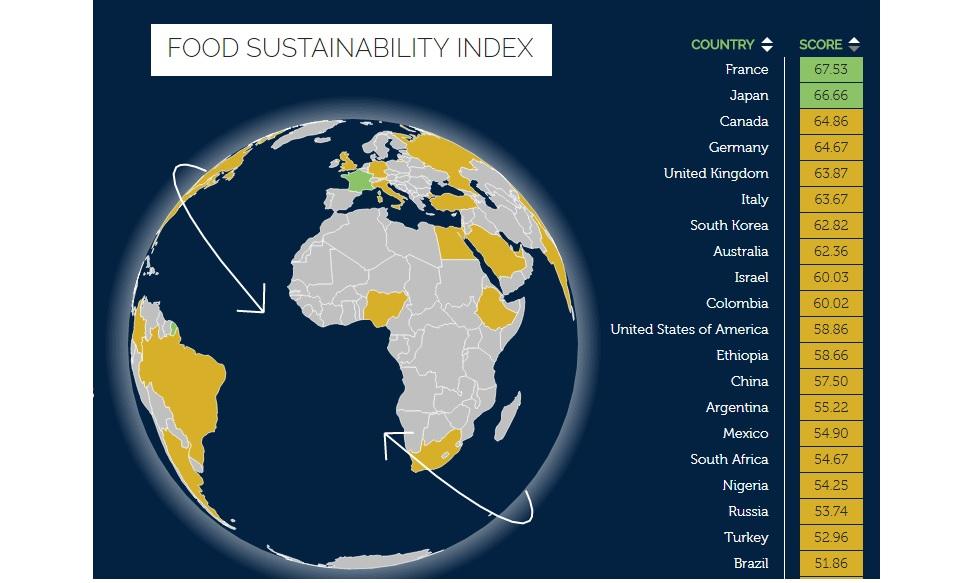
As you can see, France remains on the top but the United States is not even close. We will examine some of the reasons as to why France remains on top consistently.
The Statistics
The table below coves some of the statistics between France and the United States.
| France | United States |
| 1.8% of total food production is lost wastage annually | Approximately 40% of total food production is lost wastage annually |
| Annual food waste per person is 233 lbs | Annual food waste per person is 400+ lbs |
| 1.5 billion pounds food waste annually | 133 billion pounds food wasted anually |
| Cost approximately $8 annually | Cost up to $218 annually |
| Food waste accounts for less than 0.05% greenhouse gas emission | Food waste accounts for 2.6% of greenhouse gas emission |
Local Research
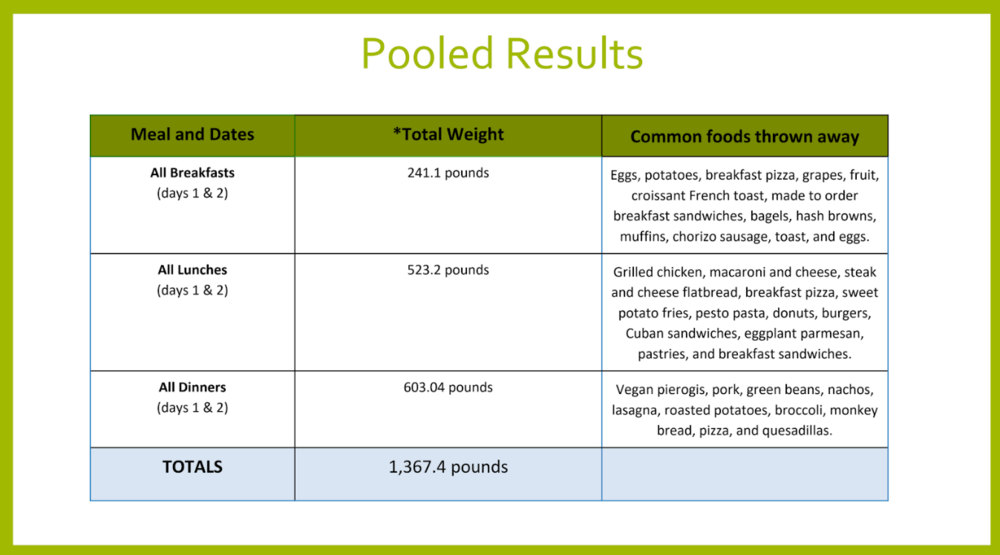
We wanted to look more locally for our research to see how much food waste being wasted. We interviewed Rochelle L'Italien, the Dietitian of UNH. She specialized in nutrition education and oversees many of the dining halls and what they provide.

We were also provided data for the food wasted in the dining halls.
Food Waste Laws in France
"“There was one food manufacturer that was not authorized to donate the sandwiches it made for a particular supermarket brand. But now, we get 30,000 sandwiches a month from them — sandwiches that used to be thrown away,” Jacques Bailet.
Below a video talks about supermakets waste laws and how it poses new challenges for French Charities.
In July of 2015, France made it illegal for grocery stores to destroy edible products. In fact, stores may recieve a fine of the equivalent of $4000 U.S. Dollars. Instead of destroying the edible products, the grocery stores must donate the extra food to organizations such as charities. February of 2016 was when France become the first country in the world to prohibt supermarket from throwing away unused food. This law led to only 11% of food waste coming from supermarkets.
Although much of the food waste has been reduced through these laws mentioned above, even more laws are proposed to prevent further food waste in France. Laws such as a clarification on food expiration dates, promoting the already frowned upon doggy bags in resturants instead of leaving leftovers to be wasted, or tax incentives for farms that donate food to charities.
As you can see, France doesn't stop when it comes to food waste. This is one of the many reasons why they're a leader in food waste. Their work is never done and this is something that the United States should emulate if they wish to cut back on the food waste.
Societal Impacts of Food Waste Regulation
Despite all the progress already made in France, there are multiple viewpoints on the effeciency of the French food waste policy:
- Those to claim the regulations aren't strict enough.
- Those are do say that the regulations are effective due to the increase in food donation by grocery stores.
Beyond the grocery stores, there are a number of problems that have generated due to the changes in the food waste laws. One unintended problem was food banks, such as the Salvation army, running into logistical and technological problems due to the surplus of food they were recieving.
While some believe that policies have been a bit harmful, some may disagree and say that it has definitely changed the lifestyle for many in a positive way through how they buy less food or knowing how to read the expiration dates better.
However despite the laws helping in groceries stores, a huge problem rests on the consumers of the society. Consumers are a large source, and laws were mostly in place for the grocery stores. This problem applies to not just the French, but the United States as well. Thus we as consumers should be doing more to help with the reducation of food waste rather than just relying on the government.
Why does the United States waste more food?
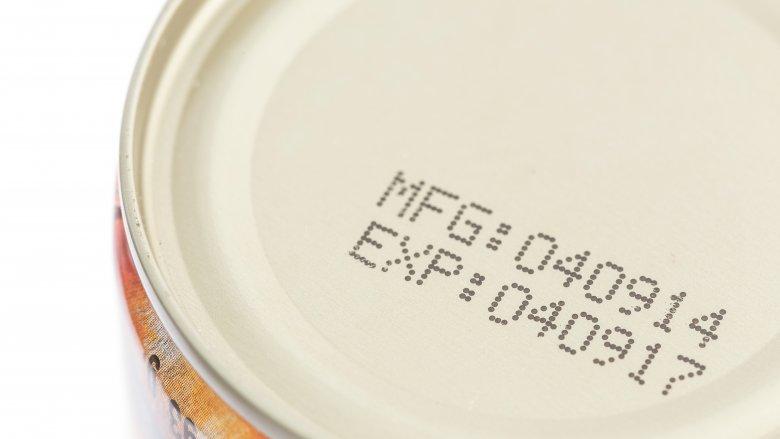 There are many reasons as to why the U.S. wastes food. We're going to cover some of the more common reasons also much of these reasons are related to the consumer side of food waste. One of the most common reasons is just failing to understand the dates on packages. Most people cannot tell the difference between the "Use-by," and "Sell-by," dates, thus leading to many products been thrown away.
Another big reason is the comsemtic standards of produce. Thing such as:
- Bruises
- Brown
- Wilt
- Oxidize
- Ding
- Discolor
Are all key to American shoppers. If a product was to have any of these qualities, a shopper is more likely to not buy that product despite it still being overall good to buy.
According to a study conducted by Brian Roe from Ohio State, 53% of the 500 participants were aware that there was a food waste problem. The study was broken into three main areas.
- Percieved Benefit: Which says that people belived that throwing away food after teh package date reduces the chance of foodborne illness
- Feelings of Guilt: Just as it implies, the guilt felt when someone throws away their products. 58% of the partipants knew that throwing out food was bad for the environment.
- Control: Which states that people don't have enough time to care about these kinds of problems.
What can we do to reduce food waste?
There are various methods and practices to preventing food waste and we've broken it up into three categories:
- Technology
- Food Policy
- Consumer Behavior
Technology: Technology can help in many ways. One of the more big examples is big companies that take the initiative to help reduce food waste. An example would be Amazon and their product Alexa. Alexa has an app called "Save the food," which allows someone to ask Alexa for advice on how to store food properly, or if something was ok to eat.
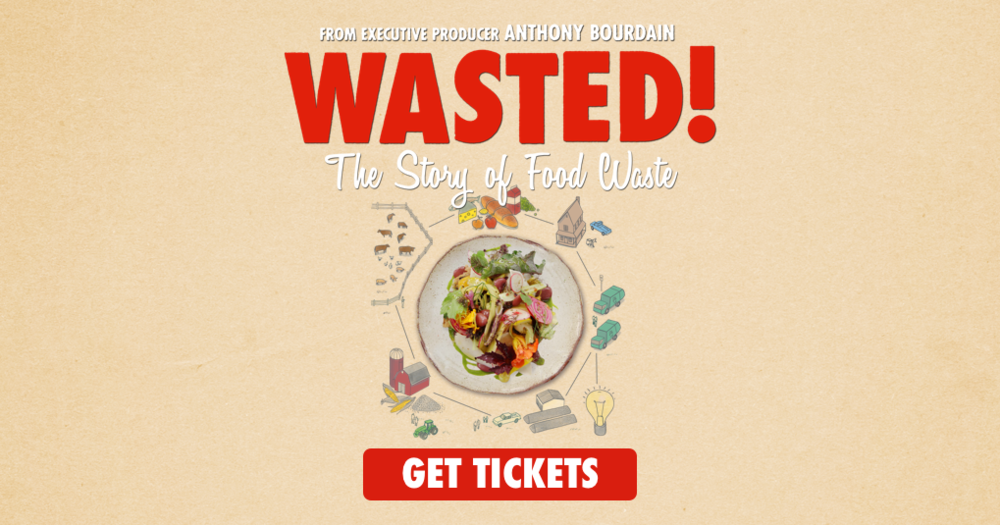 Another example is through awareness. While we all can raise awareness through the people around us or through social media, big named celebrities such as famous chef Anthony Bourdian, have been documentaries on how to stop food waste and how much of it has became a problem for us.
Food Policy
As mentioned above, policy is one of the many ways that can reduce food waste. For us in the United States, we have twice the many calories needed for our population on our store shelves. On average, diners have reported that 17% of meals are uneaten. A solution to reduce the food waste presented here is to introduce polices to limit the food portions.
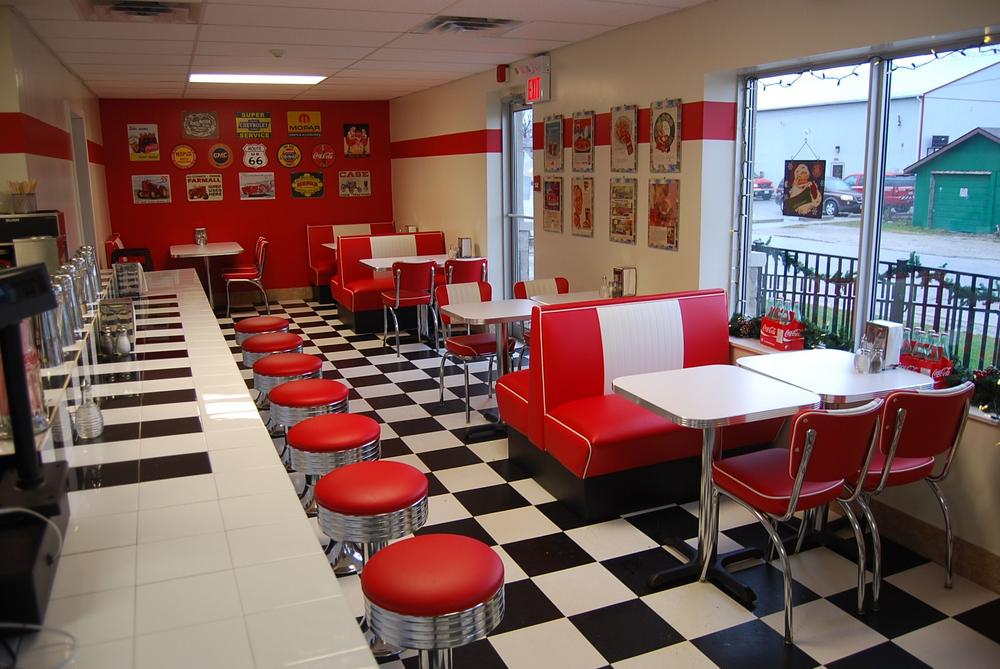
Another similar problem that the United States has that the French had already handled was the throwing away of perfectly fine food right after the expiration dates in supermarkets. For this, the U.S. should adopt similar laws to prevent for food from being wasted.
Consumer Behavior
For us as the consumers instead of having to rely on the government, we can do small things to reduce food waste on our parts. Some of the common methods of preventing food waste are...
- Canning fruits
- Pickling vegetables
- Understanding expiration dates
- This is a huge problem as 1/5 of food is thrown out way before food has gone bad just because of labels
- Not taking more food than what's needed
- Instead of taking a large amount of food, stop and think about what you can eat so that you don't waste food for others
Conclusion
To conclude, we believe that the United States should take steps to reduce food waste even further by following some practices that the French have done already. Not only does it help with cost but the impact on the world would greatly appreciate the reduction of food waste. The United States should also have a similar attitude as those in France have, and that is to keep on going through with the reduction of food waste. Just because we are able to reach a "good enough," status, doesn't mean there's always room for new improvments.
References
Aschemann-Witzel, J., Hooge, I. d., et al. (2015). Consumer-related food waste: Causes and potential for action. Sustainability, 7(6), 6457-6477. Retrieved from http://www.mdpi.com/2071-1050/7/6/6457/htm
Baglioni, Simone, Stephen-Sinclair. (2018). “Social Innovation and Food Poverty.” Social Innovation and Social Policy: Theory, Policy and Practice, 1st ed., Policy Press at the University of Bristol, Bristol, UK; Chicago, IL, USA, JSTOR, 63–80. Retrieved from www.jstor.org/stable/j.ctt201mpr4.6
Beardsley, Eleanor. (2018) “French Food Waste Law Changing How Grocery Stores Approach Excess Food.” NPR 24, Retrieved from www.npr.org/sections/thesalt/2018/02/24/586579455/french-food-waste-law-changing-how-grocery-stores-approach-excess-food
Buzby, Jean, et al. (2014) The estimated amount, value, and calories of postharvest food losses at the retail and consumer levels in the United States. USDA-ERS Economic Information Bulletin Number 121. Retrieved from https://www.ers.usda.gov/webdocs/publications/43833/43680_eib121.pdf
Deutsche W. (2016). France Battles Food Waste by Law. DW.COM. Retrieved from www.dw.com/en/france-battles-food-waste-by-law/a-19148931
Gore-Langton, Louis. (2017). France's Food Waste Ban: One Year On. Foodnavigator.com, William Reed Business Media Ltd. Retrieved from https://www.foodnavigator.com/Article/2017/03/24/France-s-food-waste-ban-One-year-on
Gunders, Dana (2012). Wasted: How America is losing up to 40 percent of its food from farm to fork to landfill. Natural Resources Defense Council 26. Retrieved from https://www.nrdc.org/sites/default/files/wasted-food-IP.pdf
Merrow, Kylie, et al. (2012). Exploring food waste reduction in campus dining halls. Western Michigan University: Appropriate Technology and Sustainability: The Campus as a Living Laboratory. Retrieved from https://wmich.edu/sites/default/files/attachments/ENVS%204100%20Final%20Project%20Report%20-%20Merrow,%20Penzien,%20Dubats.pdf
Vander Meulen, S, Boin, G. (2015). Food Waste and Donation Policies in France and the Netherlands. Food Lab International, no. 4. 27-29. Retrieved from https://www.axonlawyers.com/wp-content/uploads/2016/02/151216-eFOOD-Lab_...