
Cultural Significance of the AOC products
The AOC stands for appelation d’origne controlee, which is an organization that protects food and drinks with unique roots to particular regions of France. The French hold such a stellar culinary reputation because of their embrace for terroir and their embrace to protect it. Terroir is a powerful cultural concept that cannot easily be translated into English. It must have the combination of the soil, right climate, and the practices and soul of the cultivator. Many different French products found themselves in direct competition with imitators from abroad who were using the French reputation for their generic products. The AOC was created to protect these high reputations and guarantee a high quality. Our focus of our final project is educated others on the significance of these select processes and products in the French culture.
The Champagne Region

Champagne finally won its centuries old battle for official recognition in 1936, when was granted official AOC status. The champagne region was identified and only the sparkling wines produced in that area could be sold with Champagne on the label.
Why it’s important Champagne must be made in this region
The growing conditions:
- It’s northern location
- Its cool climate and oceanic influence that brings in steady rainfall
- Limestone subsoil
- This keeps the vines naturally watered all year long!
- The importance of the slope
- the terrain in this region is ideal for vineyards with its good drainage and sun exposure
- The special and specific practices of the cultivator
Main Rules of Champagne by the AOC
- Strict delimitation (boundaries)
- Approved grape varieties: Chardonnay, Pinot Noir, Pinot Meunier, Pinot Blanc, Pinot Gris, Arbane, Petit, Meslier
- Approved method of pruning: Royat, Chablis, Guyot, Vallee de la Marne
- Maximum permitted yields per hectare
- Maximum permitted yield press
- Minimum potential alcohol content of newly harvested grapes
- Secondary fermentation in the bottle and minimum periods of maturation ---15 months for non-vintage champagne and 3 years for vintage champagne
Why champagne is Culturally Important in France
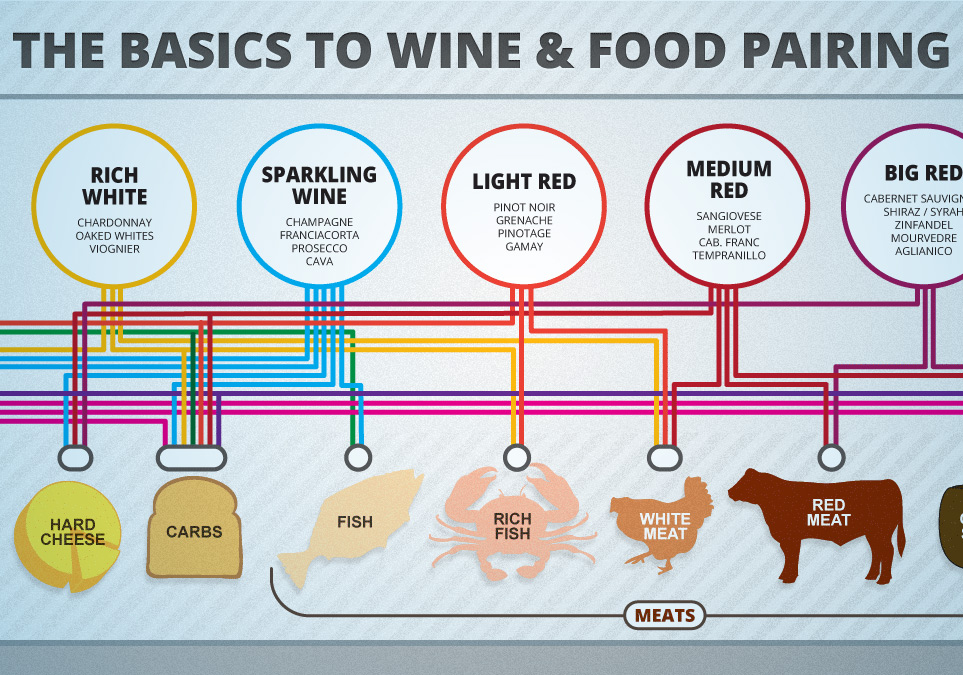
Less specifically, wine is integrated into the French culture. It has evolved as a part of French life, culture and diet. Wine serves as a perfect accompaniment to meals. The French often pair food and wine because the different flavors help to balance and complement each other. It’s central to life at all socioeconomic levels and a lot of socializing is done at these meals. Drinking wine in France facilitates social intervention and bonding, like drinking does for many other cultures.
The Symbol of Celebration and Luxury
 Pop the cork and make a toast with the fizzy, sparkling, wine. Champagne has always been used to mark special occasions and different celebrations. It has always been viewed as a status symbol. Due to its costs and novelty when it was first created, it became a favorite drink for royals in Europe, and the tradition continued to become the drink for any special occasion even to this day.
The History Behind Cassoulet
Cassoulet is a French staple in terms of southern cuisine. This dish is culturally significant to many of the regions of the south such as Toulouse, Carcassonne, and Castlenaudary. This area is known as the providence of Languedoc which is considered to be the area of origin for the cassoulet. These areas are known for the ingredients that make up the dish itself which is what makes the dish so prevalent in the area. Cassoulet is a dish generally made up of white beans, duck, sausage and other meats depending on the area.
Cassoulet originated in the town of Castelnaudary. It was originally served in the year 1355 while the town was under siege, it was served to the defenders of the town as a reward for their protection and service. At this time however Cassoulet was a little bit different as the dish didn’t contain beans, as they did not arrive in Europe until approximately the 17th century.
Map showing Castelnaudary, Carcassonne and Toulouse in relation to each other.
The climate of this region is hot summers and mild winters due to the location on the coastline of the Mediterranean. The area is known for lots of sunshine, dry weather, and clear skies. This is the location in which the growing conditions for the Haricot Blancs is prime, which are the primary bean used in Cassoulet. This area due to the mild climate allows for livestock to thrive year-round and not endure the harsh winters of the northern climates this provides a unique flavor to the meat. This accounts for the unique flavor from the duck, sausage and any other additional meat included in the Cassoulet.
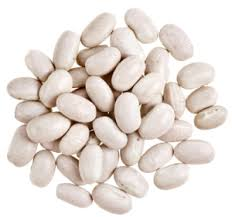
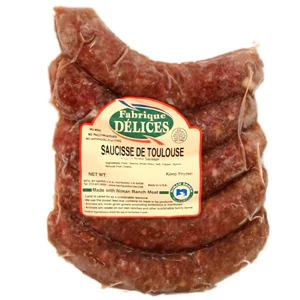
White beans (Haricot blanc) and sausage from Toulouse (Saucisse de Toulouse)
The AOC’s Regulation for Cassoulet
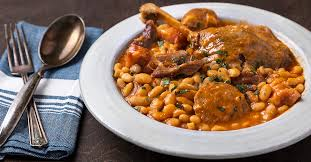
The AOC covers the ingredients that are contained within the dish. For example, the sausages that are used in the making of Cassoulet are most famously from Toulouse. Toulouse is known for its signature sausage (Saucisse de Toulouse). This sausage is made of locally sourced pork (75% lean and 15% belly) with salt and pepper. This specific sausage has some variations of recipes available on the market, but the AOC recognizes the terroir of the sausage. The Haricot bean also known as the navy bean is what is traditionally used in Cassoulet. This bean currently has a protected status in France. The bean is used in Cassoulet due to its availability and its nutrition which is high in protein (7.5 g) and iron (2.15 g).
Cassoulet started off being significant in the culture due to the convenience and availability of the ingredients. It has since grown to be a part of the history of the southern region. The recipe has touched so many people of the region. This is mainly due to the fact that the recipe can be adapted based on the needs of the person or family. Some of the higher quality meats can be withheld from the recipe and it makes it more affordable for the common person. This ability to market to so many different socioeconomic classes it what has made the dish able to flourish in southern France.
Cheese in Normandy
The Normandy region of France located on the north-western coast of the country is well known for the cheeses that they produce. This is mostly due to the Terroir of the Normandy region, and the cows that reside there. Out of all of the regions in France, the Normandy region is the region with the highest useful agricultural area. 70% of the regions surface area is at use for agriculture. Among this, 30% of the agriculture land is used for green pastures containing livestock. This large amount of land dedicated to agriculture is in part what makes the region so exceptional at cheese making.
Significance of the Normandy Cow
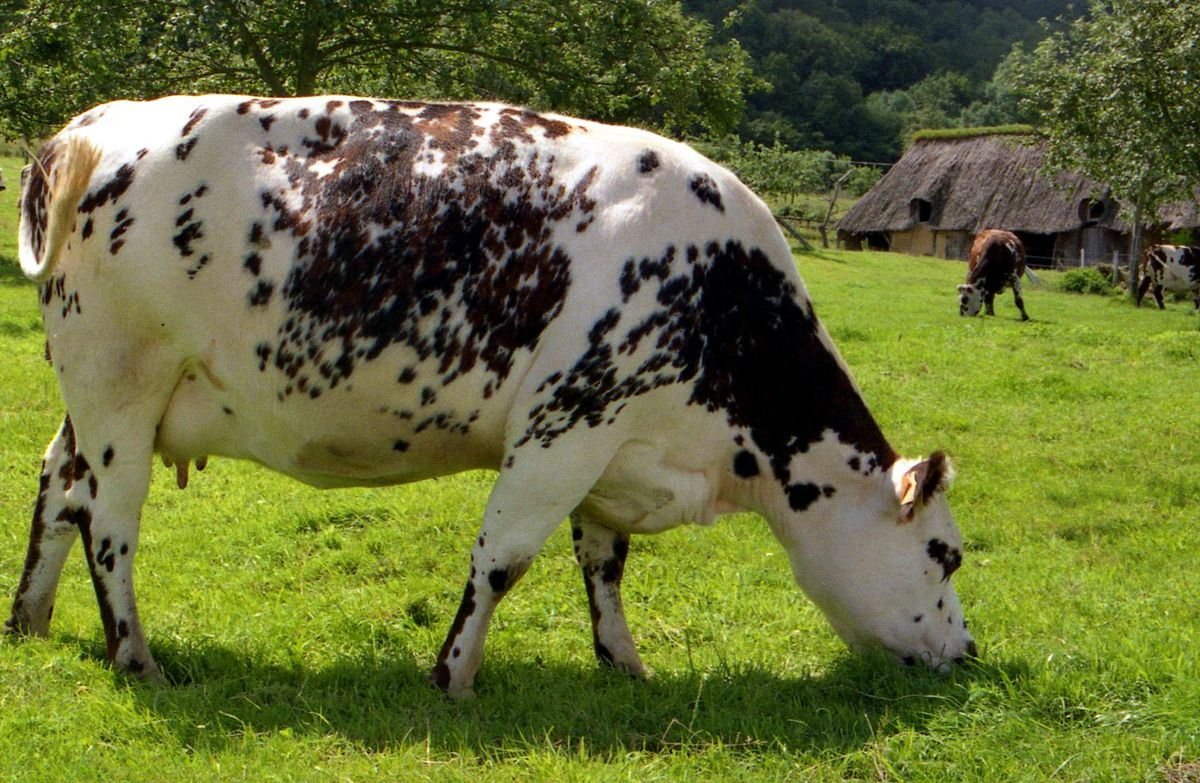 The Normandy Region contains a herd of 57,600 dairy cows. Although there are multiple breeds that make up this, the Normande cow breed is the most widely known for the cheeses that they produce. The breed of cow has a large effect on both the grazing performances of the cows and the quality of milk and cheese that they produce. These cows are able to graze in open pastures due to the amount of land available in the Normandy region, which allows them to live a natural life, improving the quality of the amount of grazing they are able to do. The Normande cows produce milk that has high casein contents and a high casein/protein ratio. Along with this, the Normande cows have shown that the milk that they produce has decreased firming time by 72% and increased firmness of curds by 20%, which is an improvement in coagulation capacity. This helps to make the distinctive texture of cheese that Normandy cheeses are so famous for. Because the Normande cows produce milk with 4.4% fat, the milk is rich in taste and creates cheese that is creamy and spreadable.
The Normandy region produces many well known cheeses, and of these, four cheeses from Normandy are protected by the AOC. These four cheeses include Camembert of Normandy, Livarot, Pont-l’eveque, and Neufchâtel (Truman, 2004).
How the AOC protects the qualities of these Cheeses
The Camembert of Normandy cheese is Normandy’s most popular cheese. This cheese has been protected by the AOC since 1983, and it ensures that the cheese must be made right in Normandy, France. The Camembert cheese was first created in 1791 by Marie Harel, who created it from raw milk and traditional cheese making methods. The AOC protects these methods that Marie Harel originally created the Camembert cheese in. The AOC ensures that the cheese must be made from raw, unpasteurized milk. Recently however, there has been a push to allow this cheese to be made from pasteurized milk as well in the AOC, but many people among Normandy and all around France are arguing that this takes away from the true quality of the Camembert cheese and how it should be made. Production of the Camembert of Normandy cheese requires the curd of the cheese to be handled very carefully, in order to prevent the cheese from drying out and to preserve the moisture. The Camembert cheese itself is rich and buttery in flavor. The cheese is bland, hard and crumbly in texture when fresh, and as the cheese matures it forms a smooth, runny interior with a white bloomy rind.


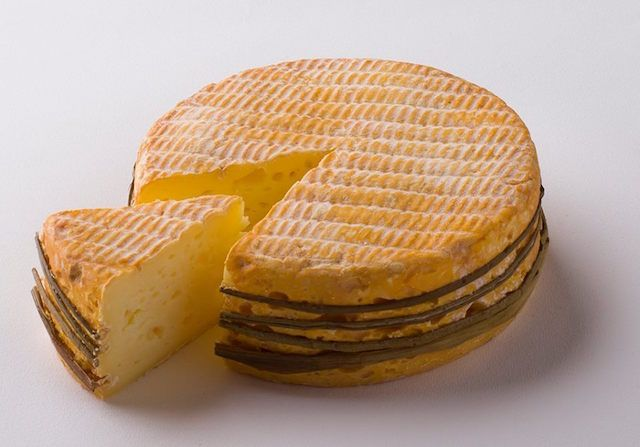 The next cheese from Normandy in the AOC is Livarot, which has been protected by the AOC since 1975. Livarot is one of the oldest Normandy cheeses. The AOC protects that this cheese is to be made in Normandy. Livarot has a washed rind and pungent aroma, that has a soft paste and springy texture. At room temperature, this cheese is generally runny and should be matured for up to two months in humid conditions.
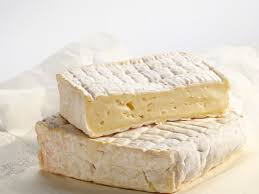 Pont-l’eveque is another cheese that is protected by the AOC, and has been since 1972. The cheese was mainly produced in the 12th century, but many people still produce and eat it today. The AOC ensures that this cheese be made in the Normandy region. Pont-l’eveque has a rind that is thin with a pink tint, and cross ruled covered in a powdery white. This cheese is soft and ripened.
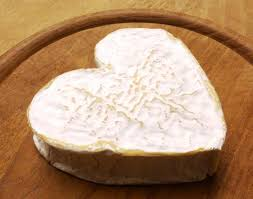 The last Normandy region cheese protected by the AOC is Neufchâtel. This cheese has been in the AOC since 1969, and must be made in Normandy to be protected. This cheese can be industrial, farmstead or artisanal. Industrial refers to the production of milk and cheese that is pasteurized, which is not the preferred method for the French. Farmstead and artisanal cheeses tend to be made from raw unpasteurized milk, which are the more original ways to produce these cheeses. Neufchâtel has a taste and texture similar to the Camembert of Normandy cheese, and can come in many different shapes and sizes.
These four cheeses from Normandy that are protected by the AOC, Camembert of Normandy, Livarot, Pont-l’eveque, and Neufchâtel, are all in the AOC as originals from the Normandy region. The breed of cows specific to the region, the Normande cows, are what gives these cheeses their rich taste that makes them so sought after. The land itself of the Normandy region allows the Normande cows to thrive in this land and is responsible for Normandy being the cheese producing region that it is.
Burgundy Wine
For Burgundy, France, Terroir is crucial. The land and climate where the grapes are grown impart unique characteristics into the grape that could not be imparted by any other region of the world. Burgundy is located in central eastern France. Burgundy is surrounded by nature, filled with rivers, freshwater ponds and lakes, mountains and forests. One of the most popular rivers that runs through Burgundy is the Saone River (Xu et al, 2012). The Saone is the largest river in France, it stretches over 30,000 km, joining the Rhone in Lyon (Xu et al, 2012). The Canal of Burgundy is 242 km and is famous for allowing navigation from the North to the South of France and joins the rivers of Yonne and Saone (Xu et al, 2012). Burgundy offers a lush environment which explains why it is considered one of the best places for vineyards and certain wine products.
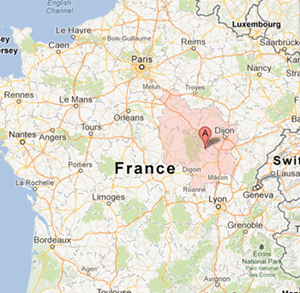

Link to the Video on the AOC and Terroir of Burgundy Wine https://www.youtube.com/watch?v=9cQ8jdfUewo
Why the Terroir of Burgundy influences the wine uniquely
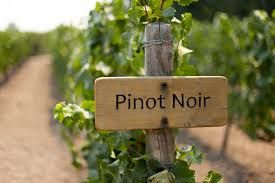
Famous wine products from Burgundy include Pinot Noir and Chardonnay. Pinot Noir is red wine that uses 100% Pinot Noir grapes and Chardonnay is white wine made from 100% Chardonnay grapes. The wine-making process is quite complex and helps identify a specific grape and wine is the color, aroma, and taste. What impacts the signature of wines is the environment, grapes, yeast, and primary sugars, organic acids, amino acids and secondary metabolites including pigments, anthocyanins, and flavonoids. During Fermentation, these metabolites will either disappear, be directly transferred to the wine, or react to form new molecules. These specific metabolites can be spotted in wine. Climate influences grape composition. That is why the environment of Burgundy is so crucial to the grapes.
In Burgundy, as previously mentioned, Pinot Noir and Chardonnay are the most popular grapes. Red Burgundy, also known as Pinot Noir, is one of the oldest grapes used for red wine dating back to the Roman era. The grape grows best in Burgundy due to its cool, dry climates with well drained stony, or chalk infested soils. Pinot Noir grapes were brought over to Burgundy and became very popular very fast. It was not long before the French wanted to claim the name. In the 1930’s, the French adopted the AOC for the grape and it has been in the French name ever since.

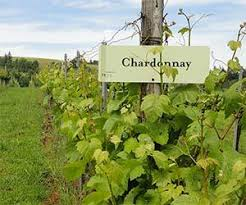
As for Chardonnay, also known as white Burgundy or white wine, the AOC label was adopted in 1935 by France. Chardonnay is considered Pinot Noir’s “daughter” because of the crossing of Pinot Noir and Gouais Blanc (nonexistent in France and brought to Burgundy by the Romans between the 5th and 10th centuries) . Chardonnay is the world’s most popular imported grape for white wine as it serves millions of people world-wide and considered one of the world’s greatest wine varieties. It is used to form many variations of white wine, but it is the primary grape used to produce champagne. Both Pinot Noir and Chardonnay grapes thrives off of Burgundy’s limestone soil and cooler climate. Other countries and areas of the world have a hard time replicating the Chardonnay grape because even the slightest change in climate can dramatically impact the harvesting of the grape. Cooler climates makes the grape go through a more difficult ripening process. Less ripe grapes have high levels of acidity, giving them a tart taste, making it more sour. These grapes have lower sugar levels which result in drier wines with a lower alcohol percentage. Warmer conditions ripen the grapes quicker and easier, leading to lower acidity, higher sugar levels and darker color. This gives a higher alcohol percentage and makes the wine more full-bodied. Burgundy is the perfect climate for Chardonnay to grow and thrive in, which makes it one of the most imported grapes world-wide.


Burgundy was not always a famous destination for people. Cultural tourism developed within the region. A rich past filled with roads of history including the Romanesque road, the Cistercian routes in Yonne, the roads of the Dukes of Burgundy, the road of chateaux of Southern Burgundy, and many more allowed attraction to the region. Burgundy wines were localized to only that particular region of France, and sometimes throughout France, but its popularity got out and people from all over fell in love with Burgundy’s wines. In 2015, the Bourgogne Wine Board (BIVB) shared that 50% of the wines produced in Burgundy were being exported all over the world. The home market shared that 28% were consumed in restaurants and 22% bought them in supermarkets, hard-discount stores, retail or wine shops (Lecat & Chapuis, 2017). The region itself is very famous as well. According to the French National Statistics Institute, nearly half a million people visited Burgundy in 2011 . Therefore, part of the 28% of Burgundy wines consumed in restaurants are paired with local food when foreigners visit Burgundy or France.
Cultural Significance of these Wines
Wine is a part of France’s culture and the lives of not only the residents of France, but the entire world. Pinot Noir and Chardonnay play an important role in France’s culture and are very significant. Pinot Noir and Chardonnay are culturally significant to the French people because wine is usually incorporated with French traditions and is introduced to kids in France at a young age (Dixon, 2013). Parents will allow their children to have a glass of wine at dinner around the age of thirteen to fifteen, sometimes even giving kids younger than ten years old a taste. Chardonnay is the main grape used in champagne, with pinot noir right behind. Champagne as mentioned previously is associated with joy, celebration, and luxury (Dixon, 2013). It has influenced the realms of art, architecture and design for many centuries (Dixon, 2013). Wine is also used with the French gastronomic meal and meal pairing. For example, white wines go better with seafood and chicken and other meats, while red wine is served well with chocolate, salmon, duck and other foods (Lecat & Chapuis, 2017). Certainly, wine can be served with any meal, but certain wines suit meals better than others. It is all about preference and what will taste better. Wine has become part of many French traditions and it has been like this for thousands of years. It as become invested in people’s lives and is basically served at almost every meal in France. It is not a bad thing, it is just important to the French just like any other tradition for any other country/culture.
In Conclusion
The AOC provides an insight as to why certain foods and beverages are protected over specific regions. It is different from terroir in which terroir is the land/region that the specific food or beverage is grown. The environment and region in which wine is produced is the terroir. The climate, soil, and surrounding regions all contribute to the terroir and how the food is harvested. The flavor and brand has cultural significance due to the brand name and region where the product is produced. This gives global recognition to the brand names that are contained within the AOC. The AOC allows regions to keep their products where they are originated from so no one else can take their name.
Sources:
“Appellation D'Origine Controlée (AOC).” Champagne.fr, www.champagne.fr/en/terroir-appellation/appellation/appellation-origine-....
Barman , Elizabeth. Translating Terroir . www.ethno-terroirs.cnrs.fr/gestion/applis/apetit/fichiers/1-s20-S0743016....
“Champagne & Sparkling Wine.” SPIRITEDGIFTS.COM, spiritedgifts.com/champagne.
Definition and Law - Union Des Maisons De Champagne, maisons-champagne.com/en/appellation/definition-and-protection/definition/article/definition-and-law.
Melina, Remy. “Why Do We Celebrate with Champagne?” LiveScience, Purch, 28 Dec. 2010, www.livescience.com/32829-why-celebrate-with-champagne.html.
Trubek, A., B. Bowlen, S. (2008). Creating the taste of place in the United States: can learn from the French. Geojournal. 73, 23-30.
Bertozzi, L., Panari, G. (1993). Cheeses with Appellation d’Origne Controle (AOC): factors that affect quality. International Dairy Journal. 3, 297-312.
(n.d.). Retrieved from https://web.archive.org/web/20120616135506/http://www.ville-castelnaudary.fr/fr/multipage.xml?pg=1&id=134662#
Writer, S., & |. (2018, August 13). Taste of the Terroir - Toulouse. Retrieved from https://www.frenchentree.com/living-in-france/food-recipes/terroir/taste-of-the-terroir-toulouse/
Messina, V. (2014). Nutritional and health benefits of dried beans. American Journal of Clinical Nutrition. 100, 437-442.
Agrilys. (2019). Normandy. Retrieved from https://www.agrilys-incoming.com/region/normandy/
Hurtaud, C., Peyraud, J. L., Michel, G., Berthelot, D., & Delaby, L. (2009). Winter feeding systems and dairy cow breed have an impact on milk composition and flavour of two Protected Designation of Origin French cheeses. Animal,3(09), 1327-1338. doi:10.1017/s1751731109004716
Treston, G. (2015, September 15). 15 Things You Should Know About Normande Cattle! Retrieved from https://www.thatsfarming.com/news/normande-cattle-breed
Woldnews, inc. (2019). Camembert. Retrieved from https://www.cheese.com/camembert/
Woldnews, inc. (2019). Livarot. Retrieved from https://www.cheese.com/livarot/
Truman, R. (2004). Something old, something new. Dairy Industries International, 69(11), 19-20. Retrieved from https://unh.idm.oclc.org/login?url=https://search-proquest-com.unh.idm.oclc.org/docview/222243810?accountid=14612
Begalli, D., Capitello, R., & De Salvo, M. (2013). Evaluation of climate change effects on the wine industry: an interdisciplinary approach. Compet of Agro-Food and Envir Econ, 1, 14-26.
Bowers, J., Boursiquot, J.M. (1999) Historical genetics: the parentage of chardonnay, gamay, and other wine grapes of northeastern France. Science;Washington, 285, 1562-1565.
Dixon, J. (2013). A journey that offers a taste of the past: through the vineyards of France, you can take in more than 2,000 years of history and heritage. The Sunday Telegraph, 1, 1-14.
Lecat, B., & Chapuis, C. (2017). Food and wine pairing in Burgundy: the case of grand crus. Beverages, 3, 1-26.
Moulard, J., Barry, B., & Mitch, G. (2015). How aspects of a wine’s place affect consumers’ authenticity perceptions and purchase intentions. International Journal of Wine Business Research, 27, 61-78.
Roullier-Gall, C., Boutegrabet, L., Gougeon, R.D., & Kopplin, P.S. (2014). A grape and wine chemodiversity comparison of different appellations in Burgundy: vintage vs terroir effects. Food Chemistry, 152, 100-107.
Roullier-Gall, C., Lucio, M., Noret, L., Schmitt-Kopplin, P., & Gougeon, R.D. (2014). How subtle is the terroir effect? Chemistry-related signatures of two climates de Bourgogne. PLoS One, 9, 1-12.
Spielmann, N., & Gelinas-Chebat, C. (2012). Terroir? That’s not how I would describe it. International Journal of Wine Business Research, 24, 254-270.
Xu, Y., Castel, T., Richard, Y., Cuccia, C., & Bois, B. (2012). Burgundy regional climate change and its potential impact on grapevines. Clim Dyn, 39, 1613–1626