
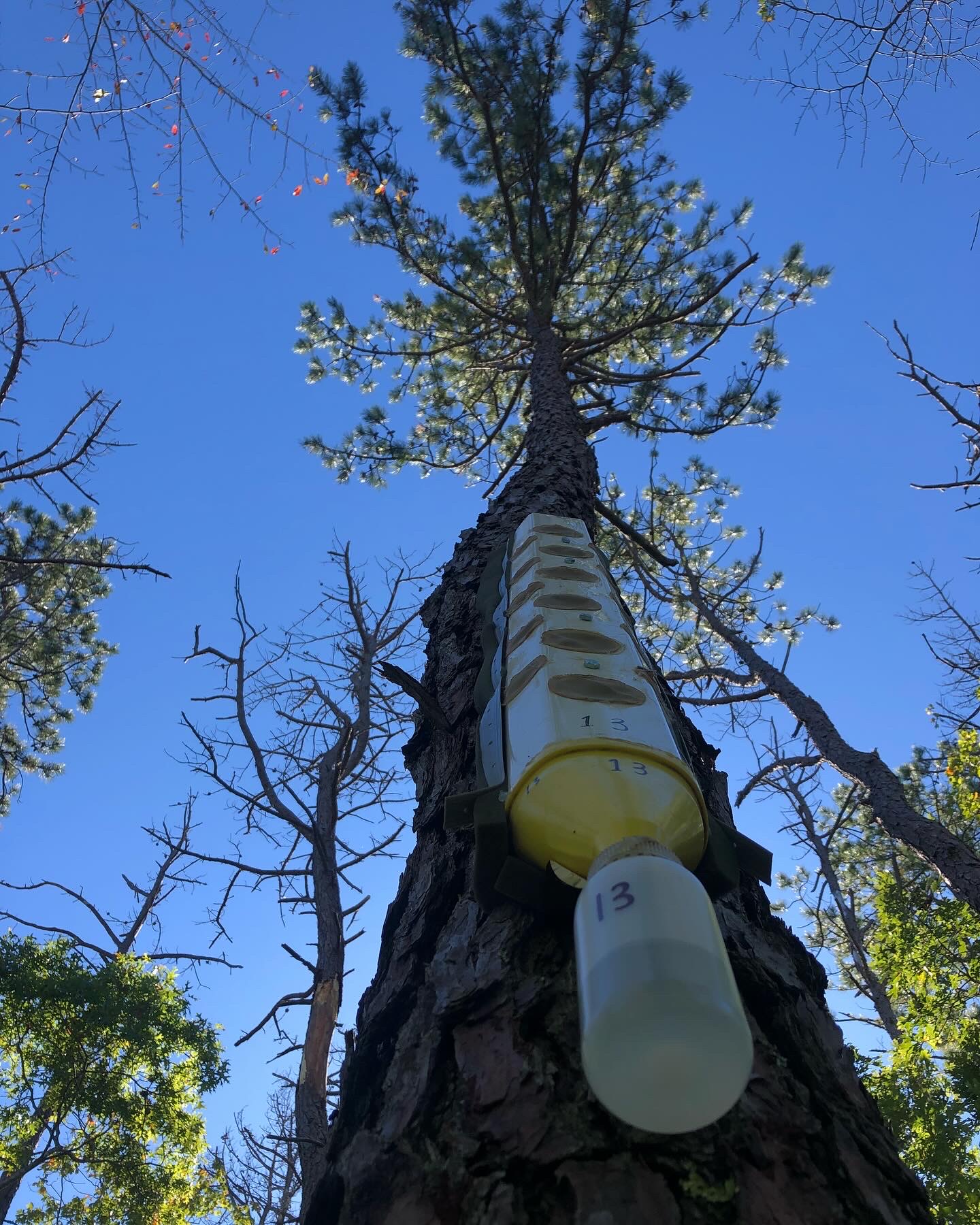
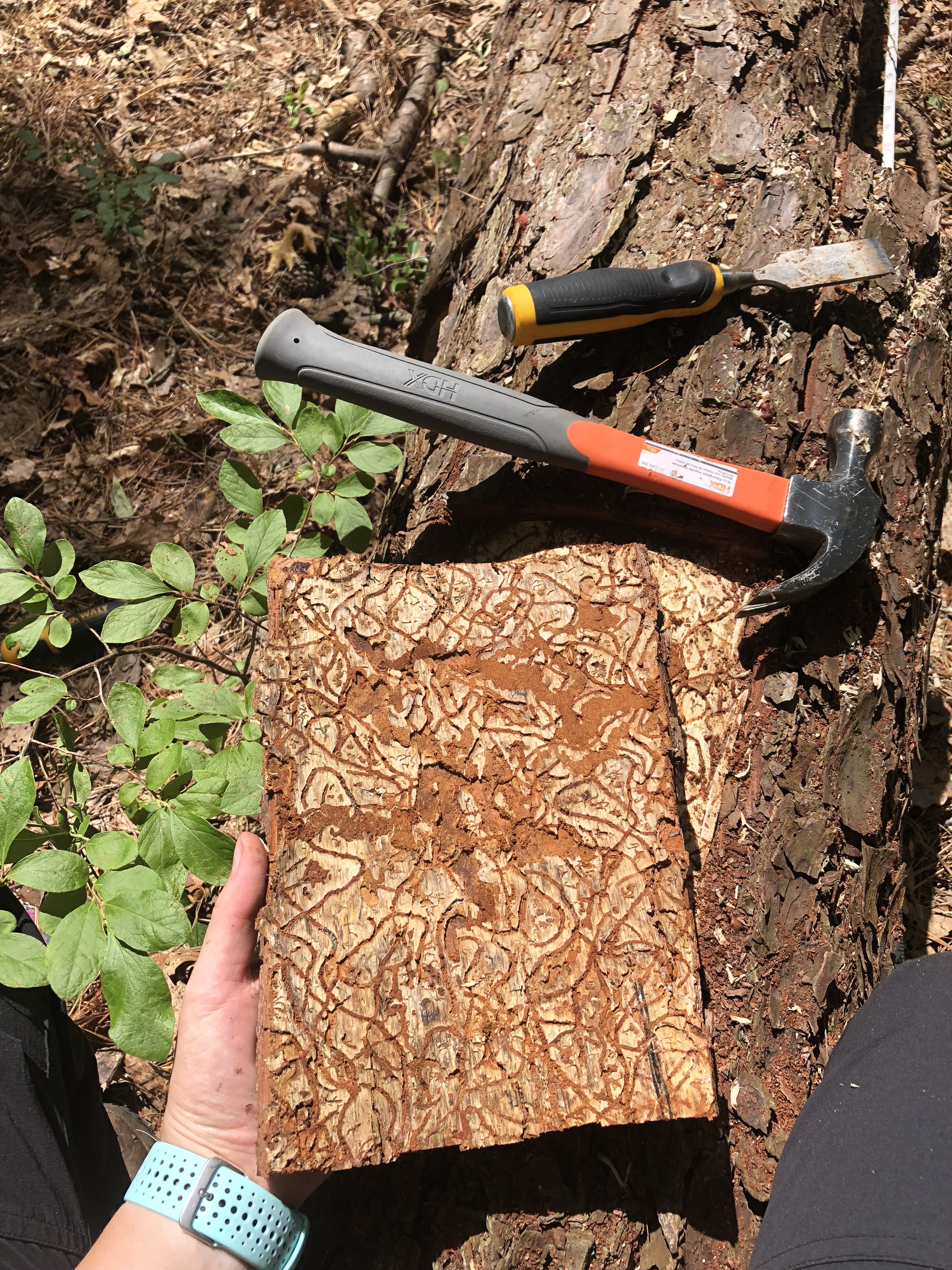
PhD candidate Caroline Kanaskie here. I’m proud to share that my first big paper is now available as an advance article in Environmental Entomology! This is the result of my masters research.
Kanaskie CR, Dodds KJ, Stephen FM, Garnas JR. 2023. Southern pine beetle (Coleoptera: Curculionidae) and its associated insect community: similarities and key differences between northeastern and southeastern pine forests. Environmental Entomology. https://doi.org/10.1093/ee/nvad112
The southern pine beetle (SPB) was discovered on Long Island, New York in 2014, further north than ever before recorded. This range expansion presented (and still presents) new challenges for SPB management, as the phenology and ecology of the beetle differs throughout its range. Thus, I decided to make my niche in graduate school studying SPB’s range expansion. For my masters, I set out to compare the insect community associated with SPB outbreaks on Long Island with that of the beetle’s native range.
Luckily, Dr. Fred Stephen and his team at the University of Arkansas created a southern pine beetle database, DENFIMS – Dendroctonus frontalis Information Management System. DENFIMS houses data collected in the SPB’s native range from 1975-1997, including a wealth of information about SPB associates. In general, bark beetle associates include parasitoids, predators, and competitors.
I conducted a study to compare SPB associates on Long Island with the SPB associates in the DENFIMS database. Along the way, I connected with Jess Cancelliere of the New York Department of Environmental Conservation (NYDEC), and she shared more SPB associates data and insect samples with me. I added this data to my analyses, and in the end, I compared the SPB-associated insect community across different sampling methods and geographic areas (using host tree species as a proxy).
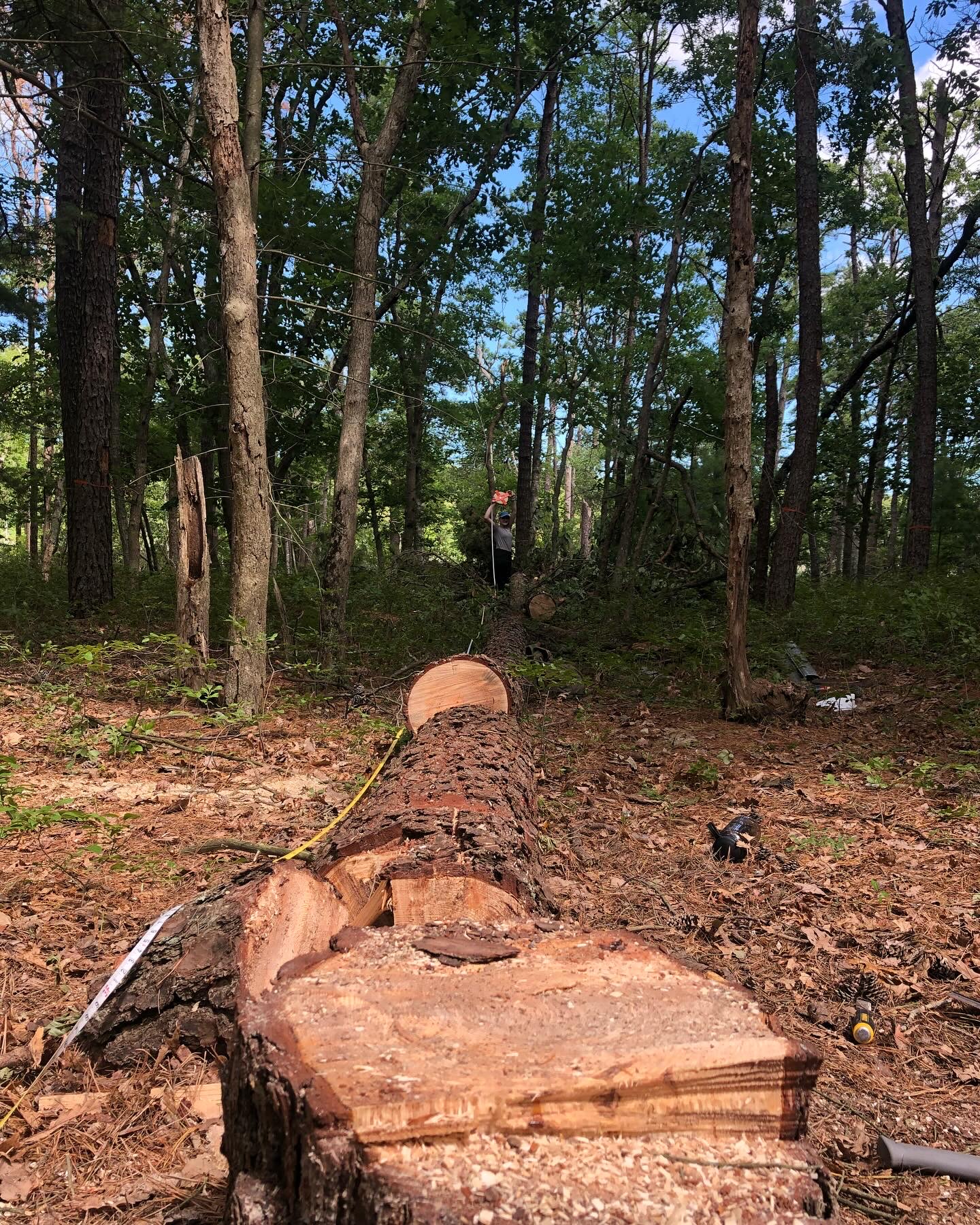
I won’t talk about results here, but instead I want to use this space to highlight some of the people and groups that made this work possible. The NYDEC was instrumental in helping me locate field sites and sample trees—we worked directly behind felling crews conducting SPB suppression, so we were able to sample the entire tree on the ground just hours after felling. My field technicians Drew West and Jon Swett spent many long days in the field with me, braving the heat, humidity, and endless lonestar ticks. Marc DiGirolomo (USFS), Istvan Miko (UNH Collection of Insects and other Arthropods, UNHC) and Don Chandler (UNHC) helped me learn to identify some of the tricky insects we collected. This work was funded by the U.S. Forest Service, and I personally received conference travel support from the UNH Department of Natural Resources and the Environment (via the Ruth E. Farrington Fund) and the UNH Graduate School (via Travel Grants and a Summer Teaching Assistant Fellowship).
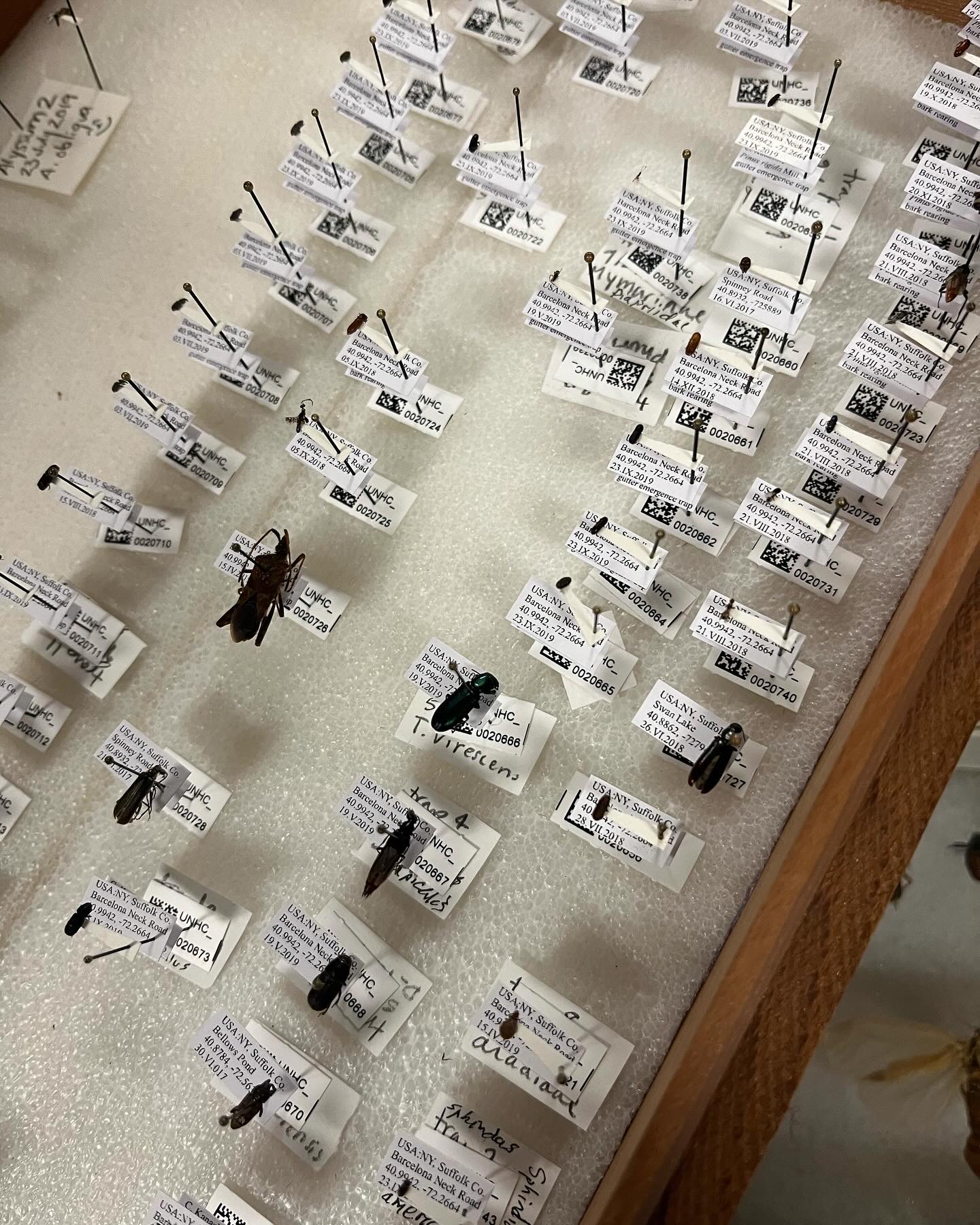
Voucher specimens from this work are available in the UNHC. The photo at left shows some of these specimens as I prepared them for submission to the collection!