
No, we have not started studying large, hairy mammals, and we expect that humans will remain the only primates you’ll find in New Hampshire.
We’d like to share a bit about the APE (Ash Protection Experiment) at Hubbard Brook! You can read more about the project here: https://hubbardbrook.org/story/copy/. Here, we specifically want to share more about the Garnas lab involvement in the project and highlight those who have contributed thus far.
You have probably heard about the emerald ash borer (EAB, Agrilus planipennis) and the threat it poses to the ash trees (genus Fraxinus) of North America. There are some treatments available to protect ash trees against EAB, including injecting the trees with an insecticide: emamectin benzoate. Trees are injected near the base and then transport the insecticide to various parts of the tree, including the leaves.
A major goal of the APE is to understand how the dramatic loss of an important tree species impacts the structure and function of our forests, and how the forest will recover over time. To do this, members of the Hubbard Brook research community have protected over 300 large canopy ash trees in 30 plots using emamectin benzoate. These plots will serve as an experimental control to compare against plots where ash is killed by EAB. EAB was only discovered at the site in 2021, but trees are already showing symptoms of decline.
Emamectin benzoate is among the best and only ways to protect high-value trees from EAB and is increasingly used for this purpose, including in forested conditions. As such, it is important to understand how emamectin benzoate injection impacts ash leaf decomposition and soil communities, both for the APE project and beyond. As part of a grant from the US Forest Service Pesticide Impact Assessment Program, we are using high-throughput genomic sequencing methods to characterize the diversity of soil microbes and arthropods in ash sites with and without emamectin benzoate injected trees.
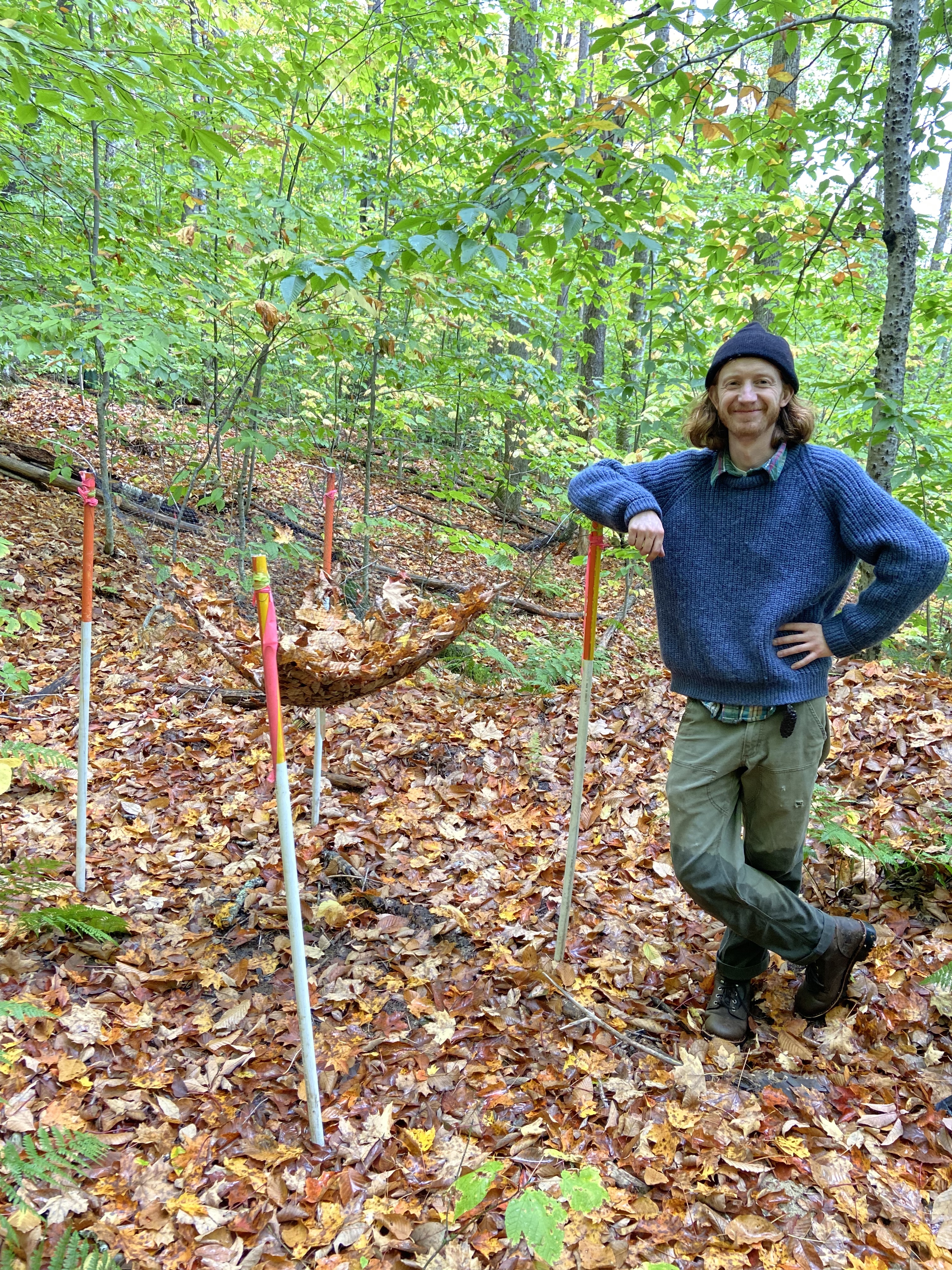
Our APE field team in the Garnas Lab is led by Casey Coupe and Mariah Rietzel. Over the past several months, Casey and Mariah have spent a lot of time at Hubbard Brook, collecting ash leaves and soil samples in 20 plots. Then, they deployed leaf litter bags at each plot. Over time, we will learn how emamectin benzoate treatment impacts leaf decomposition and microbial communities. PhD student Santi Rivera-Reyes will lead the analysis of microbial communities. Meanwhile, our collaborators at Dartmouth will investigate how springtails (aka Collembola, tiny arthropods that play a key role in decomposition) respond to emamectin benzoate in these same sites.
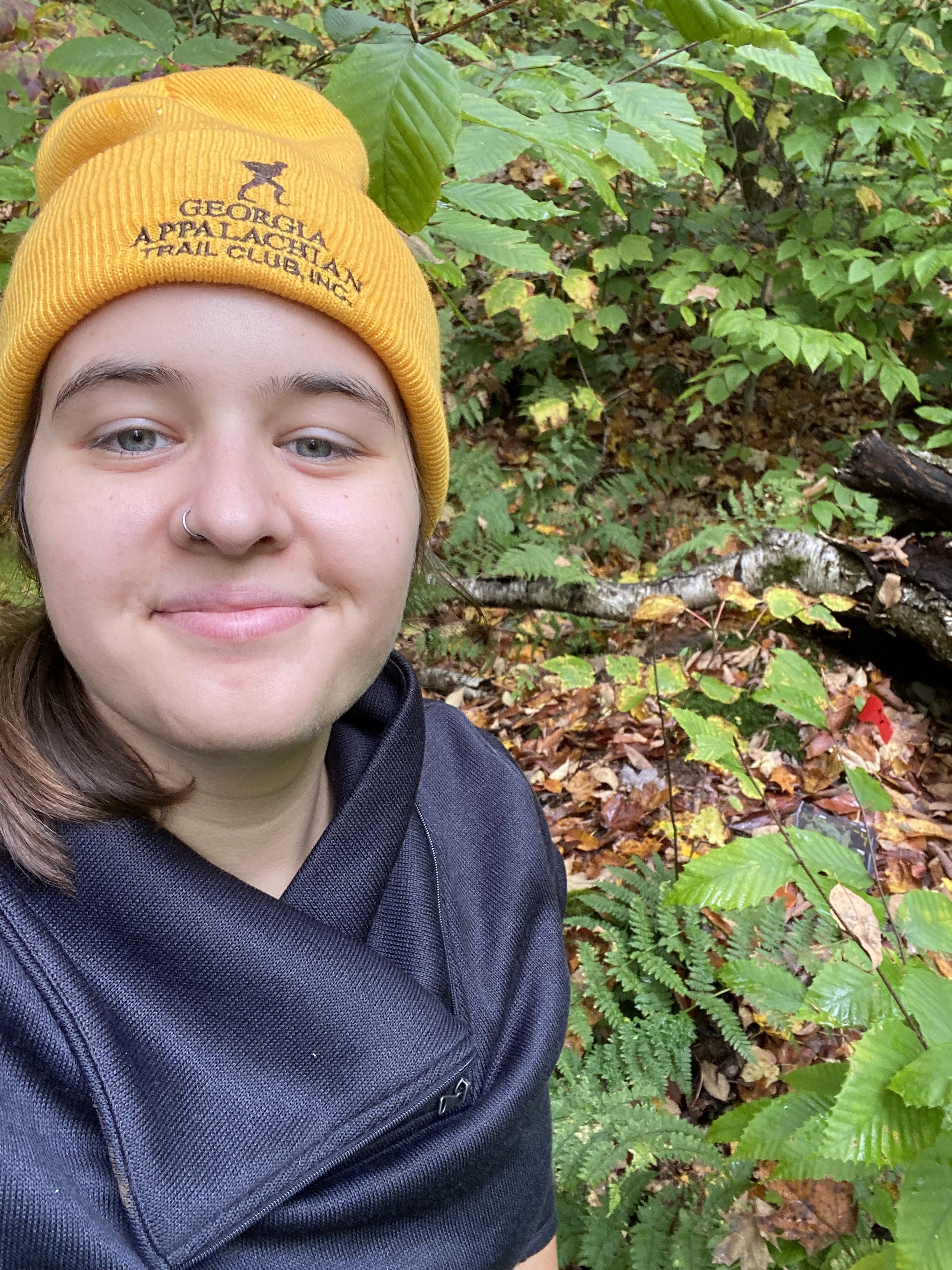
Can you spot the red flagging & leaf litter bag?
The team dried and sorted the leaves in the lab prior to litter bag deployment.