MEET THE CRHC TEAM
CURRENT MEMBERS
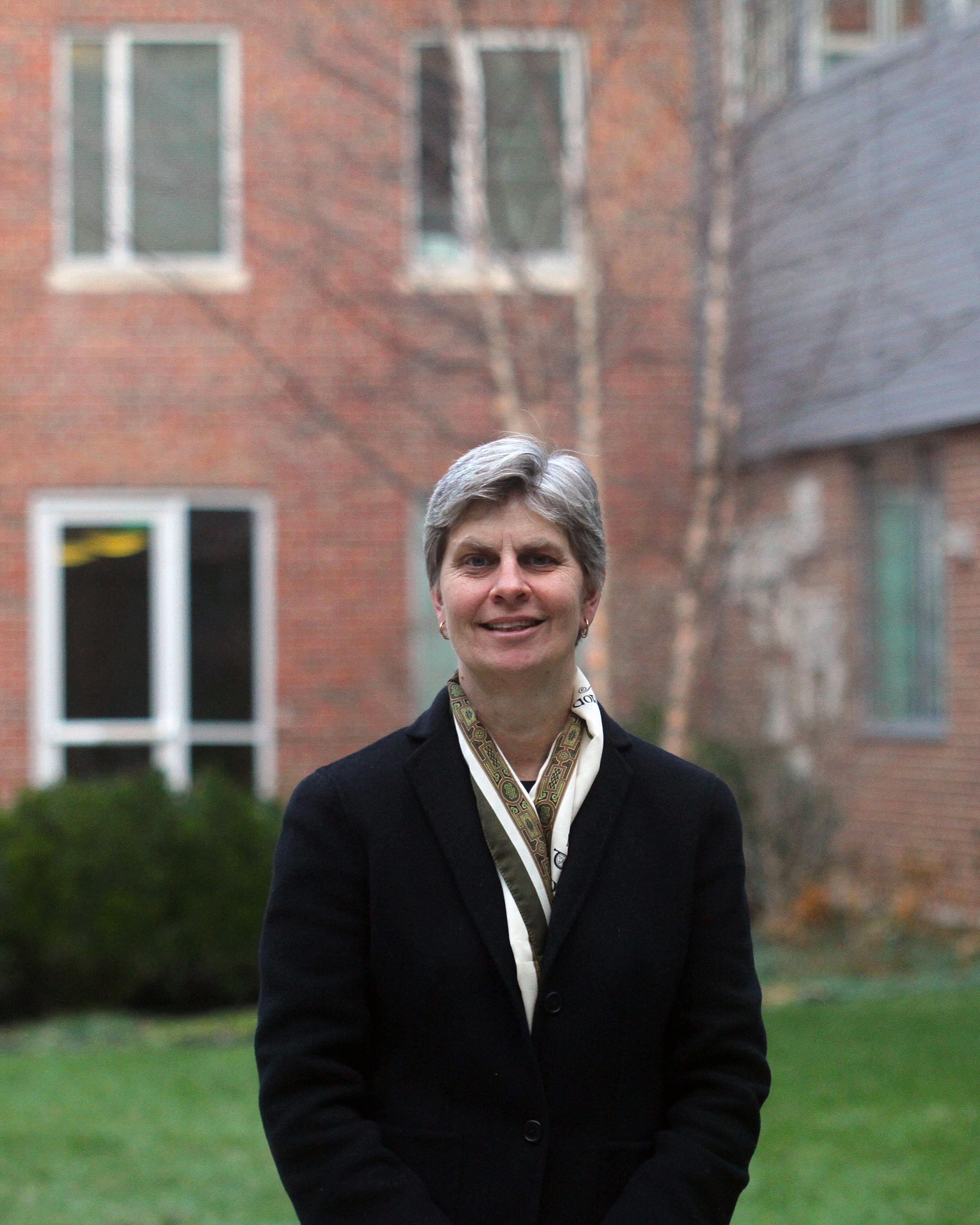
PROFESSOR | CRHC LAB HEAD | INFRASTRUCTURE AND CLIMATE NETWORK (ICNet) DIRECTOR
Jennifer M. Jacobs
jennifer.jacobs@unh.edu
Jennifer is a Water Resources Professor with over 25 years of experience, more than 100 published journal articles, and host to 11 Ph.D. and 30 master's students, eight post-doctoral scientists, and numerous undergraduate researchers. Jennifer’s career trajectory includes expert systems/AI (the 1980s!!), atmospheric boundary layer evapotranspiration, and soil moisture (the 1990s), and instream flows (2000s). Since 2010, she has had two research passions – climate change influences on infrastructure and cold regions/snow hydrology. A common research thread through the years is a strong experimental focus (let’s get outside!!), the use of NASA’s big data (30 years and counting), tractable approaches to physical processes, and research informed by my colleagues in the practice. When Jennifer is not working, she can be found biking along the New England coast or playing agility with her German wirehaired pointers.
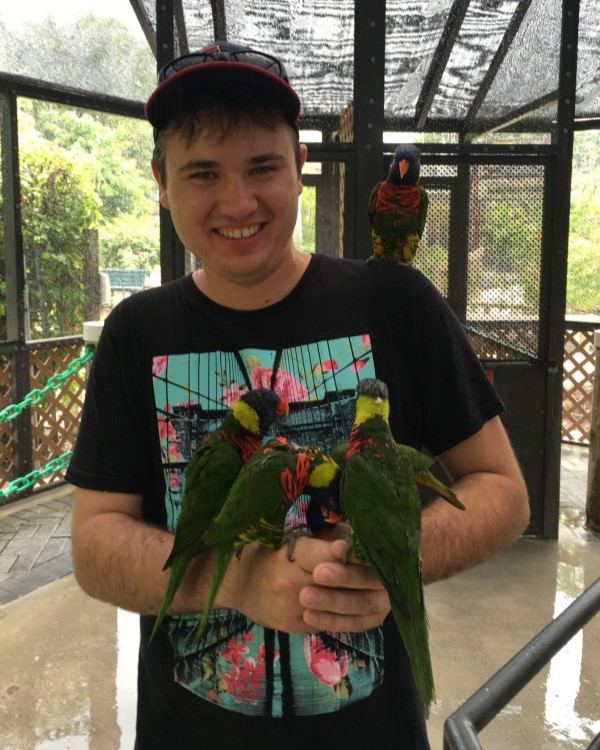
RESEARCH ENGINEER
Adam Hunsaker
adam.hunsaker@unh.edu
Adam is a research engineer who is passionate about aviation and the application of remote sensing to the fields of engineering and natural resources. His work has involved coordinating and executing UAS-based data collection campaigns utilizing LiDAR, hyperspectral, thermal and radar sensors. Adam has also managed and flown countless UAS missions in an effort to meet research objectives and to push the boundaries of UAS applications. He has also logged over 40+ hours towards a private pilot’s license and flown a Cessna Skyhawk solo! Aside from aviation, he enjoys working on DIY inventions to aid in data collections and has developed several tools that CHRC group members use to collect field observations.
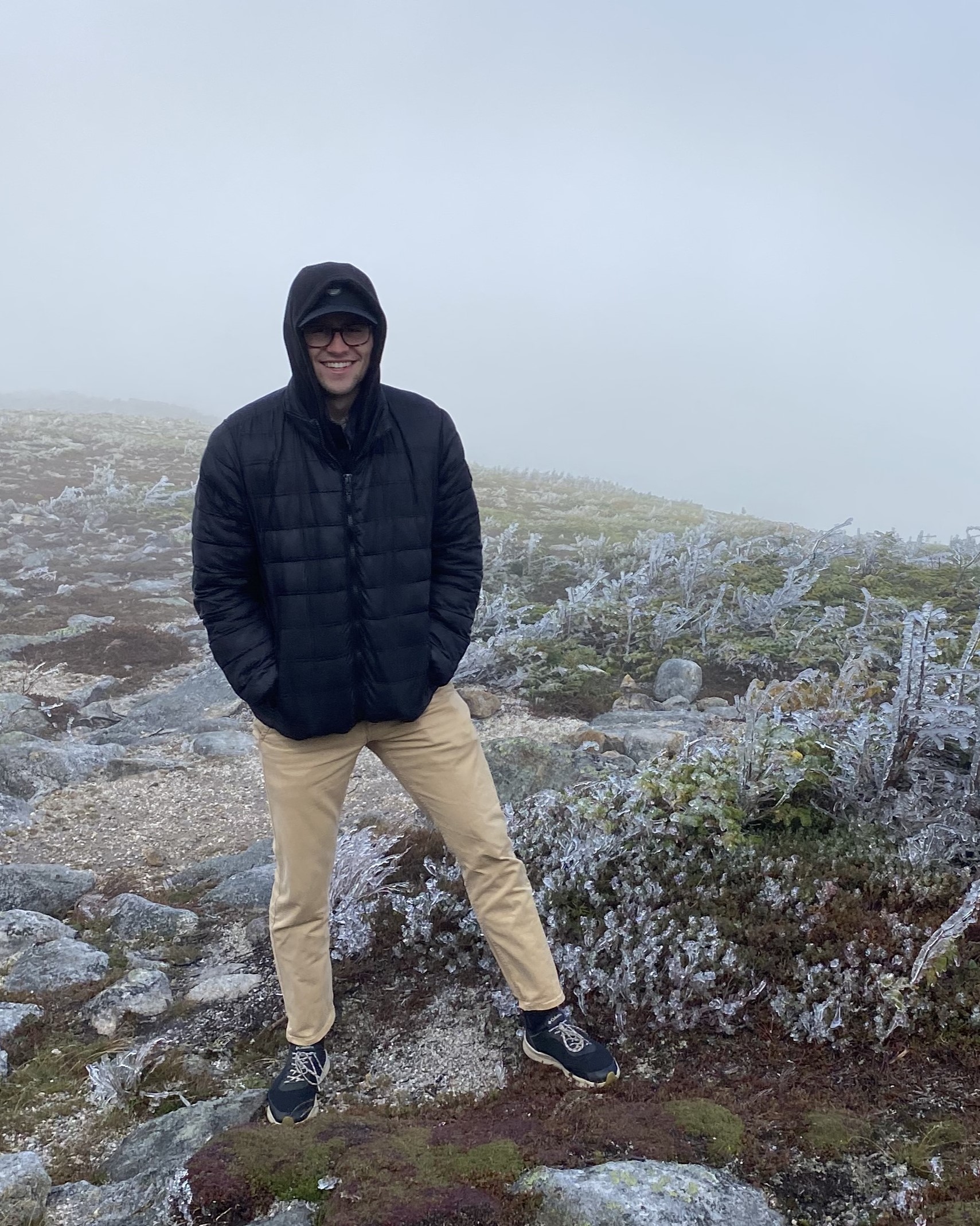
RESEARCH ENGINEER
Jeremy Johnston
jeremy.johnston@unh.edu
Jeremy’s research interests revolve around using various environmental sensing (e.g., DIY, drone-based, and satellite remote sensing) and modeling approaches to improve understanding of various environmental processes occurring over a range of scales. Most recently, after receiving his Ph.D. in Water Resources Engineering in 2022 from George Mason University, he has worked to quantify variability in snow conditions from centimeter- to continental scales at the University of New Hampshire. Jeremy believes that open source ‘big data’ will play a critical role in finding equitable solutions to many global environmental challenges. Specifically, Jeremy’s research explores relationships between climate, the cryosphere (i.e., snow and ice), and hydrology (i.e., flooding, precipitation extremes, and water resources). Improving approaches to monitor and predict climate changes are critical to managing its effects on the built and natural environment and for ensuring a sustainable future. Jeremy’s other interests include STEM education, playing basketball, and anything outdoors.
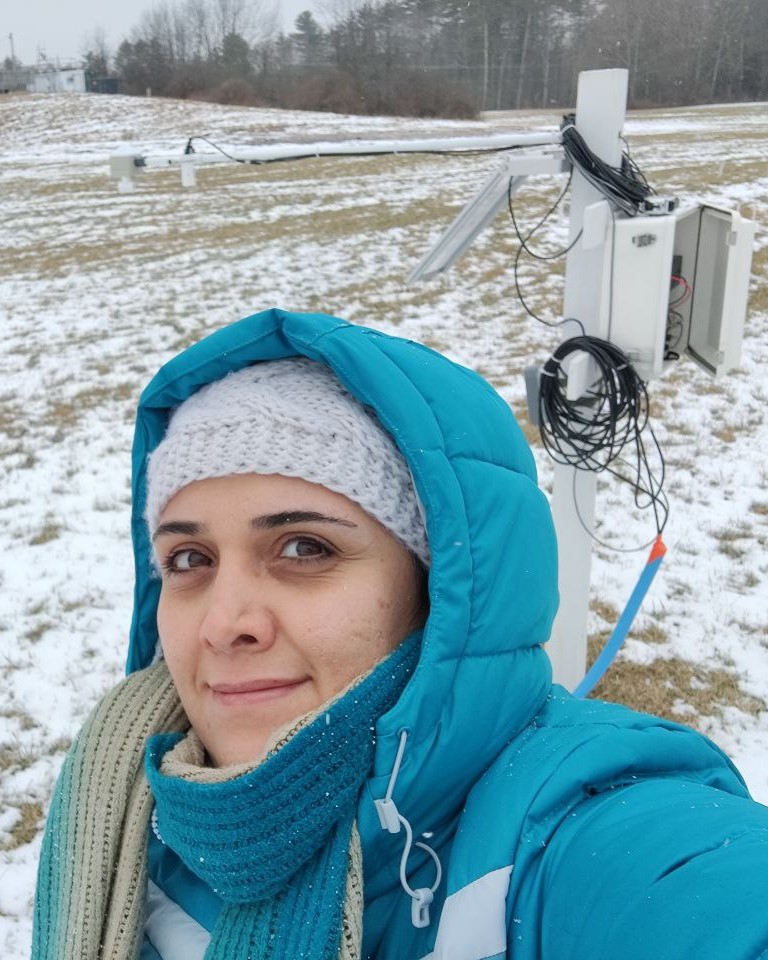
PHD, CIVIL & ENVIRONMENTAL ENGINEERING
Mahsa Moradi
mahsa.moradikhaneghahi@unh.edu
Mahsa’s research is focused on understating and monitoring soil freeze-thaw (FT) processes and the dynamic interactions between frozen ground and snow during winters within mid-latitude cold regions. Mahsa utilizes satellite remote sensing, in-situ observations, and land surface models (LSMs) at various temporal and spatial scales to observe and model FT processes. Her current research investigates the application of synthetic aperture radar (SAR) for FT mapping and fusion of SAR with optical and thermal imagery to provide more accurate and reliable FT retrievals. Additionally, Mahsa explores computationally efficient FT retrieval schemes suitable for SAR observations, aiming for an operational product at sub-field (<100m) scale. She is also interested in diagnostics and improvement of LSM’s soil and snow simulations. Outside of her academic life, Mahsa is passionate about climate literacy, women’s studies, and literature.
PHD CANDIDATE, CIVIL & ENVIRONMENTAL ENGINEERING
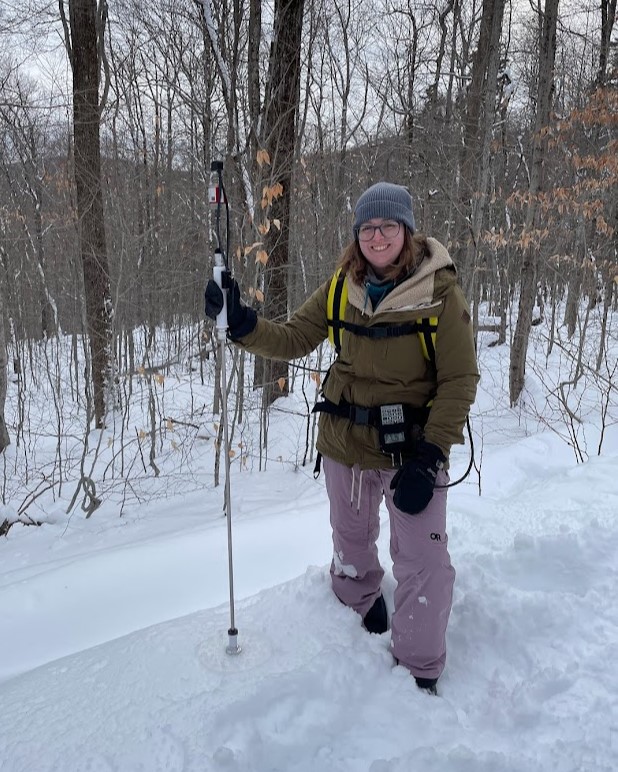
Megan Verfaillie Vardaman
megan.vardaman@unh.edu
Megan’s research focuses on understanding the underlying causes of cold region hazards using remote sensing data and models. Megan’s current work identifies the drivers of major winter and spring flood events in the Contiguous United States to improve flood monitoring and prediction. She is also interested in how high-resolution data from UAS-based remote sensing can be utilized to better understand cold region extreme hazards of all kinds, such as coastal erosion, ice jams, and winter storms. Before starting her Ph.D., Megan’s Master’s research brought together oil spill responders and modelers to improve response to Arctic maritime spills. As a result of this experience, she is motivated to produce research that advances data collection techniques and modeling tools to fill data gaps, inform decision making, and reduce risks to communities, infrastructure, and ecosystems. Outside of her research, Megan enjoys photography, spending time with her cats, and playing board games.
M.S., CIVIL & ENVIRONMENTAL ENGINEERING
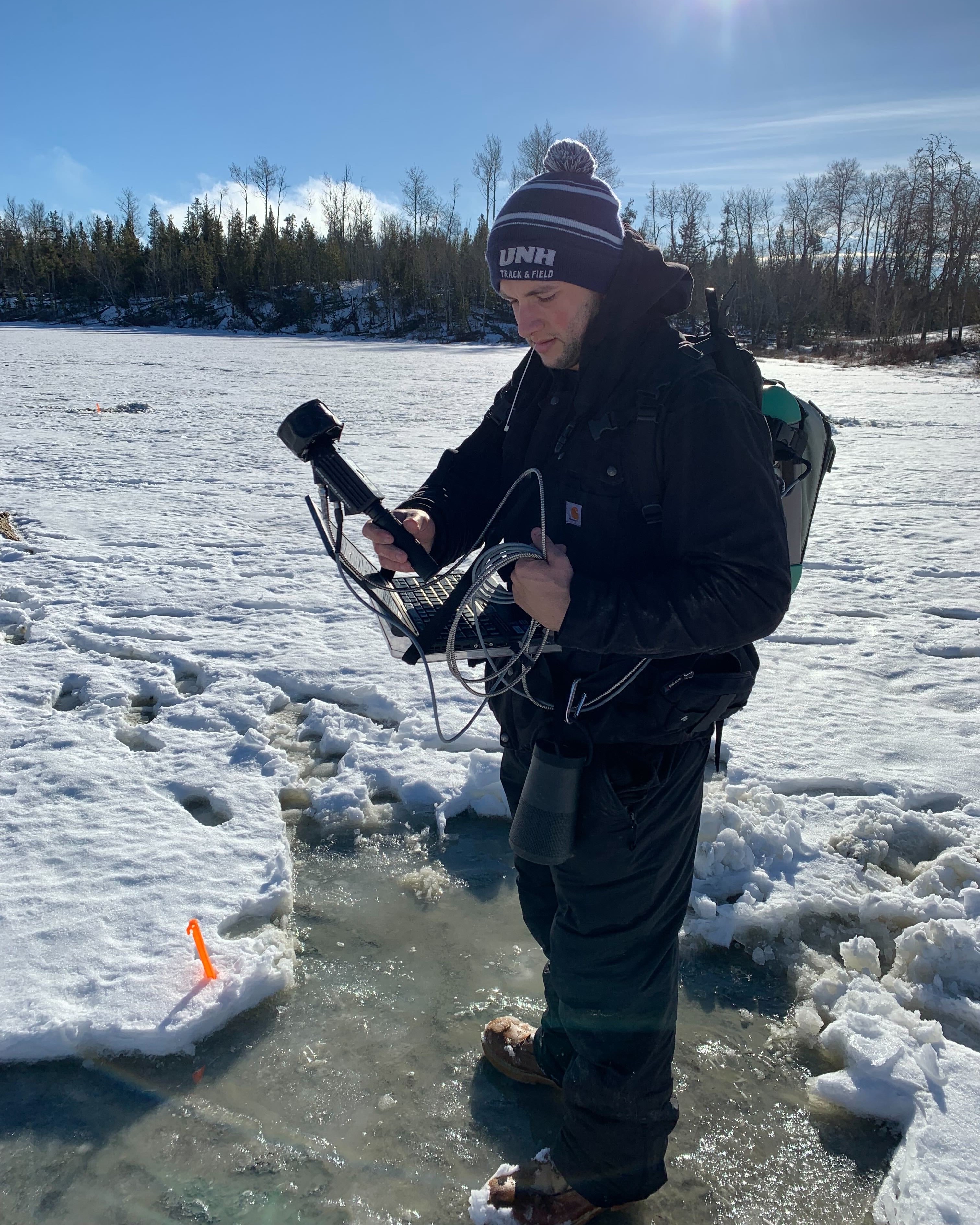
Andrew Fleming
andrew.fleming@unh.edu
Andrew’s research centers on categorizing compounds/salts present on the surface of hypersaline lakes using various remote sensing techniques. Specifically, hypersaline lakes found in the southern interior of British Columbia, Canada. These lakes serve as analog systems for ancient lake (paleolake) environments on Mars. Andrew enlists the use of ground spectrometer measurements, observations from a hyperspectral UAS system, UAS-flown LiDAR, and multispectral satellite imagery to map these unique surfaces. Developing methods to categorize these systems is a crucial step in furthering understanding of how similar systems on Mars may form, evolve, and possibly even harbor life. In his free time, Andrew competes for the UNH NCAA Track & Field team where he throws hammer and shotput.
MASTER'S STUDENT, CIVIL & ENVIRONMENTAL ENGINEERING
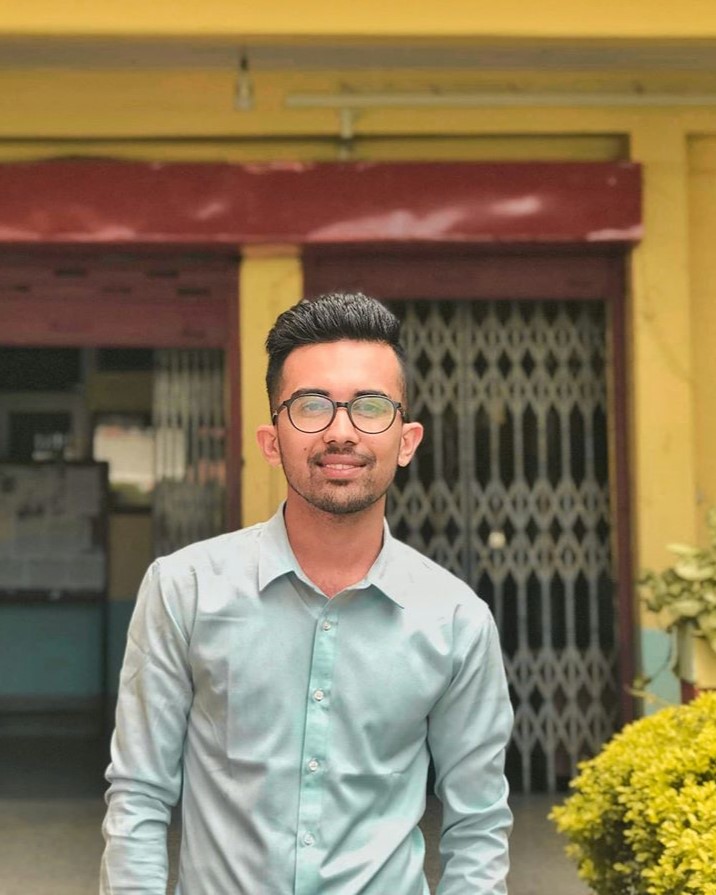
Rashik Koirala
rashik.koirala@unh.edu
Rashik’s research focuses on using remote sensing techniques, particularly optical remote sensing, image processing, and field-based camera observations to better understand snow processes in cold and primarily forested regions. He is especially interested in improving the monitoring of snow cover, melt dynamics, and its variability to support more accurate hydrological assessments. His current work involves integrating data from field-based cameras and applying machine learning algorithms to enhance the detection and analysis of snow-related patterns. He aims to contribute to more informed environmental management and hazard assessment through improved remote sensing methodologies. Outside of academia, he enjoys trekking, watching thriller movies, going on heritage walks, and maintaining a personal blog.
MASTER'S STUDENT, CIVIL & ENVIRONMENTAL ENGINEERING
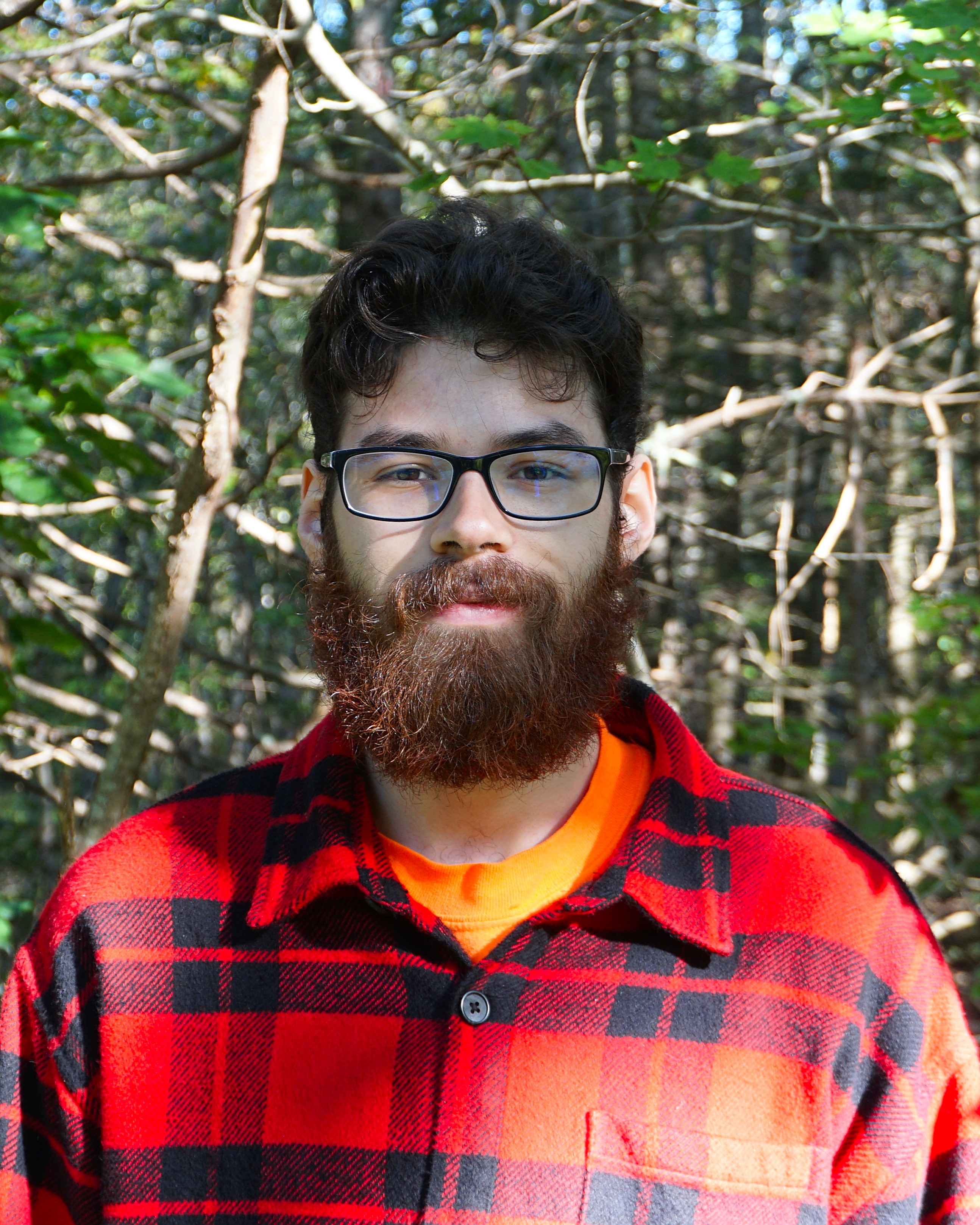
Ryan Reed
ryan.reed@unh.edu
Ryan’s research focuses on the monitoring and analysis of snow characteristics at Hubbard Brook Experimental Forest in New Hampshire, USA. Monitoring snow at Hubbard Brook has required Ryan to apply winter field sampling techniques and analyze historical trends of snow variables collected at Hubbard Brook, such as snow depth and snow water equivalent. These data are used as a reference point for current data collection and allow him to contextualize realtime snowpack properties relative to long term climate normals. Ryan’s research interests include remote sensing of snow properties and wintertime water balance modeling with a focus on the contributions of snowmelt.
MASTER'S STUDENT, CIVIL & ENVIRONMENTAL ENGINEERING
Jack Kearing
jack.kearing@unh.edu
Jack’s research focuses on enhancing the resilience of coastal roads against sea level rise and storm impacts. He is currently studying roadways along the Eastern Seaboard, analyzing their characteristics to assess vulnerability to damage. Jack collaborates with local municipalities and government agencies to maintain a comprehensive database of damaged roads in the New England region. His work aims to explore how both man-made and natural protective measures can safeguard coastal infrastructure while advancing our understanding of coastal processes. Outside of academics, Jack enjoys spending time outdoors, embracing his love for nature.
PHD STUDENT, CIVIL & ENVIRONMENTAL ENGINEERING
Min Sun Kang
minsun.kang@unh.edu
Minsun's research focuses on advancing high-resolution snow water equivalent (SWE) estimation using multi-sensor uncrewed aerial systems (UAS). She investigates methods to overcome the challenge of representing SWE at sub-meter scales, particularly in shallow snowpacks. Her current work involves integrating UAS-LiDAR-derived snow depth with snow density estimates from UAS-based Ground Penetrating Radar (GPR) and Sentinel-1 Synthetic Aperture Radar (SAR). By leveraging both airborne and satellite remote sensing technologies, she aims to improve the accuracy and spatial representativeness of SWE estimates over field scales. Minsun’s broader interests lie in the hydrologic impacts of changing snowpack characteristics under climate change, such as snow droughts. Outside of her academic work, she enjoys yoga, spending time with friends, shopping, and going to the beach.
ALUMNI
PHD STUDENT, NATURAL RESOURCES
Tim Hoheneder
Tim's research focuses on the intersection of remote sensing, geographic information systems (GIS), and UAS technologies to evaluate the policy relevance of snow across cold regions. Tim deploys remote sensing techniques such as optical, LiDAR, and ground penetrating radar (GPR) in novel means to study snowpacks, frozen ground, and broader cold climate policy considerations in the Global North. Within this framework, Tim focuses on researching science diplomacy approaches and geopolitical policy discourse within Arctic international organizations as well as implications to the Arctic from the ongoing war in Ukraine. Tim’s interest in furthering arctic research, collaboration, and governance inspired him to hold a position on the United States Association of Polar Early Career Scientists (US-APECS) board. When not working on his research, Tim enjoys skiing, advancing his knowledge as a sommelier/pommelier, watching local sports, and growing his photography portfolio throughout his global travels.
PHD, CIVIL & ENVIRONMENTAL ENGINEERING
Imran Khan
Imran’s research focuses on the application of satellite remote sensing, GIS, and modelling approaches to understand the complex dynamics of glaciers, glacial lakes, and glacial lake outburst floods (GLOFs) in the context of climate change. Imran utilizes synthetic aperture radar (SAR) and optical data to observe the evolution of glacial lakes at seasonal scales, focusing on the growing risk of GLOFs, and obtaining information to inform decisions regarding GLOF risk management in a changing climate. His work further includes validating new modelling tools for simulation of GLOFs. He is also interested in collaborating with communities impacted by GLOFs and integrating indigenous knowledge with modern scientific resources to address GLOF risks. When not in the office, Imran spends his time reading poetry, as well as watching cricket and soccer games.
OUR GROUP VALUES
INCLUSIVITY
We value diversity in research disciplines and individuals. The CRHC team respects local and Indigenous knowledge systems and strives to incorporate a range of perspectives in our work.
COLLABORATION
Members of CRHC are supportive of each other, assisting with fieldwork sampling campaigns, providing coding support, and celebrating and encouraging each other's success.
ENGAGEMENT
Research at CRHC has broad-reaching impacts. We are passionate about open data, knowledge sharing, outreach, and community engagement and believe that these practices are essential to formulating new research topics.