
Visiting Scholars and Students

Dr. Rodrigo Lizana
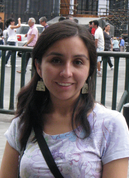
Dra. Dayan Sanhueza
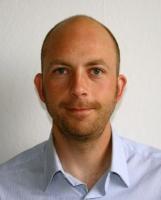
Dr. Magnus Lundberg
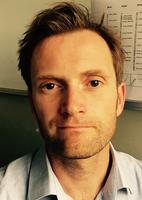
Dr. Daniel J Sargent
Collaborators

Dr. Lise L Mahoney
Research Assistant Professor, Agriculture, Nutrition, and Food Systems
University of New Hampshire
With the help of New Hampshire Agricultural Experiment Station (NHAES) staff and assistants, Dr. Mahoney maintains thousands of strawberry plants at the Woodman Farm and in the Macfarlane Greenhouse at UNH. Her goal is to breed strawberries with excellent fruit quality and disease resistance, which are long bearing and locally adapted to the Northeast. Her research aims to develop new varieties of strawberries that will meet the changing needs of growers in the region while addressing consumer demands for high quality, locally grown produce and value-added horticultural products.
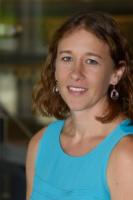
Dr. Anissa Poleatewich
Assistant Professor, Graduate Program Coordinator
Agriculture, Nutrition, and Food Systems
University of New Hampshire
Dr. Poleatewich's research focuses on managing diseases in horticultural crops, such as greenhouse flowers, greenhouse vegetables, strawberries, quinoa, and tree fruit, via the use of sanitation, beneficial microbes, and plant resistance. The Poleatewich Lab specializes in the biological control of plant diseases and the role microbes and their metabolites play in plant health, yield and quality. Her research explores the interactions between microbial biopesticides, plants, and the environment to identify best practices for integrated pest management.
Dr. Raúl Herrera
Professor, Institute of Plant Biology and Biotechnology
Universidad de Talca, Chile
Dr. Herrera's research focuses on functional genomics of plant wall dynamics in forest and fruit species, including the Chilean strawberry, Fragaria chiloensis. Additionally, he investigates genetic markers in diversity studies, as well as functional genomics and transcript analysis.
Dra. Alejandra Moya
Professor, Institute of Plant Biology and Biotechnology
Universidad de Talca, Chile
Dr. Moya investigates the physiology of maturation of climacteric and non-climacteric fruits, among them the Chilean strawberry. She studies the role of ethylene and auxins, the development of aromas, plant wall metabolism, and fruit quality.
Dr Eric Bishop von Wettberg
Associate Professor, Department of Plant and Soil Science
University of Vermont
Merging approaches from genomics and evolutionary ecology, Dr. von Wettberg studies the consequences of population bottlenecks for adaptation to harsh environments. Working to establish a thorough understanding of the evolutionary ecology and population genetics of wild relatives of crops they hope to breed better crops, conserve crop genetic resources, and instill resilence to climate change into agricultural systems. The von Wettberg lab works mostly on the wild relatives of chickpea, but also works with lentil, fenugreek, mungbeans, and mangoes.


Dr. Rick Jellen
Associate Dean, Life Science, Department of Plant and Wildlife Sciences
Brigham Young University
Dr. Jeff Maughan
Professor, Department of Plant and Wildlife Sciences
Brigham Young University
Dr. Jellen investigates genetic marker development and diversity in quinoa and its wild relatives (Chenopodium spp.), amaranth (Amaranthus spp.), papalisa or olluco (Ullucus tuberosus), and oca (Oxalis tuberosa). Dr. Maughan's research is primarily focused on development of genomic tools for accelerated breeding of orphaned crops. These crops (quinoa, amaranth, oca, etc.) were food staples among the ancient civilization of Central and South America. In light of their tolerance to abiotic stress (drought and salinity), these crops have recently received substantial attention as an alternative food crop. Drs. Jellen and Maughan are investigators in the Orphan Crops Lab, where they study underutilized or orphaned species that could be used for food on a much larger scale in diverse ecosystems.