by Gabriella Gurney, guest contributor
May 28, 2024
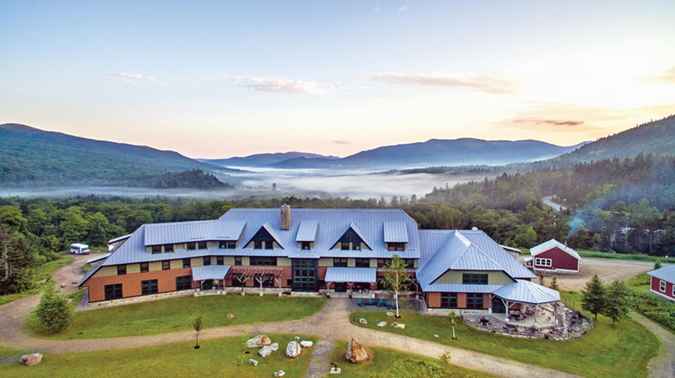
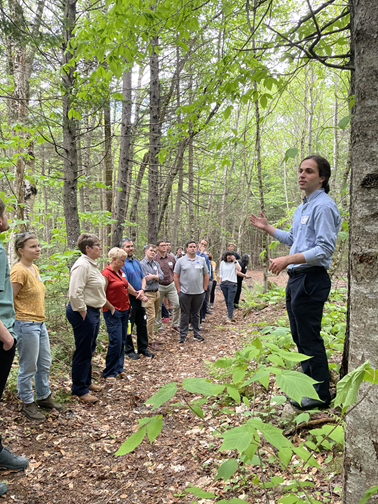
On May 28, 2024, more than 40 NESS interest holders from across the country met for the day to discuss network design and siting considerations for the Northeast Snow Survey feasibility study project. The meeting was hosted at the Appalachian Mountain Club’s Highland Center and included walking tours of the local AMC weather stations and forest phenology monitoring.
In addition to asking critical questions about station siting, participants also learned from existing snow and weather monitoring programs, such as the U.S. Geological Survey’s Sleepers River (VT) Research Watershed, Natural Resources Conservation Service (NRCS) Western US’s automated Snow Telemetry Network (SNOTEL), the newly launched University of Vermont’s Summit to Shore monitoring network, and the Maine Cooperative Snow Survey, which includes a network of volunteers across the state who submit their hand collected measurements on a biweekly to monthly schedule. These existing programs helped educate and inform partners on siting considerations, what kinds of data are useful to collect, and potential program costs for regional automated snow monitoring in northern New England to enhance and complement existing networks.
Partners had many opportunities to connect, working in breakout sessions to further refine program goals and choose potential snow monitoring sites. All levels of experience with snow science and weather monitoring were welcome and encouraged to participate, with experts joining forces with “fresh eyes” to make meaningful progress.
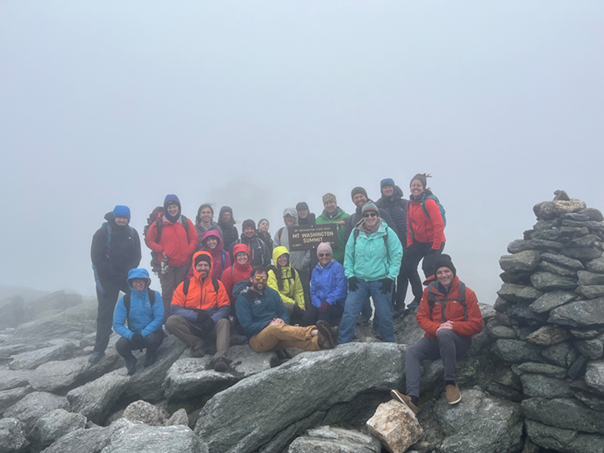
On May 29, a smaller group of participants summited Mount Washington, the highest peak in the Northeast, known as Kawdahkwaj (“Hidden Mountain Always in the Clouds”) by the Penacook-Abenaki people. At the summit, the group toured the Mount Washington Observatory with Jay Broccolo, Director of Weather Operations, and Drew Bush, Executive Director, who spoke about collecting weather data in one of the most extreme climates in the U.S. The Mount Washington Observatory has been collecting weather data since 1932, and has invaluable experience to share testing and maintaining instruments in extreme conditions.