Soil microorganisms play integral roles in controlling decomposition, thus determining how nutrients are cycled and how carbon moves into and out of soils. While we know that agricultural management (i.e. fertilizer inputs, plant cover, tillage) alters microbial community membership and function, however we lack an understanding of how this affects soil function and ecosystem health more broadly.
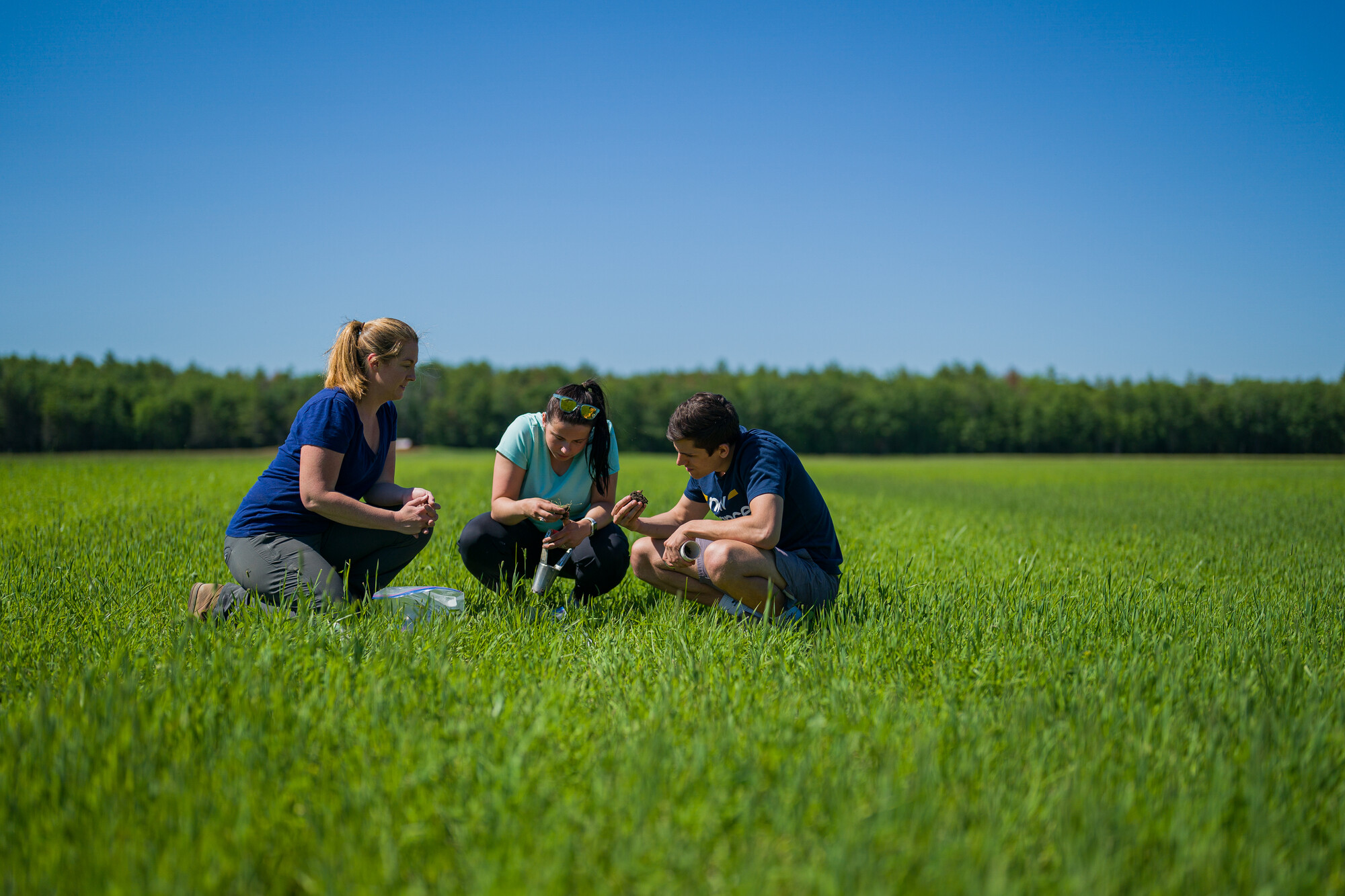
The Ernakovich lab has created a database of 43 agricultural sites with varying management strategies encompassing a variety of farms (both public and privately owned) throughout the New Hampshire Seacoast. This range of management will be used to understand the link between agricultural practices and changes in microbial communities and soil health. Using soil samples from this network, Lukas Bernhardt conducted an aggregate scale survey of microbes to understand how the soil physical environment affects species composition and function and how these relationships are affected by tillage.
Future work in the Ernakovich lab includes using stable isotopes to track the carbon into microbes to determine how each taxa contributes to overall C cycling under different environmental conditions.