
Acoustics of CAS
Current work expands on a master's thesis conducted by Rachel Babccok (née Platt) and analyzes the the melodic and rhythmic patterns (i.e., prosody) of children with CAS and children with no known speech or language disorder. We are interested in how children with CAS produce intonation. This is part of a larger project led by Dr. Don Robin (CSD, UNH) that is anlayzing the effectiveness of the treatment TEMPO (Treatment for Establishing Motor Program Organization), which uses principles of motor learning to treat children with CAS (Miller et al., 2021).
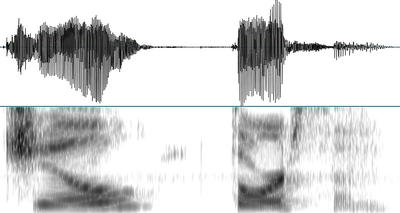
Downstep in Mainstream United States English
In work with Linguistics Professor Rachel Burdin, another area of interest is examining how prosody and acoustics vary with meaning in language. This series of studies looks specifically at the meaning and acoustic realizations of the downstepped pitch contour !H*. This work is currently under review for publication (Thorson & Burdin, revise & resubmit).