The Khmer Empire
At its peak the Khmer Empire (9th-15th century) controlled territories such as present day Cambodia, Vietnam, Laos, and Thailand. However by the 13th century, internal conflicts weakened the empire, creating an opportunity for smaller regions like the Tai people ancestors of modern Thais to seek independence. The Tai people had migrated from southern China and settled in northern Thailand, Laos, and Myanmar. By the 13th century, they lived under Khmer control, but as the empire weakened, Tai leaders saw a chance to gain independence. This led to the creation of the Sukhothai kingdom which played a crucial role in creating Thailand.
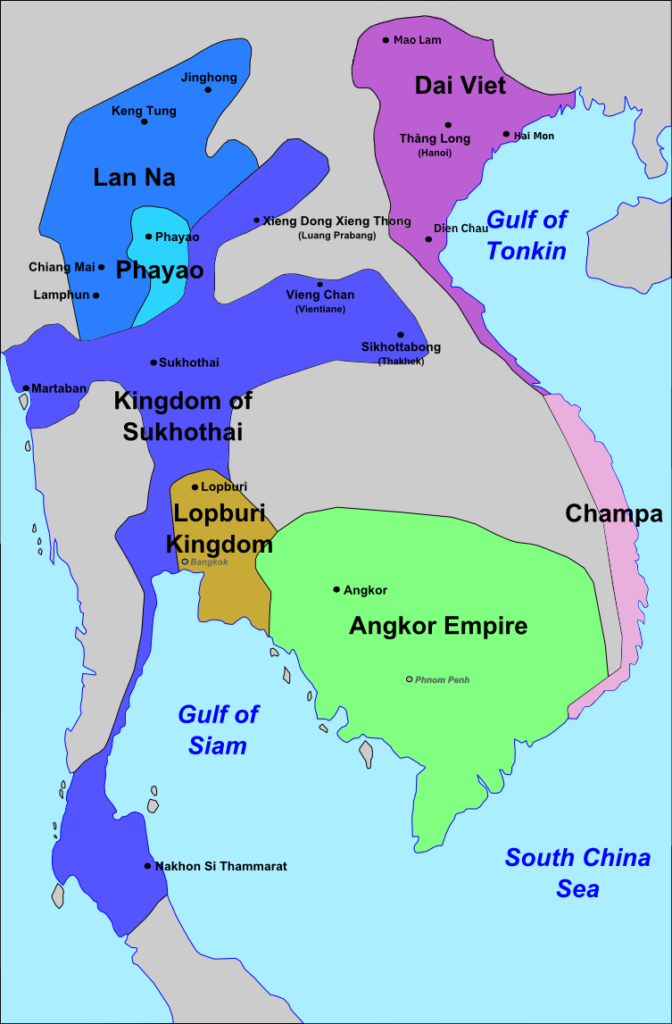
David K. Wyatt (2004), Thailand: A Short History, 2nd ed. Silkworm Books, Chiang Mai, p. 32 and Cornell Southeast Asia Program map 13th century Thailand.
Rebellion
In 1238, two leaders, Pho Khun Bang Klang Hao and Pho Khun Pha Muang, led a rebellion against the Khmer Empire. These two local rulers under Khmer rule, united their forces in rebellion against the empire’s rule over the Tai people. The rebellion took root in what is now northern Thailand. The Tai forces defeated the Khmer in Sukhothai establishing the first Thai kingdom and marking a new era of independence.
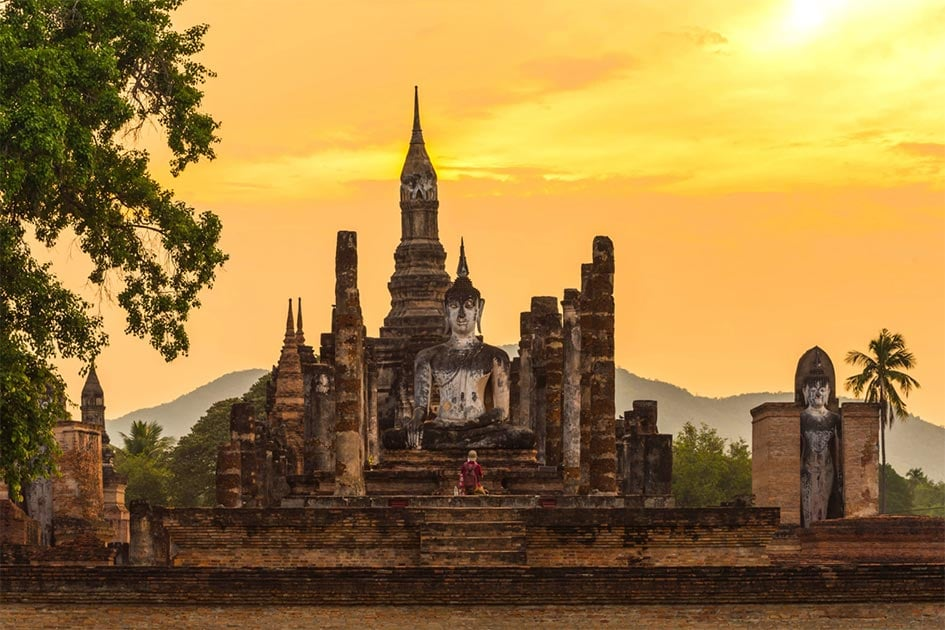
https://www.ancient-origins.net/ancient-places-asia/sukhothai-kingdom-0013580
Cultural Impact and Legacy
Under King Ramkhamhaeng, Sukhothai became a center of Thai culture, religion, and political power. He created the Thai script and promoted Theravada Buddhism which still is the dominant religion in Thailand. Sukhothai’s legacy shaped Thai governance and culture long after its decline. Sukhothai’s creation marked the beginning of aa difficult path to the growth of today’s Thai state, and it continues to stand as a proud symbol of Thai determination and freedom. The Sukhothai Kingdom’s political and cultural legacies kept going even after it began to decline in the late 14th century and was absorbed into the newly created Ayutthaya Kingdom.